

Advanced Certificate in Developing Language Models in Python
Elevate your Python skills with this certificate, mastering language model development and deployment.
Advanced Certificate in Developing Language Models in Python
Programme Overview
This course is designed for data scientists, software engineers, and AI enthusiasts who have foundational knowledge of Python and are eager to specialize in the development of advanced language models. Participants will gain hands-on experience with state-of-the-art libraries and frameworks, enabling them to create, train, and optimize language models for various applications.
Students will develop skills in natural language processing, machine learning, and deep learning, culminating in the ability to deploy custom language models. By the end of the course, learners will have a portfolio of projects that showcase their expertise in text generation, sentiment analysis, and other NLP tasks, preparing them for careers in AI and data science.
What You'll Learn
Dive into the exciting world of natural language processing with our Advanced Certificate in Developing Language Models in Python. This intensive program equips you with the skills to create, fine-tune, and deploy sophisticated language models that can understand, generate, and even translate human language. You'll master state-of-the-art techniques using Python, the language of choice for data science and AI. From text classification to sentiment analysis, our curriculum prepares you for innovative roles in tech, finance, healthcare, and more. By the end, you'll have a portfolio of projects showcasing your ability to solve real-world linguistic challenges, opening doors to a future where your code shapes how we communicate. Join us to transform language into a tool for understanding and innovation!
Programme Highlights
Industry-Aligned Curriculum
Developed with industry leaders to ensure practical, job-ready skills valued by employers worldwide.
Globally Recognised Certificate
Recognised by employers across 180+ countries as a mark of professional excellence.
Flexible Online Learning
Study at your own pace with lifetime access to all course materials and updates.
Instant Access
Start learning immediately — no application process or waiting period required.
Constantly Updated Content
Stay ahead with the latest industry trends, best practices, and emerging insights.
Career Advancement
87% of graduates report measurable career progression within 6 months of completion.
Topics Covered
- 1. Introduction to Natural Language Processing (NLP): Learners will explore the basics of NLP, including text processing, tokenization, and part-of-speech tagging. They will gain foundational skills in preparing text data for machine learning models.
- 2. Python for Data Science: This module covers essential Python libraries for data science, such as NumPy, Pandas, and Matplotlib, with a focus on applying these tools to NLP tasks.
- 3. Building Text Classifiers: Learners will study how to build and evaluate text classifiers using machine learning techniques, including logistic regression and support vector machines, in Python.
- 4. Understanding and Implementing Word Embeddings: This module delves into word embeddings, covering both theoretical foundations and practical implementation using libraries like gensim and word2vec.
- 5. Sequence Models and RNNs: Learners will learn about sequence models, including Recurrent Neural Networks (RNNs), Long Short-Term Memory networks (LSTMs), and Gated Recurrent Units (GRUs), with hands-on Python coding.
- 6. Advanced Deep Learning Techniques for NLP: This module covers advanced deep learning models such as Transformers, BERT, and other pre-trained models, focusing on their application in NLP tasks.
- 7. Text Generation with Language Models: Learners will study how to generate text using language models, including training character-level and word-level models in Python.
- 8. Evaluating and Improving Language Models: This module covers various evaluation metrics for NLP models and techniques for improving model performance, including fine-tuning and hyperparameter tuning.
- 9. Handling Imbalanced Datasets in NLP: Learners will learn strategies for dealing with imbalanced datasets in NLP tasks, including oversampling, undersampling, and the use of anomaly detection techniques.
- 10. Deploying Language Models in Real-World Applications: The final module focuses on deploying NLP models in real-world applications, including considerations for model deployment, cloud services, and integrating models into web applications.
What You Get When You Enroll
Secure checkout • Instant access • Certificate included
Key Facts
Audience: Data scientists, NLP enthusiasts
Prerequisites: Basic Python, statistics knowledge
Outcomes: Build, train, evaluate models
Ready to get started?
Join thousands of professionals who already took the next step. Enroll now and get instant access.
Enroll Now — $149Why This Course
Gain hands-on experience with state-of-the-art language models, enhancing your programming and machine learning skills.
Access industry-standard tools and frameworks in Python, preparing you for roles in natural language processing and data science.
Develop projects that showcase your expertise in building and deploying language models, strengthening your resume and career prospects.
Your Path to Certification
Trusted by Professionals Worldwide
Course Brochure
Download our comprehensive course brochure with all details
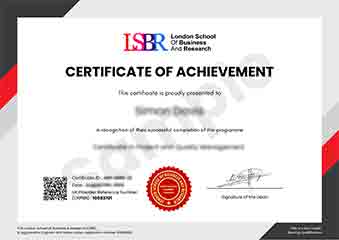
Sample Certificate
Preview the certificate you'll receive upon successful completion of this program.
Get Free Course Info
Enter your details and we'll send you a comprehensive course information pack straight to your inbox.
Employer Sponsored Training
Let your employer invest in your professional development. Request a corporate invoice and get your training funded.
Request Corporate InvoiceWhat People Say About Us
Hear from our students about their experience with the Advanced Certificate in Developing Language Models in Python at FlexiCourses.
James Thompson
United Kingdom"The course content was incredibly thorough and well-structured, providing a solid foundation in developing language models with Python. I gained practical skills that are directly applicable to real-world projects, which has already enhanced my resume and opened up new career opportunities."
Kai Wen Ng
Singapore"This course has been instrumental in enhancing my ability to develop sophisticated language models, making me more competitive in the job market. The practical projects have directly translated into real-world applications that I can now confidently apply in my work."
James Thompson
United Kingdom"The course structure is well-organized, providing a clear path from foundational concepts to advanced topics in language model development, which has significantly enhanced my understanding and practical skills in Python. The comprehensive content and real-world applications have been particularly beneficial for my professional growth in the field."