

Advanced Certificate in Practical Python NLP: Tokenization to Topic Modeling
Master Python NLP from tokenization to topic modeling, gaining practical skills for text data analysis and processing.
Advanced Certificate in Practical Python NLP: Tokenization to Topic Modeling
Programme Overview
This course is designed for data scientists, software engineers, and researchers looking to enhance their natural language processing (NLP) skills with Python. Participants will learn essential techniques from tokenization to topic modeling, enabling them to analyze and extract meaningful insights from text data.
By the end of the course, learners will be proficient in using Python libraries such as NLTK and spaCy for text preprocessing, and will understand how to implement and interpret topic modeling using tools like Gensim and scikit-learn, equipping them with the skills to tackle real-world NLP challenges.
What You'll Learn
Dive into the exciting world of Natural Language Processing (NLP) with our Advanced Certificate in Practical Python NLP: Tokenization to Topic Modeling. This intensive course equips you with advanced skills in text processing, from breaking down text into tokens to uncovering hidden topics. Master Python libraries like NLTK and spaCy to handle complex NLP tasks. Enhance your resume with a certificate that opens doors to careers in data science, AI, and software development. Join us to become a proficient NLP practitioner and drive innovation in text analysis and processing.
Programme Highlights
Industry-Aligned Curriculum
Developed with industry leaders to ensure practical, job-ready skills valued by employers worldwide.
Globally Recognised Certificate
Recognised by employers across 180+ countries as a mark of professional excellence.
Flexible Online Learning
Study at your own pace with lifetime access to all course materials and updates.
Instant Access
Start learning immediately — no application process or waiting period required.
Constantly Updated Content
Stay ahead with the latest industry trends, best practices, and emerging insights.
Career Advancement
87% of graduates report measurable career progression within 6 months of completion.
Topics Covered
- 1. Introduction to Python NLP: Learners will understand the basics of Natural Language Processing (NLP) and Python programming for NLP, gaining foundational knowledge in libraries like NLTK and spaCy.
- 2. Tokenization Techniques: Learners will explore various tokenization methods, including word, sentence, and character-level tokenization, and practice implementing these techniques in Python.
- 3. Text Cleaning and Preprocessing: Learners will study text normalization techniques such as removing stopwords, stemming, and lemmatization, and apply these methods to clean and preprocess real-world text data.
- 4. Feature Extraction and Representation: Learners will learn about different feature extraction methods, including bag-of-words, TF-IDF, and word embeddings, and practice representing text data for machine learning models.
- 5. Sentiment Analysis: Learners will delve into sentiment analysis techniques and build models to classify text into different sentiment categories, enhancing their ability to analyze and interpret textual data sentiment.
- 6. Topic Modeling with Latent Dirichlet Allocation (LDA): Learners will understand the concept of topic modeling and implement LDA to discover hidden topics in a collection of documents, gaining skills in unsupervised learning for text analysis.
- 7. Advanced Topic Modeling Techniques: Learners will explore advanced topic modeling techniques such as Non-negative Matrix Factorization (NMF) and Hierarchical Dirichlet Process (HDP), and apply these models to more complex datasets.
- 8. Text Clustering: Learners will learn how to cluster text data using algorithms like K-means, hierarchical clustering, and DBSCAN, and apply these techniques to group similar documents together.
- 9. Named Entity Recognition (NER): Learners will study NER techniques and build models to identify and classify named entities in text, such as names, dates, and locations, enhancing their ability to extract structured information from unstructured text.
- 10. Text Generation: Learners will explore text generation techniques using recurrent neural networks (RNNs) and transformers, and practice generating text based on given inputs, advancing their skills in creating and manipulating text data.
What You Get When You Enroll
Secure checkout • Instant access • Certificate included
Key Facts
Ideal for data scientists, NLP enthusiasts
Basic Python programming knowledge required
Master tokenization, stemming, lemmatization techniques
Implement topic modeling with Python libraries
Gain hands-on experience with NLP projects
Ready to get started?
Join thousands of professionals who already took the next step. Enroll now and get instant access.
Enroll Now — $149Why This Course
Gain proficiency in essential NLP techniques, including tokenization and topic modeling, which are critical for data analysis and text processing.
Apply Python in real-world projects, enhancing your coding skills and making you a valuable asset in the tech industry.
Master the tools and methodologies needed for natural language processing, opening doors to career advancements in fields like data science and software engineering.
Your Path to Certification
Trusted by Professionals Worldwide
Course Brochure
Download our comprehensive course brochure with all details
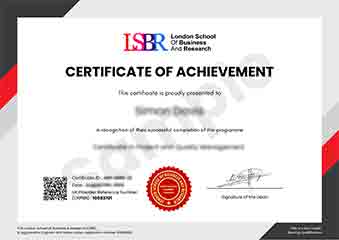
Sample Certificate
Preview the certificate you'll receive upon successful completion of this program.
Get Free Course Info
Enter your details and we'll send you a comprehensive course information pack straight to your inbox.
Employer Sponsored Training
Let your employer invest in your professional development. Request a corporate invoice and get your training funded.
Request Corporate InvoiceWhat People Say About Us
Hear from our students about their experience with the Advanced Certificate in Practical Python NLP: Tokenization to Topic Modeling at FlexiCourses.
Charlotte Williams
United Kingdom"The course content is incredibly thorough, covering everything from tokenization to topic modeling with real-world applications that significantly enhance your ability to handle natural language data effectively. Gaining these skills has been invaluable for my career, providing a solid foundation for tackling complex NLP projects."
Greta Fischer
Germany"This course has been instrumental in enhancing my ability to handle real-world NLP tasks, particularly in tokenization and topic modeling, which are now core skills in my data science portfolio. It has significantly boosted my career prospects by equipping me with tools that are in high demand across various industries."
Anna Schmidt
Germany"The course is meticulously structured, guiding learners through tokenization to topic modeling with clear, concise modules that build upon each other, making complex concepts accessible. It equips you with practical skills that enhance your ability to analyze and interpret large text datasets, significantly boosting your professional capabilities in data science and NLP."