

Certificate in Implementing ARIMA in Python for Data Analysis
Master ARIMA modeling in Python for robust time series analysis and forecasting.
Certificate in Implementing ARIMA in Python for Data Analysis
Programme Overview
This course is designed for data analysts, statisticians, and Python developers looking to apply ARIMA models for forecasting and time series analysis. Participants will gain practical skills in building, validating, and deploying ARIMA models using Python, enhancing their ability to make accurate predictions and informed decisions based on data trends.
By the end of the course, attendees will be proficient in preprocessing time series data, selecting appropriate ARIMA parameters, and evaluating model performance. They will also learn to integrate ARIMA models into larger data analysis workflows, leveraging Python libraries such as pandas, statsmodels, and scikit-learn.
What You'll Learn
Dive into the world of time series analysis with our 'Certificate in Implementing ARIMA in Python for Data Analysis.' This course equips you with the skills to forecast future trends using powerful ARIMA models, a cornerstone in data science and financial analytics. Learn to manipulate and visualize time-series data, and master Python programming for robust data analysis. Ideal for data analysts, financial analysts, and anyone interested in predictive analytics, this program opens doors to advanced roles in data science and business intelligence. Join us to unlock the potential of ARIMA and transform raw data into actionable insights.
Programme Highlights
Industry-Aligned Curriculum
Developed with industry leaders to ensure practical, job-ready skills valued by employers worldwide.
Globally Recognised Certificate
Recognised by employers across 180+ countries as a mark of professional excellence.
Flexible Online Learning
Study at your own pace with lifetime access to all course materials and updates.
Instant Access
Start learning immediately — no application process or waiting period required.
Constantly Updated Content
Stay ahead with the latest industry trends, best practices, and emerging insights.
Career Advancement
87% of graduates report measurable career progression within 6 months of completion.
Topics Covered
- 1. Introduction to Time Series Analysis: Learners will understand the basics of time series data, its characteristics, and common challenges. They will gain skills in visualizing time series data and interpreting basic trends and seasonality.
- 2. Understanding ARIMA Model: This module covers the fundamental concepts of the ARIMA model, including Autoregressive (AR), Integrated (I), and Moving Average (MA) components. Learners will learn how to identify the orders of AR, I, and MA components.
- 3. Stationarity and Differencing: Learners will study the importance of stationarity in time series data and how to achieve it through differencing. They will practice applying differencing to make non-stationary data stationary.
- 4. ARIMA Model Estimation: This module focuses on the estimation of ARIMA parameters using maximum likelihood estimation. Learners will gain hands-on experience in fitting ARIMA models to real-time series data.
- 5. Model Diagnostics and Validation: Learners will learn how to assess the goodness of fit of an ARIMA model using diagnostic tests and residual analysis. They will also practice splitting data into training and testing sets for validation.
- 6. Advanced ARIMA Techniques: This module explores advanced techniques such as seasonal ARIMA (SARIMA) and ARIMA with exogenous variables (ARIMAX). Learners will learn how to incorporate seasonal patterns and external factors into their models.
- 7. Time Series Forecasting: This module covers techniques for forecasting future values using ARIMA models. Learners will practice creating multi-step forecasts and evaluating their accuracy.
- 8. Model Selection and Comparison: This module focuses on selecting the best ARIMA model for a given dataset by comparing different models using criteria such as AIC, BIC, and out-of-sample forecasting performance.
- 9. Practical Applications of ARIMA: Learners will apply ARIMA models to real-world datasets from various industries, such as finance, economics, and environmental data. They will gain experience in interpreting model results and communicating findings.
- 10. ARIMA in Python: This final module provides an in-depth look at implementing ARIMA models in Python using libraries like statsmodels and pandas. Learners will complete a project where they build, validate, and forecast an ARIMA model on a dataset of their choice.
What You Get When You Enroll
Secure checkout • Instant access • Certificate included
Key Facts
Audience: Data analysts, researchers
Prerequisites: Basic Python, statistics knowledge
Outcomes: Master ARIMA modeling, perform time series analysis
Ready to get started?
Join thousands of professionals who already took the next step. Enroll now and get instant access.
Enroll Now — $79Why This Course
Gain hands-on experience with ARIMA models, a powerful tool for time series forecasting in Python, enhancing your data analysis skills.
Access comprehensive resources and support, ensuring you can apply ARIMA effectively in real-world scenarios and stay updated with the latest techniques.
Build a specialized skill set that is highly valued in the data science industry, making you a more competitive candidate for jobs and projects involving time series analysis.
Your Path to Certification
Trusted by Professionals Worldwide
Course Brochure
Download our comprehensive course brochure with all details
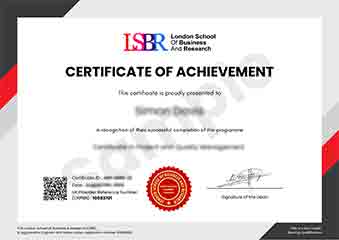
Sample Certificate
Preview the certificate you'll receive upon successful completion of this program.
Get Free Course Info
Enter your details and we'll send you a comprehensive course information pack straight to your inbox.
Employer Sponsored Training
Let your employer invest in your professional development. Request a corporate invoice and get your training funded.
Request Corporate InvoiceWhat People Say About Us
Hear from our students about their experience with the Certificate in Implementing ARIMA in Python for Data Analysis at FlexiCourses.
James Thompson
United Kingdom"The course provided high-quality material that was both comprehensive and practical, equipping me with essential skills to apply ARIMA models in real-world data analysis scenarios. Gaining proficiency in this technique has significantly enhanced my ability to forecast and analyze time series data, which is incredibly beneficial for my career in data science."
Jack Thompson
Australia"This course has been instrumental in enhancing my ability to model time series data effectively using ARIMA in Python, making my skills highly relevant in the job market. It has opened up new opportunities for me in data analysis roles that require advanced predictive modeling techniques."
Klaus Mueller
Germany"The course is well-organized, providing a clear path from basic concepts to advanced ARIMA modeling techniques in Python, which has significantly enhanced my ability to analyze time series data for real-world applications."