

Certificate in Localization Testing for Simulation Applications
This certificate equips professionals with skills to test and ensure the accuracy and usability of simulation applications in localized environments.
Certificate in Localization Testing for Simulation Applications
Programme Overview
This course is designed for QA engineers, software developers, and testing professionals aiming to specialize in the localization testing of simulation applications. Participants will gain expertise in understanding the unique challenges of localizing simulation software, including cultural adaptation, technical compatibility, and regulatory compliance. They will learn to develop and execute localized test strategies, use localization testing tools, and ensure the seamless delivery of simulation applications in diverse linguistic and cultural contexts.
Upon completion, learners will be capable of designing and implementing effective localization testing plans, identifying potential issues, and collaborating with global teams to improve the user experience across different locales. This specialization will enhance their career prospects in the global software industry, particularly in sectors reliant on simulation technologies.
What You'll Learn
Discover the world of localization testing for simulation applications with our comprehensive Certificate Program. This cutting-edge course equips you with the skills to ensure your simulations are culturally, linguistically, and technically accurate across global markets. You'll learn advanced testing methodologies, localization best practices, and the latest tools for seamless integration. Whether you're looking to advance your career in software development, quality assurance, or localization, this program offers unparalleled opportunities. Graduates can pursue roles as localization testers, simulation engineers, or quality assurance specialists in multinational corporations. Unique projects and real-world case studies will enhance your portfolio, making you a standout candidate in the global tech job market. Join us and transform your career with the power of localization testing!
Programme Highlights
Industry-Aligned Curriculum
Developed with industry leaders to ensure practical, job-ready skills valued by employers worldwide.
Globally Recognised Certificate
Recognised by employers across 180+ countries as a mark of professional excellence.
Flexible Online Learning
Study at your own pace with lifetime access to all course materials and updates.
Instant Access
Start learning immediately — no application process or waiting period required.
Constantly Updated Content
Stay ahead with the latest industry trends, best practices, and emerging insights.
Career Advancement
87% of graduates report measurable career progression within 6 months of completion.
Topics Covered
- 1. Introduction to Localization Testing: Learners will understand the basics of localization testing, including its importance, key principles, and terminology. They will gain foundational knowledge to ensure that simulation applications are culturally and linguistically appropriate.
- 2. Fundamentals of Simulation Applications: This module covers the core aspects of simulation applications, focusing on their design, development, and user interface. Learners will be able to identify potential localization challenges in these applications.
- 3. Cultural Sensitivity and Localization Best Practices: Learners will explore cultural nuances and best practices in localization, including translation, adaptation, and testing strategies. They will learn how to ensure that simulation applications resonate with different cultural contexts.
- 4. Technical Aspects of Localization Testing: This module delves into technical tools and methodologies used in localization testing, such as tools for string extraction, localization memory, and automated testing frameworks. Learners will gain practical skills in setting up and using these tools.
- 5. Testing for Accessibility: Learners will understand the importance of accessibility in localization testing, including guidelines and standards. They will learn to test and improve the accessibility of simulation applications for diverse users.
- 6. Localization Testing in Multi-Platform Environments: This module focuses on testing simulation applications across multiple platforms, including desktop, mobile, and web. Learners will learn how to ensure consistent user experiences across different environments.
- 7. Advanced Localization Strategies: Learners will explore advanced localization strategies, such as context-sensitive testing, localization in virtual reality (VR) and augmented reality (AR) environments, and testing for emerging technologies.
- 8. Quality Assurance in Localization: This module covers quality assurance (QA) methods specific to localization testing, including test planning, execution, and reporting. Learners will learn how to ensure high-quality localized simulation applications.
- 9. Continuous Integration and Continuous Deployment (CI/CD) in Localization: Learners will understand the role of CI/CD in localization testing, including integration of localization processes into development workflows. They will learn to implement CI/CD practices to streamline localization testing.
- 10. Case Studies and Practical Application: In this module, learners will apply their knowledge and skills through real-world case studies and practical projects. They will develop a comprehensive localization testing plan for a simulation application, demonstrating their ability to integrate all aspects of localization testing into the development lifecycle.
What You Get When You Enroll
Secure checkout • Instant access • Certificate included
Key Facts
Audience: Test engineers, quality assurance professionals
Prerequisites: Basic testing knowledge, simulation software experience
Outcomes: Master localization testing, simulate international environments, ensure cultural accuracy
Ready to get started?
Join thousands of professionals who already took the next step. Enroll now and get instant access.
Enroll Now — $79Why This Course
Enhance career prospects by gaining specialized knowledge in testing simulation applications, which is in high demand across various industries.
Develop practical skills in localization testing, making you proficient in ensuring that simulation applications function correctly in different cultural and linguistic environments.
Access current industry standards and best practices, preparing you to address complex localization challenges and improve user experiences globally.
Your Path to Certification
Trusted by Professionals Worldwide
Course Brochure
Download our comprehensive course brochure with all details
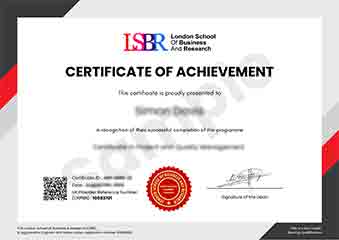
Sample Certificate
Preview the certificate you'll receive upon successful completion of this program.
Get Free Course Info
Enter your details and we'll send you a comprehensive course information pack straight to your inbox.
Employer Sponsored Training
Let your employer invest in your professional development. Request a corporate invoice and get your training funded.
Request Corporate InvoiceWhat People Say About Us
Hear from our students about their experience with the Certificate in Localization Testing for Simulation Applications at FlexiCourses.
Sophie Brown
United Kingdom"The course content was thorough and well-structured, providing a solid foundation in localization testing for simulation applications. I gained valuable practical skills that have already enhanced my ability to test software across different languages and regions, making me more competitive in the job market."
Jia Li Lim
Singapore"This certificate course has been incredibly valuable, equipping me with the latest tools and techniques for localization testing in simulation applications. It has not only enhanced my technical skills but also opened up new career opportunities in the global tech industry."
James Thompson
United Kingdom"The course structure is well-organized, providing a clear path from foundational concepts to advanced localization testing techniques, which has significantly enhanced my understanding and practical skills in this field. The comprehensive content and real-world applications have been particularly beneficial, offering insights that are directly applicable to improving the user experience in simulation applications."