

Certificate in Numerical Methods for Data Analysis
This certificate equips learners with advanced numerical methods for efficient and accurate data analysis, enhancing analytical and computational skills.
Certificate in Numerical Methods for Data Analysis
Programme Overview
This course is designed for data scientists, engineers, and researchers seeking to enhance their skills in applying numerical methods to data analysis. Participants will gain proficiency in using computational tools to solve complex mathematical problems and perform sophisticated data analysis tasks.
Students will learn essential techniques such as numerical linear algebra, interpolation, optimization, and solving differential equations. Through practical assignments and projects, they will apply these methods to real-world datasets, improving their ability to extract meaningful insights and make informed decisions based on numerical analysis.
What You'll Learn
Dive into the transformative world of data analysis with our Certificate in Numerical Methods for Data Analysis. This intensive, hands-on course equips you with advanced techniques to extract meaningful insights from complex data sets. Through practical applications and real-world case studies, you'll master essential numerical methods, including linear algebra, optimization, and machine learning algorithms. Enhance your analytical skills and gain a competitive edge in tech-driven industries. This course is perfect for aspiring data scientists, analysts, and anyone eager to unlock the full potential of data in decision-making processes. Join us and transform raw data into actionable intelligence, opening doors to rewarding career opportunities in data science, analytics, and beyond.
Programme Highlights
Industry-Aligned Curriculum
Developed with industry leaders to ensure practical, job-ready skills valued by employers worldwide.
Globally Recognised Certificate
Recognised by employers across 180+ countries as a mark of professional excellence.
Flexible Online Learning
Study at your own pace with lifetime access to all course materials and updates.
Instant Access
Start learning immediately — no application process or waiting period required.
Constantly Updated Content
Stay ahead with the latest industry trends, best practices, and emerging insights.
Career Advancement
87% of graduates report measurable career progression within 6 months of completion.
Topics Covered
- 1. Fundamentals of Numerical Methods: Learners will study basic numerical concepts such as rounding errors, floating-point arithmetic, and the principles of numerical stability. They will gain skills in implementing simple numerical algorithms and understanding their implications for data analysis.
- 2. Interpolation Techniques: This module covers various interpolation methods including polynomial, spline, and piecewise interpolation techniques. Learners will learn how to approximate functions and data using these methods, enhancing their ability to model and predict data trends.
- 3. Numerical Integration and Differentiation: Here, learners will explore techniques for numerical integration and differentiation, such as the trapezoidal rule, Simpson's rule, and finite difference methods. They will develop skills in accurately estimating derivatives and integrals from discrete data points.
- 4. Solving Systems of Linear Equations: This module focuses on methods for solving systems of linear equations, including direct and iterative techniques. Learners will understand the importance of matrix decompositions and gain practical skills in using these methods for data analysis.
- 5. Eigenvalue Problems and Applications: Learners will study eigenvalue problems and their applications in data analysis. They will learn about algorithms for finding eigenvalues and eigenvectors, and how these concepts are crucial in principal component analysis and other dimensionality reduction techniques.
- 6. Numerical Solutions to Ordinary Differential Equations: This module covers numerical methods for solving ordinary differential equations (ODEs), including Runge-Kutta methods and adaptive step-size control. Learners will gain skills in modeling dynamical systems and analyzing time-series data.
- 7. Optimization Techniques: Here, learners will study various optimization techniques, including gradient descent, Newton's method, and constrained optimization. They will learn how to find optimal solutions to problems and apply these techniques in data analysis and machine learning.
- 8. Monte Carlo Methods: This module introduces Monte Carlo methods for simulating random processes and estimating solutions to problems. Learners will learn about variance reduction techniques and apply these methods to estimate integrals, solve differential equations, and perform statistical inference.
- 9. Numerical Linear Algebra: This advanced module focuses on advanced topics in numerical linear algebra, including iterative methods for large sparse systems, QR and SVD decompositions, and their applications in data analysis. Learners will deepen their understanding of matrix computations and their practical implications.
- 10. Advanced Topics in Numerical Methods for Data Analysis: In this capstone module, learners will explore advanced numerical techniques relevant to modern data analysis, such as numerical optimization in high dimensions, advanced interpolation techniques, and numerical methods for partial differential equations. They will gain expertise in applying these techniques to real-world data analysis problems.
What You Get When You Enroll
Secure checkout • Instant access • Certificate included
Key Facts
Audience: Data analysts, researchers
Prerequisites: Basic programming, calculus
Outcomes: Proficient in numerical methods, data analysis skills
Ready to get started?
Join thousands of professionals who already took the next step. Enroll now and get instant access.
Enroll Now — $79Why This Course
Enhance Analytical Skills: The certificate focuses on practical numerical methods essential for data analysis, improving learners' ability to process and interpret complex data sets.
Industry-Relevant Knowledge: Equips learners with techniques and tools that are in high demand in various sectors, making them more competitive for data-related roles.
Hands-On Experience: Includes real-world applications and projects, allowing learners to apply theoretical knowledge directly, enhancing practical understanding and proficiency.
Your Path to Certification
Trusted by Professionals Worldwide
Course Brochure
Download our comprehensive course brochure with all details
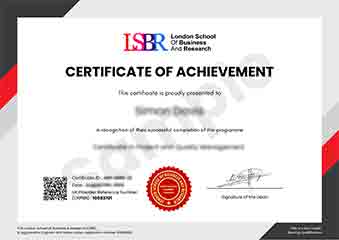
Sample Certificate
Preview the certificate you'll receive upon successful completion of this program.
Get Free Course Info
Enter your details and we'll send you a comprehensive course information pack straight to your inbox.
Employer Sponsored Training
Let your employer invest in your professional development. Request a corporate invoice and get your training funded.
Request Corporate InvoiceWhat People Say About Us
Hear from our students about their experience with the Certificate in Numerical Methods for Data Analysis at FlexiCourses.
James Thompson
United Kingdom"The course provided a robust foundation in numerical methods, equipping me with practical skills to analyze complex data sets efficiently. It significantly enhanced my ability to tackle real-world problems, making me more competitive in my field."
Ryan MacLeod
Canada"This certificate has been instrumental in bridging the gap between theoretical knowledge and practical application of numerical methods. It has significantly enhanced my ability to analyze complex data sets, making me more competitive in the job market and opening up new opportunities in data analysis roles."
Liam O'Connor
Australia"The course structure is well-organized, providing a seamless transition from theoretical concepts to practical applications, which significantly enhances my understanding and ability to apply numerical methods in real-world data analysis scenarios."