

Certificate in Optimizing Structural Design with Computational Tools
This certificate equips professionals with skills to optimize structural design using computational tools, enhancing efficiency and structural integrity.
Certificate in Optimizing Structural Design with Computational Tools
Programme Overview
This course is designed for engineers and architects seeking to enhance their skills in using computational tools to optimize structural design. Participants will learn to apply advanced software and algorithms to create more efficient and cost-effective designs that meet stringent safety standards.
By the end of the course, students will gain proficiency in using industry-specific software for structural analysis and optimization. They will also develop the ability to interpret complex data, make informed design decisions, and integrate computational methods into their workflow to achieve superior structural outcomes.
What You'll Learn
Discover the power of computational tools in revolutionizing structural design with our 'Certificate in Optimizing Structural Design with Computational Tools.' This intensive program equips you with the skills to leverage advanced software for efficient and innovative design solutions. You'll learn to model complex structures, optimize materials usage, and enhance structural integrity. This certificate opens doors to high-demand careers in architecture, engineering, and construction, where computational skills are crucial. Unique to our program, hands-on projects and mentorship from industry experts ensure practical experience and industry-relevant knowledge. Join us and transform your design approach, paving the way for a future where creativity meets precision.
Programme Highlights
Industry-Aligned Curriculum
Developed with industry leaders to ensure practical, job-ready skills valued by employers worldwide.
Globally Recognised Certificate
Recognised by employers across 180+ countries as a mark of professional excellence.
Flexible Online Learning
Study at your own pace with lifetime access to all course materials and updates.
Instant Access
Start learning immediately — no application process or waiting period required.
Constantly Updated Content
Stay ahead with the latest industry trends, best practices, and emerging insights.
Career Advancement
87% of graduates report measurable career progression within 6 months of completion.
Topics Covered
- 1. Introduction to Structural Design and Computational Tools: Learners will study the fundamentals of structural design and be introduced to key computational tools used in the industry. They will gain an understanding of the basic principles and practical skills in selecting appropriate computational tools for structural analysis.
- 2. Static Analysis and Linear Elasticity: This module focuses on the principles of static analysis and linear elasticity. Learners will study how to perform static analysis on structures and understand the behavior of materials under static loads, acquiring skills in using computational tools for this purpose.
- 3. Dynamics and Vibration Analysis: Here, learners will explore dynamic analysis and vibration behavior of structures. They will learn to model and analyze structures subjected to dynamic loads, developing skills in predicting the dynamic response and vibration characteristics of structures.
- 4. Material Properties and Advanced Analysis Techniques: This module covers in-depth material properties and advanced analysis techniques. Learners will study various material properties and their impact on structural performance, and gain proficiency in applying advanced analysis techniques using computational tools.
- 5. Structural Optimization: In this module, learners will learn about the principles and methods of structural optimization. They will develop the ability to optimize structural designs for various criteria such as weight, cost, and performance using computational tools.
- 6. Finite Element Analysis (FEA) Fundamentals: This module provides an in-depth understanding of finite element analysis (FEA) principles and techniques. Learners will learn to perform FEA on complex structures and gain practical skills in interpreting FEA results.
- 7. Computational Fluid Dynamics (CFD) for Structural Analysis: Here, learners will study the application of computational fluid dynamics in structural analysis. They will learn to model and analyze the interaction between structures and fluids, developing skills in predicting fluid-structure interaction effects.
- 8. Advanced Structural Design with Computational Tools: This module covers advanced topics in structural design, focusing on the integration of computational tools in innovative design processes. Learners will explore advanced design strategies and techniques, enhancing their ability to use computational tools for complex structural design challenges.
- 9. Case Studies and Real-World Applications: In this module, learners will analyze real-world structural design projects and apply their knowledge to solve practical problems. They will gain experience in using computational tools to optimize structural designs in various engineering contexts.
- 10. Professional Practices and Project Management: This final module focuses on professional practices and project management in structural design. Learners will learn about the ethical and professional standards in the field, and develop skills in managing and implementing structural design projects using computational tools.
What You Get When You Enroll
Secure checkout • Instant access • Certificate included
Key Facts
Audience: Engineers, architects, researchers
Prerequisites: Basic engineering knowledge, programming experience
Outcomes: Master computational modeling, enhance design efficiency, gain optimization techniques
Ready to get started?
Join thousands of professionals who already took the next step. Enroll now and get instant access.
Enroll Now — $79Why This Course
Expands skill set with expertise in computational tools for structural design, enhancing employability.
Provides practical knowledge through hands-on experience, critical for applying theories to real-world problems.
Equips learners with up-to-date techniques and software, ensuring they stay current in a rapidly evolving field.
Your Path to Certification
Trusted by Professionals Worldwide
Course Brochure
Download our comprehensive course brochure with all details
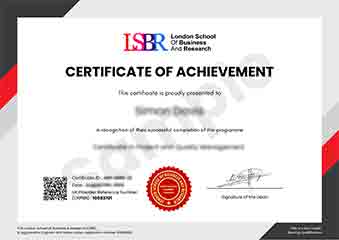
Sample Certificate
Preview the certificate you'll receive upon successful completion of this program.
Get Free Course Info
Enter your details and we'll send you a comprehensive course information pack straight to your inbox.
Employer Sponsored Training
Let your employer invest in your professional development. Request a corporate invoice and get your training funded.
Request Corporate InvoiceWhat People Say About Us
Hear from our students about their experience with the Certificate in Optimizing Structural Design with Computational Tools at FlexiCourses.
Charlotte Williams
United Kingdom"The course content is incredibly thorough and well-structured, providing a solid foundation in optimizing structural design with computational tools. I've gained practical skills that are directly applicable to real-world projects, which has been incredibly beneficial for my career."
Connor O'Brien
Canada"This certificate course has been incredibly practical, equipping me with advanced computational tools that are directly applicable in the industry. It has not only enhanced my ability to optimize structural designs but has also opened up new career opportunities in firms that prioritize cutting-edge technology."
Fatimah Ibrahim
Malaysia"The course structure is well-organized, providing a clear path from foundational concepts to advanced applications of computational tools in structural design, which has significantly enhanced my understanding and practical skills in this field."