

Certificate in Porous Solid Characterization Methods
Gain expertise in advanced methods for characterizing porous solids, enhancing material science knowledge and analytical skills.
Certificate in Porous Solid Characterization Methods
Programme Overview
This course is designed for materials scientists, engineers, and researchers who need to characterize porous solid materials. It covers essential techniques such as mercury porosimetry, gas adsorption, and imaging methods. Participants will gain practical skills in selecting appropriate methods, interpreting results, and understanding material properties related to porosity.
By the end of the course, attendees will be proficient in using these methods to characterize various porous materials, enabling them to make informed decisions in their research and development projects.
What You'll Learn
Discover the fascinating world of porous materials with our Certificate in Porous Solid Characterization Methods. This comprehensive program equips you with cutting-edge techniques and tools essential for analyzing the intricate structures of porous solids. You'll delve into advanced microscopy, spectroscopy, and computational modeling, gaining hands-on experience that opens doors to various industries, from pharmaceuticals to materials science. This certificate not only enhances your analytical skills but also positions you for roles in research, development, and quality control. Join us and unlock the potential of porous materials, shaping the future of sustainable and innovative technologies.
Programme Highlights
Industry-Aligned Curriculum
Developed with industry leaders to ensure practical, job-ready skills valued by employers worldwide.
Globally Recognised Certificate
Recognised by employers across 180+ countries as a mark of professional excellence.
Flexible Online Learning
Study at your own pace with lifetime access to all course materials and updates.
Instant Access
Start learning immediately — no application process or waiting period required.
Constantly Updated Content
Stay ahead with the latest industry trends, best practices, and emerging insights.
Career Advancement
87% of graduates report measurable career progression within 6 months of completion.
Topics Covered
- 1. Introduction to Porous Materials: Learners will explore the fundamental concepts of porous materials, their importance, and classification. They will gain an understanding of the basic terminology and measurement techniques used in the field.
- 2. Porosity and Pore Size Distribution: This module delves into the quantification of porosity and the methods for determining pore size distribution. Learners will master the use of mercury porosimetry and gas adsorption techniques.
- 3. Fundamentals of Gas Adsorption: Learners will study the principles of gas adsorption, including the Brunauer-Emmett-Teller (BET) theory and the Langmuir isotherm. They will learn to apply these theories to analyze adsorption data.
- 4. X-ray and Neutron Scattering Techniques: This module introduces learners to the use of X-ray and neutron scattering techniques for characterizing porous materials. Practical skills include setting up and interpreting scattering data.
- 5. Electronic and Optical Properties of Porous Materials: Learners will investigate the electronic and optical properties of porous materials, focusing on techniques such as UV-Vis spectroscopy and electron microscopy.
- 6. Thermal Analysis Methods: This module covers thermal analysis methods like TGA and DSC, focusing on their application in the characterization of thermal stability and phase transitions in porous materials.
- 7. Advanced Imaging Techniques: Learners will delve into advanced imaging techniques such as SEM, TEM, and AFM, learning how to use these tools to visualize and analyze microstructure and morphology.
- 8. Computational Methods in Porous Materials: This module introduces computational methods for modeling and predicting the properties of porous materials, including the use of molecular simulation software.
- 9. Applications of Porous Materials: Learners will study real-world applications of porous materials in various industries, such as catalysis, energy storage, and environmental remediation.
- 10. Quality Control and Standardization: The final module focuses on quality control and standardization practices in the characterization of porous materials, including understanding relevant standards and implementing QC procedures in research and industry settings.
What You Get When You Enroll
Secure checkout • Instant access • Certificate included
Key Facts
Audience: Scientists, engineers, researchers
Prerequisites: Basic chemistry knowledge
Outcomes: Proficient in solid-state NMR, BET surface area
Ready to get started?
Join thousands of professionals who already took the next step. Enroll now and get instant access.
Enroll Now — $79Why This Course
Develop specialized skills in analyzing and characterizing porous solid materials, enhancing career prospects in industry and research.
Gain access to advanced analytical techniques and methods, providing a competitive edge in academic and professional settings.
Foster interdisciplinary understanding by exploring the intersection of materials science, chemistry, and engineering, broadening professional opportunities.
Your Path to Certification
Trusted by Professionals Worldwide
Course Brochure
Download our comprehensive course brochure with all details
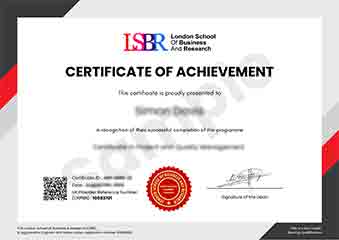
Sample Certificate
Preview the certificate you'll receive upon successful completion of this program.
Get Free Course Info
Enter your details and we'll send you a comprehensive course information pack straight to your inbox.
Employer Sponsored Training
Let your employer invest in your professional development. Request a corporate invoice and get your training funded.
Request Corporate InvoiceWhat People Say About Us
Hear from our students about their experience with the Certificate in Porous Solid Characterization Methods at FlexiCourses.
James Thompson
United Kingdom"The course provided in-depth, well-organized material that significantly enhanced my understanding of various characterization techniques for porous solids. Gaining hands-on experience with these methods has been incredibly valuable, as it has prepared me for more advanced research and practical applications in the field."
Brandon Wilson
United States"This course has been incredibly valuable, equipping me with advanced techniques for analyzing porous materials that are directly applicable in my field. It has opened up new opportunities for me in research and development, enhancing my ability to contribute to cutting-edge projects."
Jia Li Lim
Singapore"The course structure was well-organized, providing a comprehensive overview of various characterization methods for porous solids, which has greatly enhanced my understanding and practical skills in this field, opening up new possibilities for my professional growth."