

Certificate in Querying Spatial Databases with PostgreSQL
Gain expertise in querying spatial databases using PostgreSQL, enhancing data analysis and visualization skills for geographic information.
Certificate in Querying Spatial Databases with PostgreSQL
Programme Overview
This course is designed for data scientists, GIS professionals, and software developers seeking to master spatial querying techniques with PostgreSQL. You will gain proficiency in using PostGIS, a spatial database extender for PostgreSQL, to perform complex spatial analysis and visualization. Key topics include spatial data modeling, geospatial indexing, and advanced query optimization for spatial datasets.
Upon completion, participants will be able to efficiently manage, query, and analyze large-scale geospatial data, enabling them to solve real-world problems in fields such as urban planning, environmental science, and logistics.
What You'll Learn
Dive into the world of geospatial data management with our 'Certificate in Querying Spatial Databases with PostgreSQL.' This intensive course equips you with the skills to harness PostgreSQL's powerful PostGIS extension for spatial data analysis. You'll learn to create, manipulate, and query geographic data, transforming raw data into actionable insights. Ideal for GIS professionals, urban planners, and data scientists, this certification opens doors to roles like GIS Analyst and Data Scientist. By the end, you'll be proficient in using PostgreSQL to solve complex spatial problems, making you a valuable asset in any tech-driven organization. Join us and unlock your potential to innovate with spatial data!
Programme Highlights
Industry-Aligned Curriculum
Developed with industry leaders to ensure practical, job-ready skills valued by employers worldwide.
Globally Recognised Certificate
Recognised by employers across 180+ countries as a mark of professional excellence.
Flexible Online Learning
Study at your own pace with lifetime access to all course materials and updates.
Instant Access
Start learning immediately — no application process or waiting period required.
Constantly Updated Content
Stay ahead with the latest industry trends, best practices, and emerging insights.
Career Advancement
87% of graduates report measurable career progression within 6 months of completion.
Topics Covered
- 1. Introduction to Spatial Databases: Learners will study the fundamentals of spatial databases and their importance in geographic information systems (GIS). They will gain practical skills in understanding data models, storage, and retrieval of spatial data.
- 2. PostgreSQL Basics: This module covers the basics of PostgreSQL, including installation, configuration, and basic SQL commands. Learners will develop foundational skills in managing and querying relational databases.
- 3. Spatial Data Types and Functions in PostgreSQL: Learners will explore the spatial data types and functions provided by PostgreSQL, learning how to create and manipulate spatial data within the database.
- 4. Geometric and Topological Operations: This module focuses on advanced operations such as geometric and topological queries, allowing learners to understand and perform complex spatial analyses.
- 5. Spatial Indexing and Optimization: Learners will delve into the optimization techniques for spatial queries, including the use of spatial indexing to improve query performance.
- 6. Working with OpenStreetMap Data: This module teaches how to import and work with OpenStreetMap data, including data preprocessing and integration into PostgreSQL spatial databases.
- 7. Advanced Query Techniques: Learners will study advanced query techniques, including spatial joins, window functions, and spatial aggregation, to handle complex spatial datasets.
- 8. Spatial Analysis and Visualization: This module covers various spatial analysis techniques and visualization methods using PostgreSQL and related tools, enabling learners to analyze and present spatial data effectively.
- 9. Geospatial APIs and Integrations: Learners will learn about integrating PostgreSQL spatial databases with popular geospatial APIs and web mapping services, enhancing data accessibility and usability.
- 10. Project and Capstone: In this final module, learners will apply their knowledge by working on a capstone project, which may involve designing, implementing, and optimizing a spatial database solution for a real-world scenario.
What You Get When You Enroll
Secure checkout • Instant access • Certificate included
Key Facts
Audience: Data analysts, GIS professionals
Prerequisites: Basic SQL, familiarity with databases
Outcomes: Master spatial data querying, use PostGIS effectively
Ready to get started?
Join thousands of professionals who already took the next step. Enroll now and get instant access.
Enroll Now — $79Why This Course
Acquire specialized skills in managing and querying spatial data, a critical skill for roles in geographic information systems (GIS) and urban planning.
Utilize PostgreSQL, a powerful and flexible database management system, to enhance data analysis and visualization capabilities, providing a robust foundation for spatial database management.
Your Path to Certification
Trusted by Professionals Worldwide
Course Brochure
Download our comprehensive course brochure with all details
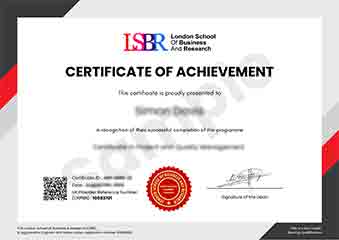
Sample Certificate
Preview the certificate you'll receive upon successful completion of this program.
Get Free Course Info
Enter your details and we'll send you a comprehensive course information pack straight to your inbox.
Employer Sponsored Training
Let your employer invest in your professional development. Request a corporate invoice and get your training funded.
Request Corporate InvoiceWhat People Say About Us
Hear from our students about their experience with the Certificate in Querying Spatial Databases with PostgreSQL at FlexiCourses.
Oliver Davies
United Kingdom"The course provided an in-depth understanding of spatial databases using PostgreSQL, equipping me with practical skills to handle real-world geographic data effectively. It significantly enhanced my ability to analyze and visualize spatial information, which is incredibly valuable for my career in GIS."
Hans Weber
Germany"This course has been instrumental in enhancing my ability to work with spatial data, making me more competitive in the job market. I now have the skills to develop practical applications that can be directly applied in various industries, opening up new career opportunities."
Klaus Mueller
Germany"The course structure is well-organized, providing a comprehensive understanding of querying spatial databases with PostgreSQL, which has significantly enhanced my ability to handle real-world spatial data challenges effectively."