

Certificate in Randomized Controlled Trials Methodology
This certificate equips learners with the skills to design, implement, and analyze randomized controlled trials, enhancing evidence-based decision-making in research.
Certificate in Randomized Controlled Trials Methodology
Programme Overview
This course is designed for researchers, clinicians, and public health professionals aiming to enhance their skills in designing and analyzing randomized controlled trials (RCTs). Participants will gain a comprehensive understanding of the fundamental principles and methodologies of RCTs, including randomization techniques, sample size calculation, and statistical analysis methods.
By the end of the course, attendees will be capable of planning and conducting high-quality RCTs, interpreting results accurately, and contributing effectively to evidence-based healthcare practices.
What You'll Learn
Embark on a transformative journey with our 'Certificate in Randomized Controlled Trials Methodology'! This intensive course equips you with the skills to design, execute, and analyze robust clinical trials, enhancing patient outcomes and advancing medical research. You'll master the art of randomization, learn statistical analysis techniques, and gain hands-on experience with real-world data. Ideal for aspiring researchers, clinicians, and data analysts, this certificate opens doors to careers in academia, pharmaceuticals, and public health. Engage with a dynamic community of learners and industry experts, and prepare to make a significant impact on global health. Join us and be part of the future of evidence-based medicine!
Programme Highlights
Industry-Aligned Curriculum
Developed with industry leaders to ensure practical, job-ready skills valued by employers worldwide.
Globally Recognised Certificate
Recognised by employers across 180+ countries as a mark of professional excellence.
Flexible Online Learning
Study at your own pace with lifetime access to all course materials and updates.
Instant Access
Start learning immediately — no application process or waiting period required.
Constantly Updated Content
Stay ahead with the latest industry trends, best practices, and emerging insights.
Career Advancement
87% of graduates report measurable career progression within 6 months of completion.
Topics Covered
- 1. Introduction to Randomized Controlled Trials (RCTs): Learners will study the fundamental principles of RCTs, including their importance in clinical and epidemiological research. They will gain skills in understanding the design, implementation, and reporting of RCTs.
- 2. Designing Randomized Controlled Trials: This module covers the detailed steps in designing an RCT, including sample size calculation, randomization techniques, and handling confounders. Learners will develop the ability to create a robust study design.
- 3. Randomization Methods and Techniques: Here, learners will explore various randomization methods and their applications, such as simple randomization, restricted randomization, and minimization. Practical skills in using statistical software for randomization will be developed.
- 4. Statistical Analysis of Randomized Controlled Trials: This module focuses on the statistical analysis of RCTs, including hypothesis testing, effect size estimation, and dealing with missing data. Participants will learn to perform these analyses using common statistical software.
- 5. Monitoring and Data Safety in RCTs: Learners will study the principles of data monitoring and safety assessment in RCTs. They will gain practical skills in setting up monitoring procedures and handling adverse events.
- 6. Publication and Dissemination of RCT Results: This module covers the process of writing up and publishing RCT results, including ethical considerations and the use of appropriate reporting guidelines. Learners will learn to prepare a high-quality manuscript for publication.
- 7. Advanced Topics in RCT Methodology: In this module, learners will delve into advanced topics such as sequential multiple assignment randomized trials (SMART), cluster randomized trials, and pragmatic trials. They will gain insights into the design and analysis of these complex trial designs.
- 8. Systematic Reviews and Meta-Analysis of RCTs: This module focuses on the systematic review and meta-analysis of RCTs, including the identification of relevant studies, assessment of study quality, and statistical pooling of results. Practical skills in conducting meta-analyses will be developed.
What You Get When You Enroll
Secure checkout • Instant access • Certificate included
Key Facts
Aimed at researchers, clinicians, and public health professionals
No specific prerequisites required
Understand RCT design and implementation
Analyze and interpret RCT data
Develop critical assessment skills for RCTs
Ready to get started?
Join thousands of professionals who already took the next step. Enroll now and get instant access.
Enroll Now — $79Why This Course
Gain specialized knowledge in a critical research area, enhancing your ability to design and analyze studies accurately.
Equip yourself with the skills needed to contribute to high-quality, evidence-based research, which is essential in fields like medicine, psychology, and public health.
Differentiate yourself in the job market by acquiring a recognized certificate that validates your expertise in randomized controlled trials methodology.
Your Path to Certification
Trusted by Professionals Worldwide
Course Brochure
Download our comprehensive course brochure with all details
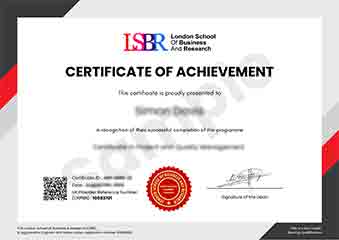
Sample Certificate
Preview the certificate you'll receive upon successful completion of this program.
Get Free Course Info
Enter your details and we'll send you a comprehensive course information pack straight to your inbox.
Employer Sponsored Training
Let your employer invest in your professional development. Request a corporate invoice and get your training funded.
Request Corporate InvoiceWhat People Say About Us
Hear from our students about their experience with the Certificate in Randomized Controlled Trials Methodology at FlexiCourses.
James Thompson
United Kingdom"The course content is incredibly thorough and well-structured, providing a solid foundation in the methodology of randomized controlled trials. Gaining hands-on experience in designing and analyzing such trials has been invaluable for my career in clinical research."
Priya Sharma
India"This certificate has been instrumental in enhancing my understanding of randomized controlled trials, making me more competitive in clinical research roles. It has provided me with practical tools and knowledge that I can directly apply to improve study designs and outcomes in my current position."
Liam O'Connor
Australia"The course structure is well-organized, providing a clear path from basic concepts to advanced topics in randomized controlled trials, which has significantly enhanced my understanding and practical skills in this area. The comprehensive content and real-world applications have been particularly beneficial, offering insights that are directly applicable to my research and professional goals."