

Executive Development Programme in Advanced Techniques in Urban Spatial Analysis
Enhance leadership skills in urban spatial analysis, equipping executives with advanced techniques for data-driven decision making and strategic urban planning.
Executive Development Programme in Advanced Techniques in Urban Spatial Analysis
Programme Overview
This Executive Development Programme in Advanced Techniques in Urban Spatial Analysis is designed for urban planners, data analysts, and policymakers seeking to enhance their skills in sophisticated spatial data analysis and urban planning. Participants will gain proficiency in using advanced GIS tools and techniques for urban spatial analysis, including predictive modeling, spatial statistics, and big data analytics, to inform evidence-based decision-making in urban development.
By the end of the program, attendees will be equipped to tackle complex urban challenges, such as optimizing public transportation, improving safety and sustainability, and managing urban growth. The course also emphasizes practical application through real-world case studies and projects, ensuring participants can immediately apply their new skills in their professional contexts.
What You'll Learn
Dive into the dynamic world of urban spatial analysis with our Executive Development Programme in Advanced Techniques. This program equips you with cutting-edge GIS and data science tools to tackle complex urban challenges. Join a community of leaders who transform data into insights that drive smarter cities. You'll master predictive analytics, machine learning, and spatial modeling to solve real-world problems like urban planning, sustainability, and public health. Ideal for professionals seeking to enhance their careers in urban development, city planning, and data-driven governance. Engage in hands-on projects, guest lectures from industry leaders, and collaborative workshops. Develop a personalized portfolio showcasing your advanced skills, positioning you as a sought-after expert in urban spatial analysis. Join us and shape the future of urban spaces through informed, data-backed decision-making.
Programme Highlights
Industry-Aligned Curriculum
Developed with industry leaders to ensure practical, job-ready skills valued by employers worldwide.
Globally Recognised Certificate
Recognised by employers across 180+ countries as a mark of professional excellence.
Flexible Online Learning
Study at your own pace with lifetime access to all course materials and updates.
Instant Access
Start learning immediately — no application process or waiting period required.
Constantly Updated Content
Stay ahead with the latest industry trends, best practices, and emerging insights.
Career Advancement
87% of graduates report measurable career progression within 6 months of completion.
Topics Covered
- 1. Introduction to Urban Spatial Analysis: Learners will explore foundational concepts in urban spatial analysis, including geographic information systems (GIS) and spatial data visualization. This module aims to equip participants with basic GIS skills and an understanding of spatial data types.
- 2. Spatial Data Collection and Management: This module covers methods for collecting and managing spatial data, including field surveys, remote sensing, and data integration. Learners will gain practical skills in data collection techniques and manage spatial datasets using GIS software.
- 3. Spatial Statistics and Analysis: Learners will study statistical methods for analyzing spatial data, including spatial autocorrelation, spatial regression, and spatial clustering. This module will enhance participants' ability to interpret and analyze spatially referenced data.
- 4. Spatial Modeling and Simulation: This module introduces advanced spatial modeling techniques, such as agent-based modeling and spatial econometrics. Participants will learn to develop and apply spatial models to simulate urban processes and predict spatial outcomes.
- 5. Geospatial Technologies and Big Data: Learners will explore the use of big data and geospatial technologies in urban spatial analysis. This module covers data management, data processing, and the application of big data analytics in urban planning and management.
- 6. Urban Land Use and Transportation Analysis: This module focuses on analyzing urban land use patterns and transportation networks using spatial analysis techniques. Participants will learn to assess the impacts of urban land use and transportation policies on urban form and mobility.
- 7. Spatial Decision Support Systems: Learners will study the development and application of spatial decision support systems (SDSS) for urban planning and management. This module will teach participants how to integrate spatial analysis tools into decision-making processes.
- 8. Urban Sustainability and Environmental Impact Assessment: This module examines the role of spatial analysis in assessing urban sustainability and environmental impacts. Participants will learn to evaluate the sustainability of urban development projects and assess environmental impacts using spatial analysis techniques.
- 9. Urban Security and Crime Analysis: Learners will explore the use of spatial analysis in urban security and crime prevention. This module covers spatial patterns of crime, hotspot analysis, and the development of spatially informed security strategies.
- 10. Advanced Topics in Urban Spatial Analysis: This module delves into cutting-edge topics in urban spatial analysis, including urban morphology, spatial justice, and the analysis of urban networks. Participants will gain expertise in advanced spatial analysis techniques and their applications in urban research and planning.
What You Get When You Enroll
Secure checkout • Instant access • Certificate included
Key Facts
Audience: Urban planners, GIS specialists
Prerequisites: Basic GIS knowledge, urban planning experience
Outcomes: Advanced spatial analysis skills, enhanced policy recommendations
Ready to get started?
Join thousands of professionals who already took the next step. Enroll now and get instant access.
Enroll Now — $199Why This Course
Gain specialized skills in advanced urban spatial analysis techniques, enhancing career prospects in urban planning and development.
Connect with industry experts and network with peers to share insights and foster professional growth.
Apply cutting-edge tools and methodologies to real-world problems, ensuring practical learning outcomes that are immediately relevant and valuable.
Your Path to Certification
Trusted by Professionals Worldwide
Course Brochure
Download our comprehensive course brochure with all details
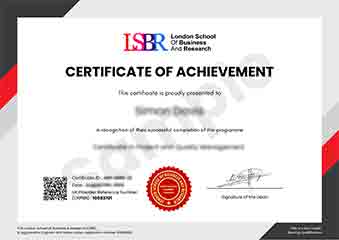
Sample Certificate
Preview the certificate you'll receive upon successful completion of this program.
Get Free Course Info
Enter your details and we'll send you a comprehensive course information pack straight to your inbox.
Employer Sponsored Training
Let your employer invest in your professional development. Request a corporate invoice and get your training funded.
Request Corporate InvoiceWhat People Say About Us
Hear from our students about their experience with the Executive Development Programme in Advanced Techniques in Urban Spatial Analysis at FlexiCourses.
Charlotte Williams
United Kingdom"The course provided an in-depth look at advanced urban spatial analysis techniques, equipping me with practical skills to analyze and solve complex urban planning challenges. It significantly enhanced my ability to make data-driven decisions and has opened up new career opportunities in the field."
Connor O'Brien
Canada"This course has significantly enhanced my ability to analyze urban spaces using advanced techniques, making my skills highly relevant in the job market. It has opened up new opportunities for career advancement by equipping me with practical tools to tackle real-world urban planning challenges."
Ruby McKenzie
Australia"The course structure was meticulously organized, providing a seamless transition from theoretical concepts to practical applications, which significantly enhanced my understanding and ability to analyze urban spaces effectively. The comprehensive content and real-world case studies were particularly beneficial, offering valuable insights that have already translated into tangible professional growth."