

Executive Development Programme in Algorithmic Trading and Automation
This program equips executives with advanced skills in algorithmic trading and automation, enhancing strategic decision-making and operational efficiency.
Executive Development Programme in Algorithmic Trading and Automation
Programme Overview
This course is designed for senior executives and finance professionals looking to enhance their understanding of algorithmic trading and automation. Participants will gain insights into high-frequency trading strategies, risk management, and the technological advancements driving the financial markets. The curriculum focuses on practical applications and real-world case studies, preparing leaders to make informed decisions and drive innovation in their organizations.
By the end of the program, attendees will be equipped with the knowledge to leverage algorithmic trading tools and automation techniques to optimize trading operations, reduce costs, and improve market performance. They will also develop a strategic perspective on how to integrate these technologies into their existing business models to stay competitive in the evolving financial landscape.
What You'll Learn
Dive into the dynamic world of financial markets with our Executive Development Programme in Algorithmic Trading and Automation. This intensive course equips professionals with the skills to build, optimize, and manage automated trading strategies. You'll master cutting-edge technologies, from Python and machine learning to high-frequency trading platforms, all while learning from industry experts. Gain hands-on experience through real-world projects and simulations, transforming theoretical knowledge into practical applications. This program opens doors to lucrative career opportunities in algorithmic trading firms, investment banks, and fintech startups. Join a network of high-achieving alumni and gain the confidence to innovate and lead in the fast-paced domain of quantitative finance.
Programme Highlights
Industry-Aligned Curriculum
Developed with industry leaders to ensure practical, job-ready skills valued by employers worldwide.
Globally Recognised Certificate
Recognised by employers across 180+ countries as a mark of professional excellence.
Flexible Online Learning
Study at your own pace with lifetime access to all course materials and updates.
Instant Access
Start learning immediately — no application process or waiting period required.
Constantly Updated Content
Stay ahead with the latest industry trends, best practices, and emerging insights.
Career Advancement
87% of graduates report measurable career progression within 6 months of completion.
Topics Covered
- 1. Introduction to Algorithmic Trading: Learners will understand the basics of algorithmic trading, including market mechanics, trading strategies, and the role of technology in trading. They will gain foundational knowledge of how algorithms are used to execute trades more efficiently.
- 2. Programming Fundamentals for Algorithmic Trading: This module covers essential programming skills required for algorithmic trading, such as Python, data structures, and algorithms. Learners will develop the ability to write and optimize code for financial applications.
- 3. Data Analysis and Visualization: Learners will explore techniques for analyzing and visualizing financial data, including time series analysis, statistical methods, and machine learning. They will learn how to use tools like pandas, matplotlib, and scikit-learn to process and understand market data.
- 4. Market Microstructure and Trading Strategies: This module delves into the structure of financial markets, including order books, liquidity, and market impacts. Learners will design and implement various trading strategies, such as market making, arbitrage, and momentum trading.
- 5. Risk Management in Algorithmic Trading: Learners will study risk management principles specific to algorithmic trading, including position sizing, risk limits, and stress testing. They will learn how to develop a risk management framework to protect against potential losses.
- 6. High-Frequency Trading (HFT) Techniques: This module focuses on advanced HFT techniques, including tick-by-tick data analysis, volatility modeling, and implementation of HFT strategies. Learners will gain hands-on experience with real-time data processing and trading algorithms.
- 7. Machine Learning for Algorithmic Trading: Learners will apply machine learning techniques to financial data, including supervised and unsupervised learning, neural networks, and reinforcement learning. They will develop models for predicting market movements and optimizing trading strategies.
- 8. Backtesting and Validation: This module covers methods for evaluating the performance of trading strategies through backtesting and validation. Learners will learn how to use historical data to test and refine their trading systems.
- 9. Algorithmic Trading Platforms and Infrastructure: Learners will explore the technical infrastructure required for algorithmic trading, including execution platforms, trading APIs, and cloud services. They will gain an understanding of how to deploy and scale trading algorithms in a production environment.
- 10. Regulatory Compliance and Ethical Considerations: This module addresses the regulatory framework for algorithmic trading, including market regulations, compliance requirements, and ethical considerations. Learners will learn how to ensure their trading activities comply with legal and ethical standards.
What You Get When You Enroll
Secure checkout • Instant access • Certificate included
Key Facts
Audience: Financial professionals, data scientists
Prerequisites: Basic programming, finance knowledge
Outcomes: Algorithmic trading skills, automation proficiency
Ready to get started?
Join thousands of professionals who already took the next step. Enroll now and get instant access.
Enroll Now — $199Why This Course
Enhances practical skills in algorithmic trading and automation, directly applicable in financial markets.
Provides a deep understanding of quantitative analysis and trading strategies, equipping learners with competitive edge.
Offers networking opportunities with industry experts and peers, facilitating knowledge exchange and career advancement.
Your Path to Certification
Trusted by Professionals Worldwide
Course Brochure
Download our comprehensive course brochure with all details
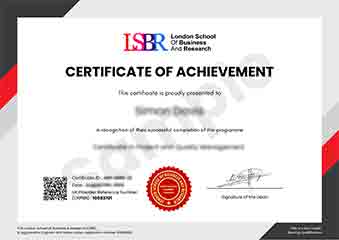
Sample Certificate
Preview the certificate you'll receive upon successful completion of this program.
Get Free Course Info
Enter your details and we'll send you a comprehensive course information pack straight to your inbox.
Employer Sponsored Training
Let your employer invest in your professional development. Request a corporate invoice and get your training funded.
Request Corporate InvoiceWhat People Say About Us
Hear from our students about their experience with the Executive Development Programme in Algorithmic Trading and Automation at FlexiCourses.
Oliver Davies
United Kingdom"The course content is incredibly detailed and well-structured, providing a solid foundation in algorithmic trading and automation that has significantly enhanced my analytical and technical skills. I've gained practical knowledge that I can immediately apply to real-world trading scenarios, which is invaluable for my career advancement."
Emma Tremblay
Canada"The Executive Development Programme in Algorithmic Trading and Automation has been incredibly relevant to my career, equipping me with advanced skills in quantitative analysis and trading strategies that I directly apply in my role. This program has not only enhanced my technical abilities but also opened up new opportunities for career advancement in the highly competitive financial sector."
Kavya Reddy
India"The course structure is meticulously organized, providing a seamless progression from foundational concepts to advanced topics in algorithmic trading and automation, which has significantly enhanced my understanding and practical skills in the field. The comprehensive content and real-world applications have been invaluable in preparing me for professional challenges in quantitative finance."