

Executive Development Programme in Automating Content Classification
This program equips executives with skills to automate content classification, enhancing decision-making and operational efficiency.
Executive Development Programme in Automating Content Classification
Programme Overview
This course is designed for mid-to-senior level executives and content managers seeking to enhance their strategic management skills in automating content classification. Participants will gain a deep understanding of current technological solutions and best practices in content categorization, enabling them to make informed decisions and drive organizational efficiency.
By the end of the program, learners will be equipped with the knowledge to develop and implement effective content classification strategies, leveraging automation tools and techniques to streamline operations and improve content accessibility.
What You'll Learn
Transform your career with our Executive Development Programme in Automating Content Classification. Dive into the world of advanced AI and machine learning, where you'll master the art of automating content categorization and analytics. This program equips you with the skills to navigate complex data landscapes, making informed decisions that drive business growth. Whether you're a manager looking to enhance your tech-savvy profile or a professional ready to lead innovative projects, this course offers unparalleled insights into integrating AI into your workflow.
Unique to our program are hands-on projects using real-world datasets, guest lectures from industry leaders, and personalized mentorship. Join us to build a future where automation meets human insight, opening doors to roles in data science, AI strategy, and content management. Enroll now and be at the forefront of digital transformation!
Programme Highlights
Industry-Aligned Curriculum
Developed with industry leaders to ensure practical, job-ready skills valued by employers worldwide.
Globally Recognised Certificate
Recognised by employers across 180+ countries as a mark of professional excellence.
Flexible Online Learning
Study at your own pace with lifetime access to all course materials and updates.
Instant Access
Start learning immediately — no application process or waiting period required.
Constantly Updated Content
Stay ahead with the latest industry trends, best practices, and emerging insights.
Career Advancement
87% of graduates report measurable career progression within 6 months of completion.
Topics Covered
- 1. Introduction to Content Classification: Learners will be introduced to the basic concepts of content classification, including types of content, importance of classification, and relevant regulations. They will gain foundational knowledge in understanding how content is structured and categorized.
- 2. Data Preprocessing Techniques: This module covers essential data preprocessing steps such as cleaning, normalization, and tokenization. Learners will understand how to prepare raw data for effective classification and will practice these techniques using real-world datasets.
- 3. Information Retrieval Fundamentals: Learners will study key concepts in information retrieval, including indexing, querying, and ranking. They will learn how to build basic information retrieval systems and understand the role of these systems in content classification.
- 4. Natural Language Processing (NLP) Basics: This module introduces learners to the core principles of NLP, including text preprocessing, tokenization, and part-of-speech tagging. Practical skills in using NLP libraries will be developed.
- 5. Machine Learning for Content Classification: Learners will explore various machine learning models applicable to content classification, such as decision trees, Naive Bayes, and support vector machines. They will learn how to apply these models to real datasets and evaluate their performance.
- 6. Deep Learning Approaches: This module delves into deep learning techniques for content classification, including convolutional neural networks (CNNs) and recurrent neural networks (RNNs). Learners will gain hands-on experience implementing and optimizing deep learning models.
- 7. Advanced Topic: Named Entity Recognition: Focusing on named entity recognition (NER), learners will learn how to identify and classify named entities in text, such as people, organizations, and locations. Practical skills in using NER tools and developing custom NER models will be developed.
- 8. Sentiment Analysis: This module covers sentiment analysis techniques to understand the emotional tone behind the words. Learners will learn how to classify text into positive, negative, or neutral sentiments and apply these techniques to real-world scenarios.
- 9. Content Categorization Using Topic Modeling: Learners will study topic modeling techniques like Latent Dirichlet Allocation (LDA) to automatically discover the hidden thematic structure in a collection of documents. Practical skills in implementing and interpreting topic models will be developed.
- 10. Putting it All Together: Building a Content Classification System: In this final module, learners will integrate all the skills and knowledge gained throughout the programme to build a complete content classification system. They will work on a capstone project to apply their skills to a real-world problem, demonstrating their ability to design, implement, and evaluate a content classification system.
What You Get When You Enroll
Secure checkout • Instant access • Certificate included
Key Facts
Audience: Experienced content creators, managers
Prerequisites: Basic understanding of AI, content management
Outcomes: Enhanced content classification skills, improved automation proficiency
Ready to get started?
Join thousands of professionals who already took the next step. Enroll now and get instant access.
Enroll Now — $199Why This Course
Enhance skills in automating content classification, making learners more competitive in the job market.
Develop proficiency in using advanced tools and technologies for content analysis and categorization, improving efficiency and accuracy.
Gain practical experience through real-world projects, applying learned techniques to solve complex classification challenges.
Your Path to Certification
Trusted by Professionals Worldwide
Course Brochure
Download our comprehensive course brochure with all details
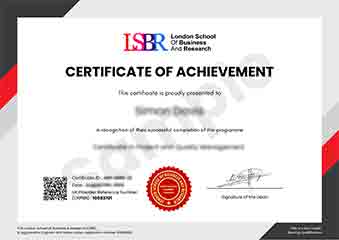
Sample Certificate
Preview the certificate you'll receive upon successful completion of this program.
Get Free Course Info
Enter your details and we'll send you a comprehensive course information pack straight to your inbox.
Employer Sponsored Training
Let your employer invest in your professional development. Request a corporate invoice and get your training funded.
Request Corporate InvoiceWhat People Say About Us
Hear from our students about their experience with the Executive Development Programme in Automating Content Classification at FlexiCourses.
Oliver Davies
United Kingdom"The course content was incredibly detailed and well-structured, providing a solid foundation in automating content classification that has significantly enhanced my ability to handle complex data sets. I've gained practical skills that are directly applicable to my role, opening up new opportunities for improving our content management systems."
Anna Schmidt
Germany"The Executive Development Programme in Automating Content Classification has significantly enhanced my ability to handle large-scale data efficiently, making my work more streamlined and effective. This skill has not only improved my current role but also opened up new opportunities for career advancement in my organization."
Charlotte Williams
United Kingdom"The course structure is well-organized, providing a comprehensive overview of content classification techniques that directly apply to real-world scenarios, significantly enhancing my professional skills in automating content management."