

Executive Development Programme in Developing Python Microservices Architecture
This programme equips executives with the skills to lead the development of efficient Python microservices architecture, enhancing scalability and agility.
Executive Development Programme in Developing Python Microservices Architecture
Programme Overview
This course is tailored for mid-to-senior level software developers and IT managers aiming to enhance their skills in building scalable and efficient Python microservices architectures. Participants will gain hands-on experience in designing, developing, and deploying microservices using Python, Docker, and Kubernetes. The curriculum covers essential topics such as service discovery, API gateway implementation, and CI/CD pipelines.
Upon completion, attendees will be proficient in creating robust microservices that adhere to best practices, ensuring they can lead projects that deliver high performance and reliability in modern cloud environments.
What You'll Learn
Embark on a transformative journey with our Executive Development Programme in Developing Python Microservices Architecture. This intensive program equips you with the cutting-edge skills needed to design and implement scalable, efficient Python microservices. Dive into real-world projects, learn from industry experts, and gain hands-on experience with the latest tools and frameworks. Perfect for professionals aiming to lead or advance in tech roles, this program opens doors to leadership positions and high-demand jobs. Enhance your resume, boost your career prospects, and become a vital asset in the tech industry. Join us and make your mark in the world of modern software development.
Programme Highlights
Industry-Aligned Curriculum
Developed with industry leaders to ensure practical, job-ready skills valued by employers worldwide.
Globally Recognised Certificate
Recognised by employers across 180+ countries as a mark of professional excellence.
Flexible Online Learning
Study at your own pace with lifetime access to all course materials and updates.
Instant Access
Start learning immediately — no application process or waiting period required.
Constantly Updated Content
Stay ahead with the latest industry trends, best practices, and emerging insights.
Career Advancement
87% of graduates report measurable career progression within 6 months of completion.
Topics Covered
- 1. Introduction to Python Microservices: Learners will understand the basics of microservices architecture, the benefits of using Python for microservices, and how to set up a basic Python microservice. Practical skills include setting up a Python development environment and creating a simple microservice using Flask.
- 2. Design Patterns for Microservices: This module covers common design patterns used in microservices such as service discovery, load balancing, and circuit breakers. Learners will learn to design and implement these patterns using Python libraries and tools. Practical skills include implementing service discovery with Consul and load balancing with Nginx.
- 3. Testing Python Microservices: Focuses on writing unit, integration, and end-to-end tests for Python microservices. Learners will master using Pytest, Flask-Testing, and other tools to ensure microservices are reliable and robust. Practical skills include writing comprehensive test cases and using test automation tools.
- 4. Security in Microservices: Discusses security best practices for Python microservices, including authentication, authorization, and secure API design. Learners will learn to implement JWT and OAuth2 in their microservices. Practical skills include securing a Flask application with Flask-JWT-Extended and integrating OAuth2 with OAuthlib.
- 5. Deployment Strategies for Microservices: Introduces various deployment strategies for microservices, including containerization with Docker and orchestration with Kubernetes. Learners will learn to build, test, and deploy microservices using Docker and Kubernetes. Practical skills include creating Docker images, deploying services with Kubernetes, and using Helm for application packaging.
- 6. Monitoring and Logging Microservices: Covers monitoring and logging practices for microservices, including metrics collection, logging, and alerting. Learners will learn to use Prometheus for metrics and ELK Stack for logging. Practical skills include setting up Prometheus and Grafana for monitoring, and integrating ELK Stack for logging and searching log data.
- 7. Advanced Python Features in Microservices: Explores advanced Python features and libraries that enhance microservices development, such as asynchronous programming, functional programming, and microframeworks. Learners will master using asyncio, Flask-SocketIO, and other advanced Python tools. Practical skills include building asynchronous microservices and implementing functional programming patterns.
- 8. Building Microservices with Flask and FastAPI: Focuses on building microservices using Flask and FastAPI, two popular Python web frameworks. Learners will learn to leverage the strengths of both frameworks to create efficient and scalable microservices. Practical skills include building RESTful APIs with Flask and FastAPI, and integrating third-party services using both frameworks.
- 9. Microservices with SQLAlchemy and Django ORM: Covers using database ORM tools in microservices development, specifically SQLAlchemy and Django ORM. Learners will learn to design and implement database models and query databases efficiently. Practical skills include setting up SQLAlchemy models, querying databases with SQLAlchemy, and using Django ORM in microservices.
- 10. DevOps for Python Microservices: Introduces DevOps best practices for Python microservices, including CI/CD pipelines, continuous integration, and continuous deployment. Learners will learn to set up and automate CI/CD pipelines using GitHub Actions and Jenkins. Practical skills include setting up CI/CD pipelines, automating deployments, and using Docker for container-based deployments.
What You Get When You Enroll
Secure checkout • Instant access • Certificate included
Key Facts
Audience: Software engineers, architects, managers
Prerequisites: Basic Python, REST APIs knowledge
Outcomes: Master microservices, optimize Python apps, enhance team leadership
Ready to get started?
Join thousands of professionals who already took the next step. Enroll now and get instant access.
Enroll Now — $199Why This Course
Gain specialized skills in building scalable and efficient Python microservices, enhancing career prospects in tech and development roles.
Learn from industry experts who provide practical insights and best practices for microservices architecture, accelerating learning and application.
Develop a portfolio of projects that demonstrate proficiency in Python microservices, making it easier to stand out in job applications and interviews.
Your Path to Certification
Trusted by Professionals Worldwide
Course Brochure
Download our comprehensive course brochure with all details
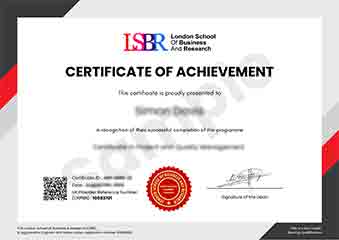
Sample Certificate
Preview the certificate you'll receive upon successful completion of this program.
Get Free Course Info
Enter your details and we'll send you a comprehensive course information pack straight to your inbox.
Employer Sponsored Training
Let your employer invest in your professional development. Request a corporate invoice and get your training funded.
Request Corporate InvoiceWhat People Say About Us
Hear from our students about their experience with the Executive Development Programme in Developing Python Microservices Architecture at FlexiCourses.
James Thompson
United Kingdom"The course content was incredibly thorough and well-structured, providing a solid foundation in Python microservices architecture that I can directly apply to real-world projects. Gaining hands-on experience in building and deploying microservices has significantly enhanced my technical skills and opened up new career opportunities in the field."
Liam O'Connor
Australia"The Executive Development Programme in Developing Python Microservices Architecture has significantly enhanced my ability to build scalable and efficient microservices, directly translating into more robust solutions at work. This course has not only deepened my technical skills but also provided me with practical insights that are highly relevant in today's fast-paced tech industry, opening up new career opportunities."
Brandon Wilson
United States"The course structure was meticulously organized, providing a seamless transition from foundational concepts to advanced topics in Python microservices, which significantly enhanced my understanding and practical skills in this area. The comprehensive content and real-world applications have been instrumental in my professional growth, equipping me with the knowledge to tackle complex projects effectively."