

Executive Development Programme in DevOps Security Practices for Code Integrity
This programme enhances executives' understanding of DevOps security practices to ensure code integrity, fostering secure software development and deployment.
Executive Development Programme in DevOps Security Practices for Code Integrity
Programme Overview
This course is tailored for senior IT professionals, CTOs, and executives seeking to enhance their understanding of DevOps security practices to ensure code integrity. Participants will learn to implement secure coding practices, integrate security into DevOps pipelines, and adopt risk management strategies to protect against vulnerabilities.
Upon completion, attendees will be equipped to lead their teams in adopting a secure DevOps culture, understand the latest security tools and frameworks, and develop policies to ensure compliance with industry standards and regulations, thereby safeguarding their organization's digital assets.
What You'll Learn
Dive into the future of secure software development with our Executive Development Programme in DevOps Security Practices for Code Integrity. This intensive course equips you with advanced DevOps security techniques, ensuring your code is robust and resilient against threats. You'll learn to implement continuous integration and delivery, secure coding practices, and advanced security testing. Gain hands-on experience with the latest tools and frameworks, and understand how to integrate security into every phase of the development lifecycle. Ideal for professionals looking to advance in cybersecurity and DevOps roles, this program offers unparalleled insights and practical skills. Join us to transform your career and contribute to building secure, high-performing systems.
Programme Highlights
Industry-Aligned Curriculum
Developed with industry leaders to ensure practical, job-ready skills valued by employers worldwide.
Globally Recognised Certificate
Recognised by employers across 180+ countries as a mark of professional excellence.
Flexible Online Learning
Study at your own pace with lifetime access to all course materials and updates.
Instant Access
Start learning immediately — no application process or waiting period required.
Constantly Updated Content
Stay ahead with the latest industry trends, best practices, and emerging insights.
Career Advancement
87% of graduates report measurable career progression within 6 months of completion.
Topics Covered
- 1. Introduction to DevOps Security: Learners will understand the fundamental principles of DevOps and security, including the importance of integrating security practices into the software development lifecycle. They will gain skills in identifying common security risks and vulnerabilities.
- 2. Code Integrity Foundation: This module covers the basics of code integrity, including checksums, digital signatures, and tools for verifying code authenticity. Learners will be able to use these tools to ensure that code has not been tampered with during transit or storage.
- 3. Secure Coding Practices: Learners will study best practices for writing secure code, including techniques for preventing common vulnerabilities such as SQL injection, cross-site scripting, and buffer overflows. They will also learn how to use static and dynamic analysis tools to detect and fix security issues.
- 4. DevOps Security Tools and Technologies: This module focuses on the tools and technologies used in DevOps security, such as CI/CD pipelines with integrated security checks, automated testing frameworks, and security orchestration, automation, and response (SOAR) platforms. Learners will gain hands-on experience with these tools.
- 5. Secure Configuration Management: Learners will learn how to manage secure configurations for infrastructure and applications, including secure default settings, secure permission management, and secure configuration practices for common technologies like Docker, Kubernetes, and AWS. They will also practice applying these configurations in a real-world scenario.
- 6. Continuous Integration and Continuous Deployment (CI/CD) Security: This module covers the integration of security into CI/CD pipelines, including automated security testing, security gateways, and security policies. Learners will understand how to build secure CI/CD pipelines that automatically detect and prevent security issues.
- 7. Threat Modeling and Risk Assessment: Learners will learn how to conduct threat modeling and risk assessments to identify potential security threats and vulnerabilities in software systems. They will practice creating threat models and risk assessments for sample applications.
- 8. Incident Response and Security Audits: This module covers incident response planning and security audits, including how to respond to security incidents and how to conduct thorough security audits to ensure compliance with security standards and regulations. Learners will practice developing incident response plans and conducting security audits.
- 9. Advanced DevOps Security Practices: Learners will explore advanced security practices in DevOps, including zero trust architectures, container security, and security in microservices. They will gain skills in designing and implementing secure architectures for modern applications.
- 10. Security Compliance and Regulations: This module focuses on security compliance and regulations, including how to ensure compliance with laws and industry standards such as GDPR, HIPAA, and PCI-DSS. Learners will learn how to integrate compliance requirements into their DevOps processes and practices.
What You Get When You Enroll
Secure checkout • Instant access • Certificate included
Key Facts
Audience: Experienced tech leaders, managers
Prerequisites: Basic DevOps knowledge, security awareness
Outcomes: Enhanced security practices, improved code integrity, stronger leadership skills
Ready to get started?
Join thousands of professionals who already took the next step. Enroll now and get instant access.
Enroll Now — $199Why This Course
Enhance security practices: Gain in-depth knowledge of DevOps security measures to ensure code integrity, protecting against vulnerabilities and threats.
Improve collaboration: Learn to integrate security into the development lifecycle, fostering better teamwork and communication between developers and security professionals.
Boost career prospects: Acquire specialized skills that are in high demand, making you a more competitive candidate in the job market and opening up advanced career opportunities.
Your Path to Certification
Trusted by Professionals Worldwide
Course Brochure
Download our comprehensive course brochure with all details
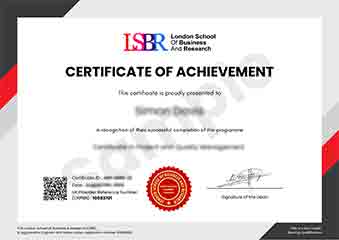
Sample Certificate
Preview the certificate you'll receive upon successful completion of this program.
Get Free Course Info
Enter your details and we'll send you a comprehensive course information pack straight to your inbox.
Employer Sponsored Training
Let your employer invest in your professional development. Request a corporate invoice and get your training funded.
Request Corporate InvoiceWhat People Say About Us
Hear from our students about their experience with the Executive Development Programme in DevOps Security Practices for Code Integrity at FlexiCourses.
James Thompson
United Kingdom"The course content was incredibly thorough and well-researched, providing a deep understanding of DevOps security practices that are crucial for maintaining code integrity. Gaining hands-on experience with tools and techniques that can be directly applied in real-world scenarios has been incredibly beneficial for my career."
James Thompson
United Kingdom"This course has been instrumental in enhancing my understanding of DevOps security practices, making my skills more relevant in the industry. It has not only improved my ability to ensure code integrity but also opened up new career opportunities in secure software development."
Brandon Wilson
United States"The course structure was meticulously organized, providing a seamless transition from theoretical concepts to practical applications in DevOps security practices, which significantly enhanced my understanding and approach to code integrity. The comprehensive content and real-world examples were particularly beneficial for my professional growth, equipping me with the skills to implement secure coding practices in a dynamic development environment."