

Executive Development Programme in Equipment Failure Analysis Techniques
Enhance leadership skills and equip executives with advanced techniques for analyzing and preventing equipment failures to drive operational excellence.
Executive Development Programme in Equipment Failure Analysis Techniques
Programme Overview
This course is designed for equipment engineers, maintenance managers, and technical directors seeking to enhance their skills in analyzing and preventing equipment failures. Participants will gain proficiency in advanced failure analysis techniques, including root cause analysis, materials testing, and predictive maintenance strategies.
By the end of the programme, attendees will be able to conduct thorough failure investigations, implement effective corrective actions, and develop strategies to extend equipment life, thereby reducing downtime and improving operational efficiency.
What You'll Learn
Dive into the cutting-edge world of equipment failure analysis with our comprehensive Executive Development Programme. This program equips professionals with advanced techniques to diagnose, prevent, and solve complex equipment failures. Ideal for those in engineering, maintenance, and reliability roles, it opens doors to leadership positions and innovation in industry. Through hands-on labs and real-world case studies, you’ll master the latest tools and methodologies. Join us to transform your problem-solving skills and drive operational excellence. This program is not just about learning; it’s about revolutionizing your career and contributing to safer, more efficient operations.
Programme Highlights
Industry-Aligned Curriculum
Developed with industry leaders to ensure practical, job-ready skills valued by employers worldwide.
Globally Recognised Certificate
Recognised by employers across 180+ countries as a mark of professional excellence.
Flexible Online Learning
Study at your own pace with lifetime access to all course materials and updates.
Instant Access
Start learning immediately — no application process or waiting period required.
Constantly Updated Content
Stay ahead with the latest industry trends, best practices, and emerging insights.
Career Advancement
87% of graduates report measurable career progression within 6 months of completion.
Topics Covered
- 1. Introduction to Equipment Failure Analysis: Learners will study the fundamental principles of equipment failure analysis, including definitions, types of failures, and the importance of proactive maintenance. They will gain skills in identifying common failure modes and understanding the basic tools and techniques used in the analysis process.
- 2. Root Cause Analysis Techniques: This module covers various root cause analysis techniques such as 5 Whys, Fishbone Diagrams, and Pareto Analysis. Learners will learn how to conduct a thorough investigation to identify the underlying causes of equipment failures, enhancing their analytical and problem-solving skills.
- 3. Failure Modes and Effects Analysis (FMEA): Learners will explore FMEA methodologies, including risk priority numbers (RPNs) and how to apply FMEA in a practical setting to prevent equipment failures. They will gain the skills to perform FMEA on different types of equipment and systems.
- 4. Non-Destructive Testing Methods: This module focuses on non-destructive testing (NDT) techniques such as ultrasonic testing, radiography, and magnetic particle inspection. Learners will understand the principles and applications of NDT and perform basic NDT operations to assess equipment integrity.
- 5. Advanced Materials Science for Equipment Analysis: Learners will delve into advanced materials science concepts relevant to equipment failure analysis, including metallurgy, failure mechanisms in materials, and how material properties affect equipment performance. They will gain knowledge on selecting appropriate materials based on performance and reliability requirements.
- 6. Case Studies in Equipment Failure Analysis: Through real-world case studies, learners will analyze historical equipment failures, understand the contributing factors, and learn from past mistakes. This module enhances their critical thinking and decision-making skills in complex scenarios.
- 7. Reliability Centered Maintenance (RCM) Strategies: This module introduces RCM principles and strategies, including how to perform RCM analyses, develop maintenance strategies, and integrate RCM with other maintenance and reliability programs. Learners will learn to optimize maintenance activities to improve equipment reliability.
- 8. Predictive Maintenance and Condition Monitoring: Learners will study predictive maintenance techniques and condition monitoring systems, including vibration analysis, oil analysis, and thermal imaging. They will gain skills in using data analytics to predict equipment failures and implement proactive maintenance plans.
- 9. Advanced Failure Investigation Techniques: This module covers advanced failure investigation techniques such as Failure Modes and Effects Analysis (FMEA) and Reliability Centered Maintenance (RCM). Learners will learn to apply these techniques in complex industrial environments and understand their role in maintaining high equipment reliability.
- 10. Leadership in Equipment Failure Analysis: In this final module, learners will explore the role of leadership in equipment failure analysis, including strategic planning, team management, and stakeholder communication. They will develop skills to lead and mentor teams in failure analysis projects and drive organizational change.
What You Get When You Enroll
Secure checkout • Instant access • Certificate included
Key Facts
Audience: Engineers, technicians, managers
Prerequisites: Basic understanding of equipment
Outcomes: Enhanced failure analysis skills, improved problem-solving abilities
Ready to get started?
Join thousands of professionals who already took the next step. Enroll now and get instant access.
Enroll Now — $199Why This Course
Gain specialized skills in identifying and analyzing equipment failures, enhancing operational efficiency and reducing downtime.
Access expert-led training that equips you with the latest techniques and tools for effective failure analysis, improving problem-solving capabilities.
Network with industry professionals and peers, fostering knowledge sharing and collaboration opportunities that can lead to innovative solutions.
Your Path to Certification
Trusted by Professionals Worldwide
Course Brochure
Download our comprehensive course brochure with all details
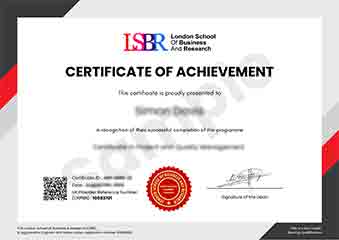
Sample Certificate
Preview the certificate you'll receive upon successful completion of this program.
Get Free Course Info
Enter your details and we'll send you a comprehensive course information pack straight to your inbox.
Employer Sponsored Training
Let your employer invest in your professional development. Request a corporate invoice and get your training funded.
Request Corporate InvoiceWhat People Say About Us
Hear from our students about their experience with the Executive Development Programme in Equipment Failure Analysis Techniques at FlexiCourses.
Oliver Davies
United Kingdom"The course content was incredibly thorough and well-researched, providing a solid foundation in equipment failure analysis techniques that have already proven invaluable in my work. I've gained practical skills that allow me to diagnose and resolve issues more effectively, significantly enhancing my professional capabilities."
Zoe Williams
Australia"The Executive Development Programme in Equipment Failure Analysis Techniques has significantly enhanced my ability to diagnose and resolve complex equipment issues, making me a more valuable asset in my organization. This program has not only deepened my technical skills but also improved my decision-making processes, leading to faster problem resolution and cost savings."
Ruby McKenzie
Australia"The course structure was meticulously organized, providing a clear path from foundational concepts to advanced techniques in equipment failure analysis, which greatly enhanced my understanding and practical skills. The comprehensive content and real-world applications have significantly contributed to my professional growth, equipping me with valuable insights and tools for effective problem-solving in my field."