

Executive Development Programme in Evidence-Based Thinking: Evaluating Information Sources
This programme enhances executives' ability to evaluate information sources critically, making evidence-based decisions with improved strategic outcomes.
Executive Development Programme in Evidence-Based Thinking: Evaluating Information Sources
Programme Overview
This course is designed for executives and managers seeking to enhance their decision-making skills through evidence-based thinking. Participants will learn to critically evaluate information sources, distinguishing between reliable and misleading data, and apply this knowledge to improve strategic planning and problem-solving in their organizations.
By the end of the program, learners will gain the ability to identify credible sources, assess the validity of information, and integrate evidence into business strategies and operations, ultimately leading to more informed and effective leadership.
What You'll Learn
Dive into the world of informed leadership with the Executive Development Programme in Evidence-Based Thinking: Evaluating Information Sources. This program equips you with the critical skills to navigate a complex information landscape, ensuring you make data-driven decisions that propel your career. You'll learn to identify reliable sources, assess the validity of information, and integrate evidence into strategic planning. Ideal for executives aiming to enhance their decision-making and leadership capabilities, this program offers personalized coaching and peer networking. Join our community of visionary leaders and emerge with the ability to drive innovation and sustainability in your organization. Transform your approach to leadership and boost your career with evidence at the heart of every decision.
Programme Highlights
Industry-Aligned Curriculum
Developed with industry leaders to ensure practical, job-ready skills valued by employers worldwide.
Globally Recognised Certificate
Recognised by employers across 180+ countries as a mark of professional excellence.
Flexible Online Learning
Study at your own pace with lifetime access to all course materials and updates.
Instant Access
Start learning immediately — no application process or waiting period required.
Constantly Updated Content
Stay ahead with the latest industry trends, best practices, and emerging insights.
Career Advancement
87% of graduates report measurable career progression within 6 months of completion.
Topics Covered
- 1. Introduction to Evidence-Based Thinking: Learners will study the foundational concepts of evidence-based thinking, including critical thinking, logical reasoning, and the importance of evidence in decision-making. They will gain skills in identifying and questioning assumptions, evaluating arguments, and forming well-supported conclusions.
- 2. Understanding Information Sources: This module explores various types of information sources, their characteristics, and how to evaluate their credibility and reliability. Learners will learn to distinguish between primary, secondary, and tertiary sources and understand the role of peer review in scholarly research.
- 3. Critical Analysis of News Media: Learners will analyze the structure and biases of news media, including print, broadcast, and digital platforms. They will develop skills in identifying and critiquing journalistic practices, propaganda techniques, and the impact of media on public opinion.
- 4. Evaluating Online Information: This module focuses on the unique challenges of evaluating information found online, including distinguishing between reliable and unreliable sources, understanding the principles of digital literacy, and recognizing online misinformation and fake news.
- 5. Assessing Scientific Research: Learners will study the fundamentals of scientific research, including research design, statistical analysis, and the peer review process. They will learn how to critically evaluate research papers and understand the importance of reproducibility and peer feedback in scientific advancements.
- 6. Analyzing Data and Statistics: This module covers the basics of data analysis and statistical methods, including descriptive and inferential statistics. Learners will gain practical skills in interpreting data, understanding statistical significance, and using tools like Excel or Python for data analysis.
- 7. Evaluating Complex Systems and Evidence: Learners will explore how to analyze complex systems and evidence in various contexts, such as policy-making, business, and healthcare. They will learn to integrate multiple sources of evidence, consider systemic factors, and develop evidence-based recommendations.
- 8. Advanced Techniques in Evidence-Based Decision Making: This module delves into advanced methods for integrating evidence into decision-making processes, including scenario planning, risk assessment, and stakeholder engagement. Learners will apply these techniques to real-world case studies and develop a strategic approach to evidence-based decision making.
- 9. Building a Culture of Evidence-Based Thinking: This module focuses on fostering a culture of evidence-based thinking within organizations and communities. Learners will learn how to promote critical thinking skills, encourage open communication, and create a supportive environment for evidence-based decision making.
- 10. Professional Development and Application of Skills: The final module provides learners with opportunities to apply their newfound skills in real-world contexts. They will work on capstone projects, participate in peer reviews, and engage in professional development activities to enhance their career prospects and contribute to evidence-based practices in their field.
What You Get When You Enroll
Secure checkout • Instant access • Certificate included
Key Facts
Target professionals seeking leadership roles
No specific prerequisites required
Enhances critical thinking skills
Teaches how to evaluate information sources
Develops evidence-based decision-making abilities
Ready to get started?
Join thousands of professionals who already took the next step. Enroll now and get instant access.
Enroll Now — $199Why This Course
Learners will develop critical skills to evaluate information sources effectively, ensuring they make informed decisions.
By focusing on evidence-based thinking, participants will enhance their analytical abilities, leading to better problem-solving outcomes.
This program equips individuals with the tools to navigate a complex information landscape, fostering a culture of evidence-driven decision-making.
Your Path to Certification
Trusted by Professionals Worldwide
Course Brochure
Download our comprehensive course brochure with all details
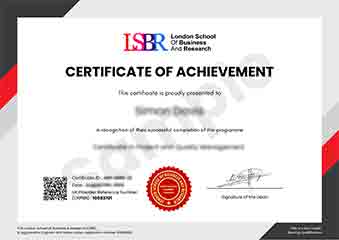
Sample Certificate
Preview the certificate you'll receive upon successful completion of this program.
Get Free Course Info
Enter your details and we'll send you a comprehensive course information pack straight to your inbox.
Employer Sponsored Training
Let your employer invest in your professional development. Request a corporate invoice and get your training funded.
Request Corporate InvoiceWhat People Say About Us
Hear from our students about their experience with the Executive Development Programme in Evidence-Based Thinking: Evaluating Information Sources at FlexiCourses.
Charlotte Williams
United Kingdom"The course provided high-quality material that significantly enhanced my ability to critically evaluate information sources, a skill that has been invaluable in my professional life. I gained practical tools to apply evidence-based thinking in decision-making processes, which has already improved the outcomes of projects I've been involved in."
Greta Fischer
Germany"This course has significantly enhanced my ability to critically evaluate information sources, a skill that is incredibly valuable in my role as a data analyst. It has not only improved my work but also opened up new opportunities for career advancement in my organization."
Hans Weber
Germany"The course structure was meticulously organized, making it easy to navigate through complex topics, and the content was incredibly comprehensive, equipping me with the skills to critically evaluate information sources in various professional contexts."