

Executive Development Programme in Geospatial Technologies for Infrastructure Development
This programme develops executives' skills in leveraging geospatial technologies for strategic infrastructure planning and decision-making.
Executive Development Programme in Geospatial Technologies for Infrastructure Development
Programme Overview
This course is designed for senior executives, urban planners, and policymakers involved in infrastructure development. It provides a deep understanding of how geospatial technologies can be leveraged to enhance decision-making processes, optimize resource allocation, and ensure sustainable infrastructure projects.
Participants will gain practical skills in using geospatial tools and technologies, including GIS, remote sensing, and big data analytics. They will learn to apply these tools to address complex infrastructure challenges, such as urban planning, disaster management, and environmental sustainability, thereby contributing to more efficient and effective infrastructure development.
What You'll Learn
Dive into the future of infrastructure with our Executive Development Programme in Geospatial Technologies for Infrastructure Development. This cutting-edge course equips you with advanced skills in GIS, remote sensing, and big data analytics, transforming raw data into strategic insights for smarter urban planning and sustainable development. Join a global network of industry leaders, learn from expert faculty, and gain hands-on experience with state-of-the-art tools and technologies. Whether you're a seasoned professional or a budding manager, this program opens doors to high-demand roles in urban planning, environmental management, and tech consultancy. Transform data into destiny with this transformative program, where innovation meets infrastructure.
Programme Highlights
Industry-Aligned Curriculum
Developed with industry leaders to ensure practical, job-ready skills valued by employers worldwide.
Globally Recognised Certificate
Recognised by employers across 180+ countries as a mark of professional excellence.
Flexible Online Learning
Study at your own pace with lifetime access to all course materials and updates.
Instant Access
Start learning immediately — no application process or waiting period required.
Constantly Updated Content
Stay ahead with the latest industry trends, best practices, and emerging insights.
Career Advancement
87% of graduates report measurable career progression within 6 months of completion.
Topics Covered
- 1. Geospatial Principles and Concepts: Learners will study the foundational concepts of geospatial technologies, including coordinate systems and projections, and gain an understanding of how these principles apply in infrastructure development. They will learn to interpret geospatial data and use it effectively in real-world scenarios.
- 2. Remote Sensing and Image Analysis: This module covers the acquisition, processing, and analysis of remote sensing data. Learners will understand how to use remote sensing technologies to assess infrastructure conditions and monitor changes over time, enhancing their ability to make informed decisions in infrastructure planning and management.
- 3. GIS Fundamentals: Learners will explore Geographic Information Systems (GIS) and master basic GIS operations, including data capture, editing, and analysis. They will gain practical skills in creating and managing geospatial databases and using GIS for infrastructure planning and design.
- 4. Advanced GIS Techniques: This module delves into more complex GIS techniques, such as spatial modeling, network analysis, and 3D visualization. Learners will develop the ability to apply these advanced methods to solve complex infrastructure problems and support decision-making processes.
- 5. Geospatial Data Management: Learners will study best practices for managing geospatial data, including data quality assessment, data integration, and database management. They will learn to ensure data accuracy and consistency, which is crucial for effective infrastructure development.
- 6. Geospatial Applications in Infrastructure Planning: This module focuses on using geospatial technologies in various aspects of infrastructure planning, including land use analysis, transportation network optimization, and environmental impact assessment. Learners will apply their knowledge to real-world case studies and develop solutions for planning and designing sustainable infrastructure.
- 7. Geospatial Analysis for Infrastructure Maintenance and Monitoring: Learners will learn how to use geospatial tools to monitor and maintain infrastructure assets, including road networks, bridges, and utilities. They will understand the importance of regular monitoring and the role of geospatial technologies in predictive maintenance and risk management.
- 8. Geospatial Data Security and Privacy: This module covers the principles and practices of securing geospatial data and ensuring privacy. Learners will learn about data encryption, access control, and ethical considerations in handling sensitive geospatial information.
- 9. Geospatial Technology Integration: Learners will explore how to integrate geospatial technologies with other information systems, such as CAD and BIM, to create a comprehensive infrastructure management system. They will gain practical experience in seamless data exchange and interoperability across different software platforms.
- 10. Leadership and Strategic Implementation of Geospatial Technologies: This final module focuses on the strategic use of geospatial technologies in leadership roles. Learners will develop skills in project management, stakeholder communication, and strategic planning to effectively implement geospatial solutions in infrastructure development projects.
What You Get When You Enroll
Secure checkout • Instant access • Certificate included
Key Facts
Audience: Mid-career professionals in infrastructure
Prerequisites: Basic understanding of geospatial technologies
Outcomes: Advanced geospatial skills, enhanced project management
Ready to get started?
Join thousands of professionals who already took the next step. Enroll now and get instant access.
Enroll Now — $199Why This Course
Gain specialized skills in geospatial technologies, essential for modern infrastructure projects.
Access to industry-relevant training and networking opportunities with leading professionals in the field.
Enhance career prospects by acquiring knowledge in applying geospatial technologies to infrastructure development.
Your Path to Certification
Trusted by Professionals Worldwide
Course Brochure
Download our comprehensive course brochure with all details
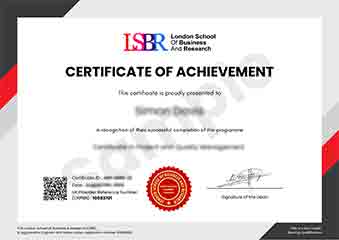
Sample Certificate
Preview the certificate you'll receive upon successful completion of this program.
Get Free Course Info
Enter your details and we'll send you a comprehensive course information pack straight to your inbox.
Employer Sponsored Training
Let your employer invest in your professional development. Request a corporate invoice and get your training funded.
Request Corporate InvoiceWhat People Say About Us
Hear from our students about their experience with the Executive Development Programme in Geospatial Technologies for Infrastructure Development at FlexiCourses.
Charlotte Williams
United Kingdom"The course content was incredibly comprehensive, providing deep insights into geospatial technologies and their application in infrastructure development. I gained substantial practical skills that will undoubtedly enhance my career prospects in the field."
Wei Ming Tan
Singapore"The Executive Development Programme in Geospatial Technologies for Infrastructure Development has significantly enhanced my technical skills and industry knowledge, making me more competitive in the job market. This program has provided practical applications that I can directly apply to real-world projects, leading to career advancement opportunities."
Isabella Dubois
Canada"The course structure was meticulously organized, providing a seamless transition from theoretical concepts to practical applications in geospatial technologies, which significantly enhanced my understanding and prepared me for real-world infrastructure development challenges."