

Executive Development Programme in Inventory Classification and Prioritization
Enhance your professional profile with advanced inventory classification and prioritization competencies. Stand out in today's competitive market.
Executive Development Programme in Inventory Classification and Prioritization
Programme Overview
This course is designed for senior inventory managers and logistics executives seeking to enhance their decision-making skills in inventory classification and prioritization. Participants will gain a deep understanding of advanced inventory management techniques, including ABC analysis, safety stock optimization, and dynamic inventory modeling.
Through case studies and practical exercises, learners will develop strategies to reduce inventory holding costs, improve supply chain efficiency, and ensure operational resilience. By the end, they will be able to implement more effective inventory management practices that drive business performance and competitive advantage.
What You'll Learn
Dive into the world of efficient inventory management with our Executive Development Programme in Inventory Classification and Prioritization. This intensive program equips you with advanced techniques to optimize stock levels, reduce costs, and enhance supply chain efficiency. You'll learn to classify items using scientific frameworks, prioritize effectively for maximum impact, and implement strategies that drive business growth. Perfect for professionals aiming to advance in operations, logistics, or supply chain management, this program offers personalized coaching, real-world case studies, and networking opportunities with industry leaders. Transform your inventory management skills and unlock new career horizons in a dynamic and rewarding field. Enroll now and lead the way in inventory excellence!
Programme Highlights
Industry-Aligned Curriculum
Developed with industry leaders to ensure practical, job-ready skills valued by employers worldwide.
Globally Recognised Certificate
Recognised by employers across 180+ countries as a mark of professional excellence.
Flexible Online Learning
Study at your own pace with lifetime access to all course materials and updates.
Instant Access
Start learning immediately — no application process or waiting period required.
Constantly Updated Content
Stay ahead with the latest industry trends, best practices, and emerging insights.
Career Advancement
87% of graduates report measurable career progression within 6 months of completion.
Topics Covered
- 1. Introduction to Inventory Classification and Prioritization: Learners will explore the basics of inventory management and the importance of classification and prioritization. They will gain foundational knowledge on different inventory classification methods and how these methods impact business operations.
- 2. Classification Techniques Overview: This module covers various classification techniques such as ABC analysis, XYZ analysis, and other inventory classification models. Learners will understand how to apply these techniques to categorize inventory items based on their value and importance.
- 3. Inventory Prioritization Strategies: Focusing on strategic decision-making, learners will study different prioritization strategies, including risk-based, order-based, and demand-based approaches. Practical skills include creating prioritization matrices and implementing these strategies in real-world scenarios.
- 4. Advanced Inventory Classification Models: In this module, learners delve into advanced classification models, such as CVA (Criticality Valuation Analysis) and TCA (Total Cost Analysis). They will learn to analyze inventory items based on a broader spectrum of factors, enhancing their ability to make informed decisions.
- 5. Inventory Data Analysis and Reporting: Here, learners will gain proficiency in using data analytics tools to analyze inventory data. They will learn to create detailed reports and dashboards to monitor inventory performance and provide insights for better decision-making.
- 6. Inventory Optimization Techniques: This module introduces various optimization techniques for inventory management, such as just-in-time (JIT), vendor-managed inventory (VMI), and collaborative inventory management. Practical exercises focus on applying these techniques to improve inventory efficiency and reduce costs.
- 7. Risk Management in Inventory Classification and Prioritization: Learners will study how to identify and manage risks associated with inventory classification and prioritization. They will learn risk assessment methodologies and develop strategies to mitigate potential risks in inventory management.
- 8. Case Studies and Real-World Applications: Through detailed case studies, learners will apply the concepts learned in earlier modules to real-world scenarios. This module emphasizes practical problem-solving and decision-making skills in diverse business environments.
- 9. Strategic Inventory Planning and Forecasting: This module covers the integration of inventory classification and prioritization with long-term strategic planning. Learners will develop skills in creating forecast models and aligning inventory strategies with overall business objectives.
- 10. Leading and Managing Inventory Teams: In the final module, learners will focus on leadership and management skills necessary for overseeing inventory teams. Topics include team building, communication, and conflict resolution in the context of inventory management.
What You Get When You Enroll
Secure checkout • Instant access • Certificate included
Key Facts
Audience: Supply chain professionals
Prerequisites: Basic inventory management knowledge
Outcomes: Enhanced classification skills, improved prioritization strategies
Ready to get started?
Join thousands of professionals who already took the next step. Enroll now and get instant access.
Enroll Now — $199Why This Course
Gain specialized skills in inventory management, enhancing your ability to optimize stock levels and reduce costs.
Learn advanced techniques for classifying and prioritizing inventory, leading to improved operational efficiency.
Develop a strategic approach to inventory control, ensuring better resource allocation and stronger business performance.
Your Path to Certification
Trusted by Professionals Worldwide
Course Brochure
Download our comprehensive course brochure with all details
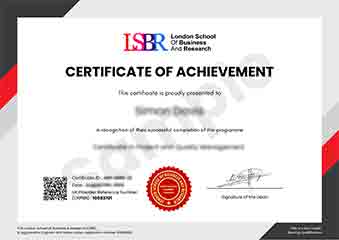
Sample Certificate
Preview the certificate you'll receive upon successful completion of this program.
Get Free Course Info
Enter your details and we'll send you a comprehensive course information pack straight to your inbox.
Employer Sponsored Training
Let your employer invest in your professional development. Request a corporate invoice and get your training funded.
Request Corporate InvoiceWhat People Say About Us
Hear from our students about their experience with the Executive Development Programme in Inventory Classification and Prioritization at FlexiCourses.
James Thompson
United Kingdom"The course content was exceptionally detailed and well-structured, providing a solid foundation in inventory classification and prioritization techniques that have directly enhanced my ability to manage stock more efficiently. Gaining these practical skills has significantly boosted my confidence in handling inventory challenges in a professional setting."
Isabella Dubois
Canada"The Executive Development Programme in Inventory Classification and Prioritization has significantly enhanced my ability to manage inventory more efficiently, leading to reduced costs and improved supply chain performance. This course has not only provided me with a deeper understanding of inventory management but also equipped me with practical tools that I can apply directly in my role, paving the way for career advancement."
Wei Ming Tan
Singapore"The course structure was meticulously organized, making it easy to follow and integrate new concepts into my existing knowledge. The content was highly comprehensive, covering a wide range of inventory classification and prioritization techniques with numerous real-world applications that significantly enhanced my professional growth."