

Executive Development Programme in Machine Learning for Molecular Classification
This program equips executives with advanced machine learning skills for molecular classification, enhancing decision-making and innovation in life sciences.
Executive Development Programme in Machine Learning for Molecular Classification
Programme Overview
This program is designed for senior executives, researchers, and industry leaders in the pharmaceutical, biotech, and healthcare sectors. It equips participants with a deep understanding of machine learning techniques and their application in molecular classification, enabling them to drive innovation and improve decision-making processes.
Upon completion, participants will gain expertise in selecting and applying appropriate machine learning algorithms for molecular data, interpret complex molecular classification results, and leverage these insights to accelerate drug discovery and development, enhance personalized medicine approaches, and optimize regulatory strategies.
What You'll Learn
Embark on a transformative journey into the cutting-edge field of machine learning for molecular classification with our Executive Development Programme. This intensive course equips you with the knowledge and skills to harness the power of AI in biotechnology and healthcare, driving innovation in diagnostics and personalized medicine. Through hands-on projects and expert mentorship, you'll explore advanced algorithms and real-world applications, preparing you for leadership roles in research, pharmaceuticals, and biotech firms. Join a community of professionals dedicated to advancing the frontier of molecular science, and unlock unparalleled career opportunities in a rapidly evolving industry. Prepare to redefine your impact in the life sciences with this transformative program.
Programme Highlights
Industry-Aligned Curriculum
Developed with industry leaders to ensure practical, job-ready skills valued by employers worldwide.
Globally Recognised Certificate
Recognised by employers across 180+ countries as a mark of professional excellence.
Flexible Online Learning
Study at your own pace with lifetime access to all course materials and updates.
Instant Access
Start learning immediately — no application process or waiting period required.
Constantly Updated Content
Stay ahead with the latest industry trends, best practices, and emerging insights.
Career Advancement
87% of graduates report measurable career progression within 6 months of completion.
Topics Covered
- 1. Introduction to Machine Learning for Molecular Classification: Learners will explore fundamental concepts of machine learning and their application in molecular classification, understanding how these techniques can be used to analyze complex biological data. They will gain skills in data preprocessing and basic machine learning model training.
- 2. Data Preprocessing and Feature Engineering: This module focuses on the critical steps of preparing molecular data for machine learning, including normalization, feature selection, and data augmentation techniques. Learners will develop skills in handling large datasets and improving model performance through effective data manipulation.
- 3. Supervised Learning Techniques in Molecular Classification: Learners will study various supervised learning algorithms, such as support vector machines and random forests, tailored for molecular classification tasks. Practical skills will include implementing these models and evaluating their performance using cross-validation and other metrics.
- 4. Unsupervised Learning for Molecular Clustering: This module introduces unsupervised learning methods like clustering and dimensionality reduction techniques (PCA, t-SNE) to discover hidden patterns in molecular data. Learners will gain expertise in applying these methods to biological datasets to identify novel classifications.
- 5. Deep Learning for Molecular Sequence Analysis: Learners will delve into deep learning architectures, particularly Convolutional Neural Networks (CNNs) and Recurrent Neural Networks (RNNs), for analyzing molecular sequences. Practical skills include designing and training deep learning models for sequence classification and prediction tasks.
- 6. Ensemble Methods and Model Integration: This module covers ensemble learning techniques, such as bagging and boosting, to improve the robustness and accuracy of machine learning models in molecular classification. Learners will practice integrating multiple models to achieve better performance.
- 7. Advanced Topics in Neural Networks: This advanced module explores specialized neural network architectures like autoencoders and generative adversarial networks (GANs), and their applications in molecular data analysis. Practical skills will include implementing these models for tasks such as data synthesis and anomaly detection.
- 8. Evaluation Metrics and Model Validation for Molecular Classification: Learners will learn about various evaluation metrics and validation strategies specific to molecular classification, such as AUC, F1 score, and precision-recall curves. Skills will include applying these metrics to assess model performance and making informed decisions based on validation results.
- 9. Case Studies in Molecular Classification: Through real-world case studies, learners will apply the techniques learned throughout the programme to complex molecular datasets. Practical skills will include problem-solving and interpreting results in the context of molecular biology research.
- 10. Ethical Considerations and Responsible Machine Learning in Molecular Research: The final module focuses on ethical considerations and best practices for responsible machine learning in molecular research. Learners will discuss issues such as data privacy, bias in algorithms, and the impact of machine learning on scientific discovery.
What You Get When You Enroll
Secure checkout • Instant access • Certificate included
Key Facts
Audience: Professionals in life sciences, data scientists
Prerequisites: Basic knowledge of machine learning, biology
Outcomes: Competent in ML for molecular classification, enhanced analytical skills
Ready to get started?
Join thousands of professionals who already took the next step. Enroll now and get instant access.
Enroll Now — $199Why This Course
Gain specialized skills in applying machine learning to molecular classification, enhancing career prospects in biotech and pharmaceutical sectors.
Access cutting-edge tools and technologies through a program designed by industry experts, ensuring practical, up-to-date knowledge.
Network with professionals and peers from diverse backgrounds, fostering collaborative opportunities and a broader professional视野.
Your Path to Certification
Trusted by Professionals Worldwide
Course Brochure
Download our comprehensive course brochure with all details
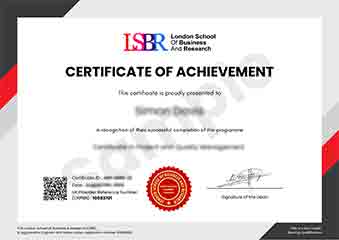
Sample Certificate
Preview the certificate you'll receive upon successful completion of this program.
Get Free Course Info
Enter your details and we'll send you a comprehensive course information pack straight to your inbox.
Employer Sponsored Training
Let your employer invest in your professional development. Request a corporate invoice and get your training funded.
Request Corporate InvoiceWhat People Say About Us
Hear from our students about their experience with the Executive Development Programme in Machine Learning for Molecular Classification at FlexiCourses.
Sophie Brown
United Kingdom"The course content was incredibly thorough and well-structured, providing a solid foundation in machine learning techniques specifically applied to molecular classification. I gained valuable practical skills that I can immediately apply in my work, enhancing my ability to analyze complex biological data and make informed decisions."
Isabella Dubois
Canada"This course has been instrumental in bridging the gap between theoretical knowledge and practical applications in machine learning for molecular classification. It has significantly enhanced my ability to analyze complex biological data, making me more competitive in the job market and opening up new career opportunities in precision medicine."
Zoe Williams
Australia"The course structure was meticulously organized, seamlessly blending theoretical concepts with practical applications, which significantly enhanced my understanding and prepared me for real-world challenges in molecular classification."