

Executive Development Programme in Multi Robot Human Interaction Design
This programme equips executives with the skills to design effective multi-robot systems for enhanced human interaction, driving innovation and usability.
Executive Development Programme in Multi Robot Human Interaction Design
Programme Overview
This course is tailored for executives and managers in robotics and technology sectors interested in advancing human-robot interaction design. It equips participants with the strategic knowledge and practical tools necessary to design effective, human-centric robotic systems that enhance productivity and user experience.
Upon completion, participants will gain insights into the latest trends and technologies in multi-robot systems, learn to identify key human interaction challenges, and develop innovative solutions that align with business objectives. They will also enhance their ability to lead interdisciplinary teams, fostering collaboration between engineers, designers, and social scientists to create impactful robotic applications.
What You'll Learn
Embark on a transformative journey with our Executive Development Programme in Multi-Robot Human Interaction Design. This cutting-edge program equips you with the latest tools and theories to design seamless, intuitive interactions between humans and robots across various industries. You'll learn to harness the power of AI, robotics, and human-centered design to create innovative solutions that enhance productivity, safety, and user experience. Through practical projects and real-world case studies, you'll gain hands-on experience in designing, testing, and iterating robotic systems. This program opens doors to leadership roles in tech giants, startups, and government agencies, where you can shape the future of human-robot collaboration. Join us and become a trailblazer in the intersection of technology and human interaction.
Programme Highlights
Industry-Aligned Curriculum
Developed with industry leaders to ensure practical, job-ready skills valued by employers worldwide.
Globally Recognised Certificate
Recognised by employers across 180+ countries as a mark of professional excellence.
Flexible Online Learning
Study at your own pace with lifetime access to all course materials and updates.
Instant Access
Start learning immediately — no application process or waiting period required.
Constantly Updated Content
Stay ahead with the latest industry trends, best practices, and emerging insights.
Career Advancement
87% of graduates report measurable career progression within 6 months of completion.
Topics Covered
- 1. Introduction to Multi-Robot Systems: Learners will explore the basics of multi-robot systems, including types of robots, communication protocols, and coordination strategies. They will gain foundational knowledge to understand the design and integration of robots in collaborative environments.
- 2. Human-Robot Interaction Fundamentals: This module covers the principles of human-robot interaction, focusing on designing interactions that are safe, efficient, and user-friendly. Learners will learn to analyze and design human-robot interfaces, and understand the psychological and social aspects of human-robot interactions.
- 3. Multi-Robot Perception and Sensing: Learners will study advanced perception and sensing techniques for multi-robot systems, including computer vision, object recognition, and sensor fusion. They will develop skills in selecting and implementing appropriate sensors for specific interaction designs.
- 4. Robot Motion Planning and Control: This module delves into motion planning and control algorithms for robots, focusing on how to navigate through dynamic environments while avoiding obstacles and working collaboratively with other robots. Practical skills in programming and testing motion control systems will be developed.
- 5. Multi-Robot Task Allocation: Learners will learn how to allocate tasks among multiple robots efficiently, considering factors such as robot capabilities, task dependencies, and environmental constraints. Practical exercises will help them develop algorithms for optimal task assignment.
- 6. Interaction Design for Collaborative Robots: This module focuses on the design of collaborative robots that can work alongside humans in various settings. Learners will study best practices for designing interfaces that enhance productivity and safety, and learn to evaluate the effectiveness of different interaction designs.
- 7. Advanced Human-Robot Interaction Techniques: In this module, learners will explore advanced interaction techniques such as natural language processing, gesture recognition, and affective computing. They will gain skills in implementing these techniques to create more intuitive and responsive human-robot interactions.
- 8. Ethical Considerations in Multi-Robot Systems: This module addresses ethical issues related to the design and deployment of multi-robot systems, including privacy, security, and the impact on employment. Learners will develop a framework for ethical decision-making in the design process.
- 9. Case Studies in Multi-Robot Human Interaction: Through in-depth case studies, learners will analyze real-world applications of multi-robot systems in human interaction, such as in healthcare, manufacturing, and service industries. They will learn to apply theoretical knowledge to solve practical problems.
- 10. Project Development and Implementation: In this capstone module, learners will work on a project that integrates all the knowledge and skills acquired throughout the programme. They will design, implement, and evaluate a multi-robot system for a specific human interaction scenario, showcasing their ability to apply theoretical concepts to real-world challenges.
What You Get When You Enroll
Secure checkout • Instant access • Certificate included
Key Facts
Audience: Professionals in robotics, human-robot interaction
Prerequisites: Basic knowledge of robotics, programming experience
Outcomes: Enhanced design skills, improved HRI capabilities
Ready to get started?
Join thousands of professionals who already took the next step. Enroll now and get instant access.
Enroll Now — $199Why This Course
Gain specialized skills in designing human-robot interactions, a critical area in the development of advanced robotics.
Enhance career prospects in sectors like healthcare, manufacturing, and service industries that are increasingly integrating robots into daily operations.
Develop a deep understanding of user-centered design principles to create intuitive and effective interactions between humans and multiple robots.
Your Path to Certification
Trusted by Professionals Worldwide
Course Brochure
Download our comprehensive course brochure with all details
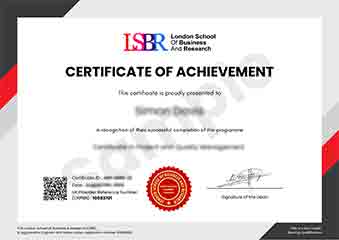
Sample Certificate
Preview the certificate you'll receive upon successful completion of this program.
Get Free Course Info
Enter your details and we'll send you a comprehensive course information pack straight to your inbox.
Employer Sponsored Training
Let your employer invest in your professional development. Request a corporate invoice and get your training funded.
Request Corporate InvoiceWhat People Say About Us
Hear from our students about their experience with the Executive Development Programme in Multi Robot Human Interaction Design at FlexiCourses.
Oliver Davies
United Kingdom"The course content was incredibly comprehensive, covering a wide range of topics from human-robot interaction to advanced multi-robot systems. Gained valuable practical skills that will undoubtedly enhance my ability to design effective human-robot interfaces, which I believe will be highly beneficial for my career in tech innovation."
Jack Thompson
Australia"This course has been incredibly valuable in enhancing my understanding of how to design interactions between humans and multiple robots, which is becoming increasingly important in various industries. It has not only deepened my technical skills but also provided me with practical insights that are directly applicable to my career, opening up new opportunities for innovation and leadership."
Sophie Brown
United Kingdom"The course structure was well-organized, providing a comprehensive overview of multi-robot human interaction design that seamlessly bridged theoretical concepts with practical applications, significantly enhancing my understanding and professional growth in the field."