

Executive Development Programme in Performance-Based Earthquake Engineering
This programme enhances leadership skills in applying performance-based earthquake engineering, driving innovative solutions and improved structural safety.
Executive Development Programme in Performance-Based Earthquake Engineering
Programme Overview
This Executive Development Programme in Performance-Based Earthquake Engineering is designed for senior engineers, engineering managers, and policymakers. It provides participants with advanced knowledge in developing and implementing performance-based earthquake engineering strategies, enhancing their ability to manage complex projects and make informed decisions.
Graduates will gain skills in assessing structural performance under seismic conditions, integrating risk management into design processes, and navigating regulatory frameworks. The programme also equips them with leadership tools to drive organizational change and improve resilience in critical infrastructure.
What You'll Learn
Embark on a transformative journey in the field of earthquake engineering with our Executive Development Programme. This cutting-edge course equips you with the latest tools and techniques to enhance building resilience against seismic events. You'll delve into performance-based engineering, risk assessment, and advanced analytical methods, preparing you to lead innovative projects in construction and disaster management. Ideal for engineers, architects, and policymakers, this program opens doors to high-impact roles in consultancy, government, and academia. Engage in hands-on workshops, collaborate with industry experts, and gain practical insights that can shape the future of resilient infrastructure. Forge your path as a leader in earthquake safety and sustainability.
Programme Highlights
Industry-Aligned Curriculum
Developed with industry leaders to ensure practical, job-ready skills valued by employers worldwide.
Globally Recognised Certificate
Recognised by employers across 180+ countries as a mark of professional excellence.
Flexible Online Learning
Study at your own pace with lifetime access to all course materials and updates.
Instant Access
Start learning immediately — no application process or waiting period required.
Constantly Updated Content
Stay ahead with the latest industry trends, best practices, and emerging insights.
Career Advancement
87% of graduates report measurable career progression within 6 months of completion.
Topics Covered
- 1. Earthquake Engineering Fundamentals: Learners will study basic concepts in earthquake engineering, including seismicity, earthquake types, and earthquake effects on structures. They will gain foundational knowledge in structural dynamics and soil-structure interaction, essential for understanding how buildings and infrastructure respond to seismic events.
- 2. Seismic Risk Assessment and Mitigation: This module covers methods for assessing seismic risk and strategies for mitigating it. Learners will learn to evaluate seismic hazards and vulnerabilities, and apply techniques to reduce the risk of damage and loss of life from earthquakes.
- 3. Performance-Based Earthquake Engineering (PBEE) Principles: Introducing the principles of PBEE, learners will explore how to establish performance objectives and design criteria for structures to meet specific performance goals during an earthquake. They will learn to develop performance-based design tools and assess structural performance under seismic loading.
- 4. Advanced Structural Dynamics: This module delves into advanced topics in structural dynamics, focusing on modal analysis, time-history analysis, and nonlinear dynamic analysis of structures. Learners will gain the ability to analyze complex structural systems under dynamic loads and understand the behavior of structures during strong ground motions.
- 5. Soil-Structure Interaction: Here, learners will study the interaction between the ground and structures during earthquakes, focusing on liquefaction, cyclic soil response, and foundation design. They will learn to predict and mitigate adverse soil behaviors that can affect the performance of buildings and infrastructure.
- 6. Seismic Design for Special Structures: This module covers seismic design considerations for special structures such as tall buildings, bridges, and dams. Learners will apply advanced seismic design methods and understand how to ensure the performance of these critical structures during seismic events.
- 7. Performance-Based Seismic Retrofitting: Focusing on the retrofitting of existing structures, learners will learn to assess the seismic performance of existing buildings and apply retrofitting strategies to improve their seismic performance. They will gain skills in developing detailed retrofit plans and evaluating the effectiveness of retrofit measures.
- 8. Earthquake Engineering Case Studies: In this module, learners will analyze real-world case studies of earthquake engineering projects and responses to seismic events. They will learn to interpret the lessons from these cases and apply them to develop effective earthquake engineering solutions tailored to specific contexts.
- 9. Advanced Computational Methods in Earthquake Engineering: This module introduces advanced computational methods, including finite element analysis and numerical modeling techniques, for simulating seismic behavior and performance of structures. Learners will develop skills in using advanced software tools for seismic analysis and design.
- 10. Leadership and Strategic Management in Earthquake Engineering: Focusing on leadership and management skills, learners will explore how to lead teams and organizations in the context of earthquake engineering. They will learn about strategic planning, risk management, and the role of leadership in implementing performance-based earthquake engineering practices.
What You Get When You Enroll
Secure checkout • Instant access • Certificate included
Key Facts
Audience: Engineers, architects, project managers
Prerequisites: Basic engineering knowledge, prior experience
Outcomes: Enhanced seismic design skills, improved project management
Ready to get started?
Join thousands of professionals who already took the next step. Enroll now and get instant access.
Enroll Now — $199Why This Course
Enhance professional skills in performance-based earthquake engineering, equipping you with advanced knowledge and practical tools.
Network with industry leaders and peers, fostering collaborative opportunities and expanding your professional circle.
Gain access to cutting-edge research and technologies, staying ahead in the dynamic field of earthquake engineering.
Your Path to Certification
Trusted by Professionals Worldwide
Course Brochure
Download our comprehensive course brochure with all details
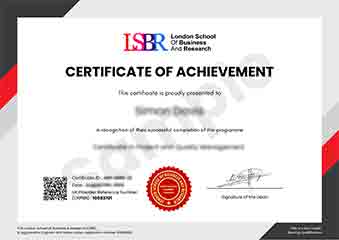
Sample Certificate
Preview the certificate you'll receive upon successful completion of this program.
Get Free Course Info
Enter your details and we'll send you a comprehensive course information pack straight to your inbox.
Employer Sponsored Training
Let your employer invest in your professional development. Request a corporate invoice and get your training funded.
Request Corporate InvoiceWhat People Say About Us
Hear from our students about their experience with the Executive Development Programme in Performance-Based Earthquake Engineering at FlexiCourses.
Oliver Davies
United Kingdom"The course content is incredibly comprehensive and well-researched, providing a solid foundation in performance-based earthquake engineering that has significantly enhanced my analytical and problem-solving skills. I've gained practical knowledge that I can directly apply to real-world projects, which is invaluable for my career in structural engineering."
Emma Tremblay
Canada"The Executive Development Programme in Performance-Based Earthquake Engineering has significantly enhanced my ability to apply theoretical knowledge to real-world scenarios, making me more competitive in the job market and opening up new opportunities for career advancement in structural engineering."
Connor O'Brien
Canada"The course structure is meticulously organized, providing a seamless progression from foundational concepts to advanced topics in performance-based earthquake engineering, which greatly enhances understanding and retention. The comprehensive content not only deepens my knowledge but also equips me with practical tools for real-world applications, significantly boosting my professional growth."