

Executive Development Programme in Phylogenetic Analysis for Evolutionary Studies
This programme equips executives with advanced phylogenetic analysis skills for strategic evolutionary studies, enhancing decision-making and innovation.
Executive Development Programme in Phylogenetic Analysis for Evolutionary Studies
Programme Overview
This program is tailored for senior scientists, researchers, and professionals in biology, ecology, and related fields seeking to enhance their expertise in phylogenetic analysis. Participants will gain advanced skills in constructing, interpreting, and utilizing phylogenetic trees to understand evolutionary relationships, with a focus on modern computational tools and methodologies.
Attendees will emerge with the ability to critically analyze evolutionary data, develop robust phylogenetic inference methods, and effectively communicate findings to both technical and non-technical audiences. The curriculum includes hands-on workshops and real-world case studies to apply theoretical knowledge in practical scenarios.
What You'll Learn
Embark on a transformative journey into the heart of evolutionary biology with our Executive Development Programme in Phylogenetic Analysis for Evolutionary Studies. This cutting-edge program equips you with the skills to unravel the intricate history of life on Earth through advanced phylogenetic analysis. You'll master the latest software tools and statistical methods, transforming raw genetic data into compelling narratives of evolutionary relationships. This program not only enhances your analytical prowess but also deepens your understanding of biodiversity and conservation strategies.
Career opportunities abound for graduates, from research roles in academia and government agencies to leadership positions in biotech and pharmaceutical industries. Join a community of forward-thinking professionals and contribute to groundbreaking research that shapes our understanding of life's evolution. With hands-on workshops, real-world case studies, and expert mentorship, this program is designed to push the boundaries of your knowledge and career potential.
Programme Highlights
Industry-Aligned Curriculum
Developed with industry leaders to ensure practical, job-ready skills valued by employers worldwide.
Globally Recognised Certificate
Recognised by employers across 180+ countries as a mark of professional excellence.
Flexible Online Learning
Study at your own pace with lifetime access to all course materials and updates.
Instant Access
Start learning immediately — no application process or waiting period required.
Constantly Updated Content
Stay ahead with the latest industry trends, best practices, and emerging insights.
Career Advancement
87% of graduates report measurable career progression within 6 months of completion.
Topics Covered
- 1. Introduction to Phylogenetic Analysis: Learners will be introduced to the fundamental concepts of phylogenetics, including tree construction, branch length interpretation, and the importance of evolutionary relationships. They will gain skills in using basic software tools to build phylogenetic trees.
- 2. Molecular Data and Alignment: This module covers the preparation and alignment of molecular data for phylogenetic analysis, focusing on DNA and protein sequences. Learners will learn to use alignment tools and understand the implications of different alignment strategies.
- 3. Phylogenetic Tree Construction Methods: The module explores various methods for constructing phylogenetic trees, including distance, maximum likelihood, and Bayesian approaches. Learners will practice constructing trees using real-world datasets and evaluate the strengths and weaknesses of each method.
- 4. Phylogenetic Signal and Consistency: Learners will study how to measure and interpret phylogenetic signal in molecular data, understanding the concept of phylogenetic correlation. They will learn to assess tree consistency and support using bootstrapping and other statistical methods.
- 5. Advanced Phylogenetic Modeling: This module delves into advanced topics in phylogenetic modeling, including models of molecular evolution, rate heterogeneity, and the use of codon models. Learners will apply these models to real datasets and understand their impact on tree inference.
- 6. Horizontal Gene Transfer and Its Impact on Phylogenies: The module investigates the phenomenon of horizontal gene transfer and its implications for phylogenetic analysis. Learners will learn how to detect and account for horizontal gene transfer in phylogenetic studies.
- 7. Phylogenetic Comparative Methods: This module introduces phylogenetic comparative methods for analyzing continuous and discrete traits. Learners will learn to use these methods to test hypotheses about trait evolution and to build ancestral state reconstructions.
- 8. Coevolutionary Analysis: The module focuses on techniques for detecting and analyzing coevolutionary signals in phylogenetic data. Learners will learn to use software tools to detect coevolutionary patterns and understand their significance.
- 9. Integrating Phenotypic and Molecular Data: This module covers methods for integrating molecular and phenotypic data in phylogenetic analysis. Learners will learn to combine different types of data to build more comprehensive and accurate phylogenetic trees.
- 10. Communicating Phylogenetic Results: The final module focuses on effective communication of phylogenetic results, including writing scientific papers and giving presentations. Learners will practice presenting their results and receiving feedback on their communication skills.
What You Get When You Enroll
Secure checkout • Instant access • Certificate included
Key Facts
Target audience: Researchers, biologists, graduate students
Prerequisites: Basic biology, statistics knowledge
Outcomes: Master phylogenetic analysis, develop research skills
Ready to get started?
Join thousands of professionals who already took the next step. Enroll now and get instant access.
Enroll Now — $199Why This Course
Gain specialized skills in phylogenetic analysis, a critical tool for evolutionary studies, enhancing your ability to contribute to cutting-edge research.
Access expert-led modules that cover both theoretical foundations and practical applications, ensuring a well-rounded understanding of the subject matter.
Network with professionals and peers in the field, fostering collaborative opportunities and expanding your professional circle.
Your Path to Certification
Trusted by Professionals Worldwide
Course Brochure
Download our comprehensive course brochure with all details
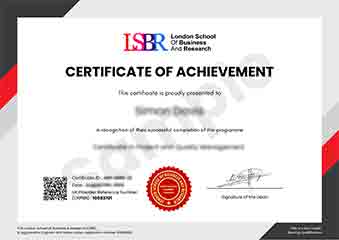
Sample Certificate
Preview the certificate you'll receive upon successful completion of this program.
Get Free Course Info
Enter your details and we'll send you a comprehensive course information pack straight to your inbox.
Employer Sponsored Training
Let your employer invest in your professional development. Request a corporate invoice and get your training funded.
Request Corporate InvoiceWhat People Say About Us
Hear from our students about their experience with the Executive Development Programme in Phylogenetic Analysis for Evolutionary Studies at FlexiCourses.
James Thompson
United Kingdom"The course provided an in-depth look at phylogenetic analysis, equipping me with robust practical skills that I can directly apply in my research. It significantly enhanced my ability to analyze evolutionary relationships and provided valuable insights that have already benefited my career."
Brandon Wilson
United States"This course has significantly enhanced my ability to analyze evolutionary relationships, making me more competitive in the field of conservation biology. The practical applications I've learned have directly contributed to advancing my career by allowing me to contribute more effectively to research projects."
Arjun Patel
India"The course structure is meticulously organized, providing a seamless transition from theoretical concepts to practical applications in phylogenetic analysis, which significantly enhances my understanding and professional growth in evolutionary studies."