

Executive Development Programme in Phylogenetics and Evolutionary Analysis: Practical Cases
This programme equips executives with practical phylogenetics and evolutionary analysis skills for strategic decision-making and innovation.
Executive Development Programme in Phylogenetics and Evolutionary Analysis: Practical Cases
Programme Overview
This course is designed for executives and managers in life sciences, biotechnology, and related industries seeking to understand and apply phylogenetics and evolutionary analysis to drive strategic decisions. Participants will gain practical skills in analyzing genetic data to uncover evolutionary relationships, predict species responses to environmental changes, and inform product development and innovation.
Attendees will learn to use advanced computational tools and interpret complex evolutionary data, enhancing their ability to lead teams and make informed business decisions based on evolutionary biology.
What You'll Learn
Dive into the cutting-edge world of phylogenetics and evolutionary analysis with our Executive Development Programme. This intensive course equips you with the latest tools and techniques to decode the evolutionary history of life. Engage with practical case studies that bring theory to life, enhancing your analytical and problem-solving skills. Ideal for professionals looking to advance in fields like conservation biology, genetics, and biotechnology, this program offers a blend of theoretical knowledge and hands-on experience. Join us to unlock new career opportunities in research, academia, and industry, where expertise in evolutionary biology is in high demand. Whether you're a seasoned professional or a recent graduate, this program will elevate your career by deepening your understanding of evolutionary processes and enhancing your ability to contribute to groundbreaking research.
Programme Highlights
Industry-Aligned Curriculum
Developed with industry leaders to ensure practical, job-ready skills valued by employers worldwide.
Globally Recognised Certificate
Recognised by employers across 180+ countries as a mark of professional excellence.
Flexible Online Learning
Study at your own pace with lifetime access to all course materials and updates.
Instant Access
Start learning immediately — no application process or waiting period required.
Constantly Updated Content
Stay ahead with the latest industry trends, best practices, and emerging insights.
Career Advancement
87% of graduates report measurable career progression within 6 months of completion.
Topics Covered
- 1. Introduction to Phylogenetics and Evolutionary Analysis: Learners will explore the fundamental concepts of phylogenetics and evolutionary analysis, including the basics of evolutionary theory and the construction of phylogenetic trees. They will gain foundational skills in understanding evolutionary relationships and interpreting molecular data.
- 2. Molecular Biology and Genetics: This module delves into the molecular basis of evolution, covering topics such as DNA structure, genetic variation, and the role of genes in evolution. Learners will develop skills in molecular biology techniques and genetic analysis.
- 3. Phylogenetic Methods and Software: Learners will study various phylogenetic methods and the software used to analyze and visualize evolutionary relationships. They will learn to apply these tools to real-world datasets and understand the statistical underpinnings of phylogenetic inference.
- 4. Comparative Genomics: This module focuses on comparing genomes to understand evolutionary processes and relationships between species. Learners will gain skills in comparative genomics techniques and the analysis of genomic data to infer evolutionary history.
- 5. Population Genetics and Evolution: Learners will explore population genetics and its role in understanding evolutionary processes at the population level. They will learn about genetic drift, mutation, selection, and migration, and how these factors influence genetic diversity and evolution.
- 6. Phylogenetic Trees and Network Analysis: This module covers advanced topics in phylogenetic tree construction and network analysis, including the use of Bayesian and maximum likelihood methods. Learners will develop skills in constructing and interpreting complex phylogenetic trees and networks.
- 7. Ecological and Environmental Factors in Evolution: Learners will study how ecological and environmental factors drive evolutionary change, covering topics such as adaptation, speciation, and extinction. They will analyze case studies and learn to incorporate ecological data into evolutionary analyses.
- 8. Practical Applications in Phylogenetics and Evolutionary Analysis: In this module, learners will apply their knowledge to real-world problems, working on projects that involve data collection, analysis, and interpretation. They will gain hands-on experience with phylogenetic and evolutionary analysis in various biological contexts.
- 9. Theories of Macroevolution: This module explores macroevolutionary theories and large-scale patterns of evolution, including mass extinctions, major evolutionary radiations, and the evolution of complex traits. Learners will learn to evaluate and apply macroevolutionary theories to their research.
- 10. Advanced Techniques in Phylogenetics and Comparative Genomics: This advanced module covers cutting-edge techniques in phylogenetics and comparative genomics, including next-generation sequencing, genome assembly, and phylogenetic inference using large-scale datasets. Learners will develop skills in using these techniques to conduct sophisticated evolutionary analyses.
What You Get When You Enroll
Secure checkout • Instant access • Certificate included
Key Facts
Audience: Professionals in life sciences
Prerequisites: Basic knowledge of genetics and statistics
Outcomes: Expertise in phylogenetic analysis, practical skills in software tools
Ready to get started?
Join thousands of professionals who already took the next step. Enroll now and get instant access.
Enroll Now — $199Why This Course
Gain practical skills in phylogenetics and evolutionary analysis through real-world case studies.
Enhance career prospects by acquiring advanced knowledge that is in high demand across various industries.
Connect with a network of professionals and academics, fostering collaboration and learning opportunities.
Your Path to Certification
Trusted by Professionals Worldwide
Course Brochure
Download our comprehensive course brochure with all details
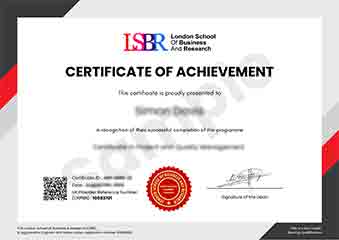
Sample Certificate
Preview the certificate you'll receive upon successful completion of this program.
Get Free Course Info
Enter your details and we'll send you a comprehensive course information pack straight to your inbox.
Employer Sponsored Training
Let your employer invest in your professional development. Request a corporate invoice and get your training funded.
Request Corporate InvoiceWhat People Say About Us
Hear from our students about their experience with the Executive Development Programme in Phylogenetics and Evolutionary Analysis: Practical Cases at FlexiCourses.
Charlotte Williams
United Kingdom"The course content was incredibly thorough, providing a deep dive into both theoretical and practical aspects of phylogenetics and evolutionary analysis. Gaining hands-on experience with real-world datasets was invaluable, as it directly enhanced my ability to analyze and interpret evolutionary relationships in a professional setting."
Jack Thompson
Australia"This course has significantly enhanced my ability to apply phylogenetic analysis in real-world scenarios, making my skills highly relevant in the biotech industry. It has opened up new opportunities for me to lead more complex projects and has accelerated my career growth."
Arjun Patel
India"The course structure was meticulously organized, providing a seamless transition from theoretical concepts to practical applications, which significantly enhanced my understanding and appreciation of phylogenetics and evolutionary analysis. The comprehensive content, coupled with real-world case studies, offered invaluable insights that have greatly contributed to my professional growth in the field."