

Executive Development Programme in Phylogenetics and Evolutionary Analysis: Tools and Methods
This programme equips executives with advanced tools and methods in phylogenetics and evolutionary analysis for strategic biological and medical insights.
Executive Development Programme in Phylogenetics and Evolutionary Analysis: Tools and Methods
Programme Overview
This course is designed for senior scientists, researchers, and professionals with a background in biology or related fields who seek to enhance their expertise in phylogenetics and evolutionary analysis. Participants will gain proficiency in using advanced computational tools and statistical methods to analyze evolutionary relationships among species, understand genetic divergence, and predict evolutionary trends.
Attendees will learn to apply modern phylogenetic software, interpret complex genetic data, and develop robust evolutionary models. The course also equips learners with skills to communicate their findings effectively in scientific research and industry applications.
What You'll Learn
Dive into the dynamic world of phylogenetics and evolutionary analysis with our Executive Development Programme. This intensive course equips you with cutting-edge tools and methods to explore evolutionary relationships among species, driving innovation in genomics, biotechnology, and environmental science. You'll gain hands-on experience with advanced software, learn to interpret complex genetic data, and understand the implications of evolutionary theory in real-world applications. Perfect for professionals aiming to advance in research, biotech, conservation, or academia, this program offers personalized mentorship, interdisciplinary collaboration, and a robust network of experts. Prepare to transform data into insights, shape future biotechnology trends, and contribute to groundbreaking discoveries.
Programme Highlights
Industry-Aligned Curriculum
Developed with industry leaders to ensure practical, job-ready skills valued by employers worldwide.
Globally Recognised Certificate
Recognised by employers across 180+ countries as a mark of professional excellence.
Flexible Online Learning
Study at your own pace with lifetime access to all course materials and updates.
Instant Access
Start learning immediately — no application process or waiting period required.
Constantly Updated Content
Stay ahead with the latest industry trends, best practices, and emerging insights.
Career Advancement
87% of graduates report measurable career progression within 6 months of completion.
Topics Covered
- 1. Introduction to Phylogenetics and Evolutionary Biology: Learners will study the fundamental concepts of phylogenetics and evolutionary biology, including the importance of evolutionary relationships in understanding biodiversity. They will gain skills in reading and interpreting phylogenetic trees.
- 2. Molecular Evolution and Sequence Analysis: This module covers the basics of molecular evolution and sequence analysis, focusing on alignment and phylogenetic inference using molecular sequences. Learners will develop skills in using software tools for sequence alignment and phylogenetic tree construction.
- 3. Comparative Genomics and Phylogenomics: Learners will explore comparative genomics and phylogenomics, learning how to analyze large genomic datasets to infer evolutionary relationships. Practical skills include the use of bioinformatics tools for comparative genomics and phylogenomic studies.
- 4. Population Genetics and Evolutionary Dynamics: This module introduces population genetics and the dynamics of evolutionary processes within populations. Learners will study key concepts such as genetic drift, mutation, and natural selection, and practice applying these concepts to real-world scenarios.
- 5. Computational Tools for Phylogenetic Analysis: Focusing on advanced computational methods, learners will learn about various algorithms and software tools used in modern phylogenetic analysis. They will gain hands-on experience in using these tools to analyze complex datasets.
- 6. Integrative Approaches to Phylogenetics: This module covers integrative approaches that combine multiple lines of evidence (e.g., molecular, morphological, and ecological) to infer evolutionary relationships. Learners will learn to integrate different types of data and use advanced statistical methods to support phylogenetic inference.
- 7. Evolutionary Biology of Specific Lineages: Through case studies, learners will delve into the evolutionary biology of specific lineages, exploring the unique patterns of evolution that have shaped these groups. Practical skills include the application of phylogenetic methods to understand the evolutionary history of specific organisms.
- 8. Advanced Topics in Phylogenetic Analysis: Covering advanced topics such as dating phylogenetic trees, horizontal gene transfer, and the use of molecular clocks, learners will expand their knowledge of phylogenetic methods and learn to apply them to complex evolutionary questions.
- 9. Phylogenetic Conservation Biology: This module focuses on the application of phylogenetic methods in conservation biology, teaching learners how to use phylogenetic information to inform conservation strategies and prioritize species for protection.
- 10. Communicating Phylogenetic Research: Learners will develop skills in communicating phylogenetic research effectively, including writing scientific papers, giving presentations, and engaging with the scientific community. They will learn to explain complex evolutionary concepts clearly and concisely to both specialist and non-specialist audiences.
What You Get When You Enroll
Secure checkout • Instant access • Certificate included
Key Facts
Audience: Professionals in biology, genetics, bioinformatics
Prerequisites: Basic knowledge in genetics, statistics
Outcomes: Expertise in phylogenetic analysis tools, evolutionary methods
Ready to get started?
Join thousands of professionals who already took the next step. Enroll now and get instant access.
Enroll Now — $199Why This Course
Gain specialized skills in phylogenetics and evolutionary analysis, equipping you with the tools to analyze and interpret complex biological data.
Enhance your career prospects by acquiring in-demand expertise that integrates computational methods with biological sciences.
Access a network of professionals and researchers in the field, fostering collaboration and learning through interactive workshops and seminars.
Your Path to Certification
Trusted by Professionals Worldwide
Course Brochure
Download our comprehensive course brochure with all details
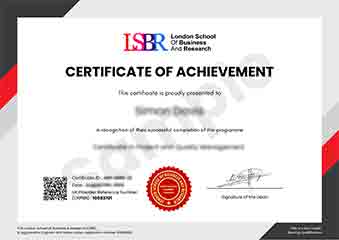
Sample Certificate
Preview the certificate you'll receive upon successful completion of this program.
Get Free Course Info
Enter your details and we'll send you a comprehensive course information pack straight to your inbox.
Employer Sponsored Training
Let your employer invest in your professional development. Request a corporate invoice and get your training funded.
Request Corporate InvoiceWhat People Say About Us
Hear from our students about their experience with the Executive Development Programme in Phylogenetics and Evolutionary Analysis: Tools and Methods at FlexiCourses.
Sophie Brown
United Kingdom"The course provided an in-depth look at phylogenetics and evolutionary analysis, equipping me with robust tools and methods that have significantly enhanced my analytical skills. Gaining hands-on experience with these techniques has opened up new avenues for my research and career in evolutionary biology."
Isabella Dubois
Canada"This course has significantly enhanced my ability to apply phylogenetic tools in real-world scenarios, making me more competitive in the job market. It has opened up new opportunities for me to contribute to cutting-edge research and has been instrumental in my career advancement."
Muhammad Hassan
Malaysia"The course structure is well-organized, providing a clear path from foundational concepts to advanced analytical techniques, which greatly enhances understanding and application of phylogenetic and evolutionary analysis tools. The comprehensive content and real-world case studies have significantly broadened my perspective and prepared me for professional challenges in the field."