

Executive Development Programme in PLC Class Advantages: Hands-On Programming Techniques
This programme offers hands-on PLC programming techniques, enhancing practical skills and executive-level expertise in automation.
Executive Development Programme in PLC Class Advantages: Hands-On Programming Techniques
Programme Overview
This course is designed for experienced professionals and managers in the PLC (Programmable Logic Controller) domain seeking to enhance their technical and managerial skills. Participants will gain hands-on expertise in programming techniques, allowing them to develop more efficient and effective control systems.
By the end of the program, attendees will master advanced PLC programming, including ladder logic, function block diagrams, and structured text, while also improving their ability to lead and manage technical teams in industrial automation projects.
What You'll Learn
Dive into the world of Programmable Logic Controllers (PLCs) with our exclusive Executive Development Programme in PLC Class Advantages: Hands-On Programming Techniques. This cutting-edge course equips you with the skills to harness the power of PLCs in industrial automation, ensuring you stay ahead in a tech-driven market. You'll learn advanced programming techniques, gain practical experience through hands-on projects, and benefit from real-world case studies. Prepare to enhance your career prospects in sectors like manufacturing, energy, and automotive, where PLC expertise is in high demand. Join us and transform your career with the precision and reliability of PLC programming.
Programme Highlights
Industry-Aligned Curriculum
Developed with industry leaders to ensure practical, job-ready skills valued by employers worldwide.
Globally Recognised Certificate
Recognised by employers across 180+ countries as a mark of professional excellence.
Flexible Online Learning
Study at your own pace with lifetime access to all course materials and updates.
Instant Access
Start learning immediately — no application process or waiting period required.
Constantly Updated Content
Stay ahead with the latest industry trends, best practices, and emerging insights.
Career Advancement
87% of graduates report measurable career progression within 6 months of completion.
Topics Covered
- 1. Introduction to Programmable Logic Controllers (PLC): Learners will understand the basics of PLCs, including their history, types, and applications. They will gain foundational knowledge to identify suitable PLCs for specific industrial applications.
- 2. PLC Hardware and Configuration: Students will learn about the components of a PLC system and how to configure the hardware. Practical skills include setting up and configuring PLCs for industrial environments.
- 3. Programming Languages for PLCs: This module introduces ladder logic, structured text, function blocks, and other programming languages used in PLCs. Learners will write and test simple programs to control basic industrial processes.
- 4. Advanced Programming Techniques: Learners will explore advanced programming techniques such as sequential function charts, timers, and counters. They will design and implement complex control logic for industrial systems.
- 5. Communication Protocols in PLCs: This module covers communication protocols like Modbus, Profibus, and Ethernet. Students will configure and test communication between PLCs and other industrial devices.
- 6. PLC Programming Best Practices: Students will learn best practices for writing efficient, maintainable, and scalable PLC programs. Practical exercises include refactoring existing programs to improve performance and readability.
- 7. Advanced Control Strategies: This module delves into advanced control strategies such as PID control, fuzzy logic, and neural networks. Learners will implement these strategies to optimize industrial processes.
- 8. PLC Maintenance and Troubleshooting: Students will learn how to diagnose and troubleshoot PLC-related issues. Practical skills include reading error codes, interpreting system logs, and performing routine maintenance on PLC systems.
- 9. Integration of PLCs with SCADA Systems: This module covers the integration of PLCs with Supervisory Control and Data Acquisition (SCADA) systems. Learners will configure and test data flow between PLCs and SCADA systems.
- 10. Project Development and Implementation: Learners will work on a comprehensive project to design, implement, and test a complete industrial control system using PLCs. This module integrates knowledge and skills from previous modules in a real-world context.
What You Get When You Enroll
Secure checkout • Instant access • Certificate included
Key Facts
Audience: Engineers, managers with technical background
Prerequisites: Basic knowledge of PLCs, programming experience
Outcomes: Enhanced programming skills, hands-on experience, improved problem-solving
Ready to get started?
Join thousands of professionals who already took the next step. Enroll now and get instant access.
Enroll Now — $199Why This Course
Enhances Practical Skills: Learners gain firsthand experience with programming techniques, crucial for real-world application.
Boosts Career Prospects: Mastery of PLC programming improves employability in industries relying on automation and control systems.
Flexibility in Learning: The programme offers hands-on training, catering to diverse learning styles and enhancing comprehension.
Your Path to Certification
Trusted by Professionals Worldwide
Course Brochure
Download our comprehensive course brochure with all details
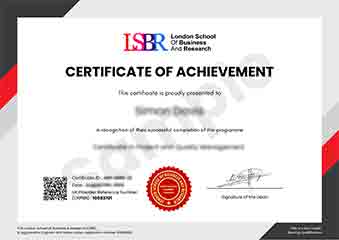
Sample Certificate
Preview the certificate you'll receive upon successful completion of this program.
Get Free Course Info
Enter your details and we'll send you a comprehensive course information pack straight to your inbox.
Employer Sponsored Training
Let your employer invest in your professional development. Request a corporate invoice and get your training funded.
Request Corporate InvoiceWhat People Say About Us
Hear from our students about their experience with the Executive Development Programme in PLC Class Advantages: Hands-On Programming Techniques at FlexiCourses.
James Thompson
United Kingdom"The course provided high-quality material that was directly applicable to real-world scenarios, significantly enhancing my ability to implement PLC programming effectively. I gained substantial practical skills that have already proven beneficial in my current role and are positioning me well for advancement."
James Thompson
United Kingdom"This course has been incredibly valuable, equipping me with practical PLC programming skills that are directly applicable in the industry. It has not only enhanced my technical abilities but also opened new career opportunities in automation and control systems."
Kavya Reddy
India"The course structure was meticulously organized, making it easy to follow and understand the complex concepts of PLC programming. The knowledge gained has significantly enhanced my ability to apply these techniques in real-world scenarios, providing a clear path for professional growth."