

Executive Development Programme in Python Code Review for Research Papers
This programme enhances Python code review skills, ensuring robust research paper implementations with improved accuracy and efficiency.
Executive Development Programme in Python Code Review for Research Papers
Programme Overview
This course is designed for researchers and academic professionals looking to enhance their Python programming skills, particularly in the context of code review for research papers. Participants will learn to critically evaluate code quality, understand best practices in coding for reproducibility, and apply these skills to improve the robustness and reliability of their research.
Upon completion, attendees will be able to conduct thorough code reviews, identify potential issues in research code, and provide constructive feedback to authors. They will also gain proficiency in using version control systems and tools for automated testing, enhancing the reproducibility of their research.
What You'll Learn
Dive into the world of Python code review with our Executive Development Programme in Python Code Review for Research Papers. This intensive program equips you with the skills to critically assess and improve Python code in academic research papers, ensuring robustness and reproducibility. You'll learn to navigate complex research codebases, understand advanced Python libraries, and apply best practices for ethical coding. Whether you're a researcher, data scientist, or software developer, this course opens doors to specialized roles like Research Code Analyst or Data Integrity Specialist. Unique features include hands-on workshops, mentorship from industry experts, and networking opportunities with like-minded professionals. Join us to elevate your career and contribute to the integrity of scientific research.
Programme Highlights
Industry-Aligned Curriculum
Developed with industry leaders to ensure practical, job-ready skills valued by employers worldwide.
Globally Recognised Certificate
Recognised by employers across 180+ countries as a mark of professional excellence.
Flexible Online Learning
Study at your own pace with lifetime access to all course materials and updates.
Instant Access
Start learning immediately — no application process or waiting period required.
Constantly Updated Content
Stay ahead with the latest industry trends, best practices, and emerging insights.
Career Advancement
87% of graduates report measurable career progression within 6 months of completion.
Topics Covered
- 1. Introduction to Python for Research: Learners will be introduced to Python basics, including syntax, data types, and control structures, essential for reviewing and coding research papers. They will gain foundational coding skills and understand how Python can be applied in research contexts.
- 2. Data Structures and Manipulation: This module covers lists, tuples, dictionaries, and sets, along with data manipulation techniques using libraries like pandas. Learners will learn to handle and process data efficiently, preparing them for more complex tasks in code reviews.
- 3. Version Control with Git: Learners will learn how to use Git for version control, enabling them to manage and track changes in their code and documentation effectively. They will understand the importance of version control in collaborative research projects.
- 4. Automated Testing with Python: This module introduces learners to unit testing frameworks such as pytest, teaching them how to write and run automated tests for their Python code. They will gain skills in ensuring code reliability and quality.
- 5. Code Review Best Practices: In this module, learners will learn best practices for reviewing code, focusing on readability, maintainability, and adherence to style guidelines. They will also gain insights into how to effectively communicate feedback in a constructive manner.
- 6. Data Visualization with Matplotlib and Seaborn: Learners will learn to create effective visualizations using Matplotlib and Seaborn, essential for understanding and presenting data from research papers. They will gain skills in data visualization and communication.
- 7. Advanced Python Libraries for Data Analysis: This module covers advanced libraries such as NumPy, SciPy, and scikit-learn, essential for data analysis tasks. Learners will learn how to perform complex data analysis and modeling, enhancing their ability to review and interpret research data.
- 8. Research Paper Analysis with Python: In this module, learners will apply their coding skills to analyze research papers, extracting key information and identifying potential issues or areas for improvement. They will gain practical experience in using Python for research paper review.
- 9. Natural Language Processing with Python: This module introduces learners to Natural Language Processing (NLP) techniques using Python. They will learn how to process and analyze text data, which is crucial for reviewing scientific literature and research papers.
- 10. Project: Comprehensive Code Review of a Research Paper: Learners will work on a comprehensive project to review a research paper, applying all the skills learned throughout the programme. They will write and test code to automate parts of the review process, demonstrating their ability to integrate knowledge and solve real-world problems.
What You Get When You Enroll
Secure checkout • Instant access • Certificate included
Key Facts
Audience: Researchers, Developers, Academics
Prerequisites: Basic Python, Research paper writing
Outcomes: Enhanced code review skills, Improved paper quality
Ready to get started?
Join thousands of professionals who already took the next step. Enroll now and get instant access.
Enroll Now — $199Why This Course
Enhances coding skills: The programme provides hands-on experience in reviewing Python code, improving learners' ability to identify and correct errors, which is crucial for rigorous research.
Boosts research credibility: By mastering code review techniques, learners can ensure the reliability and validity of research papers, contributing to the field with more accurate and trustworthy data.
Promotes collaboration: Engaging in peer reviews fosters a collaborative environment, allowing learners to exchange ideas and best practices, which is essential for advancing research and innovation.
Your Path to Certification
Trusted by Professionals Worldwide
Course Brochure
Download our comprehensive course brochure with all details
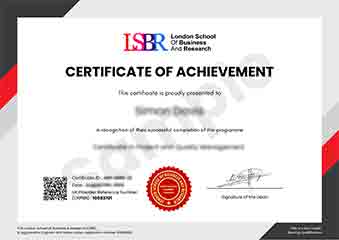
Sample Certificate
Preview the certificate you'll receive upon successful completion of this program.
Get Free Course Info
Enter your details and we'll send you a comprehensive course information pack straight to your inbox.
Employer Sponsored Training
Let your employer invest in your professional development. Request a corporate invoice and get your training funded.
Request Corporate InvoiceWhat People Say About Us
Hear from our students about their experience with the Executive Development Programme in Python Code Review for Research Papers at FlexiCourses.
Oliver Davies
United Kingdom"The course provided high-quality material that significantly enhanced my ability to critically analyze and review research papers using Python. I gained practical skills in automating the review process, which has already improved the efficiency of my work and opened up new opportunities in my field."
Hans Weber
Germany"The Executive Development Programme in Python Code Review for Research Papers has significantly enhanced my ability to critically evaluate and improve the technical accuracy of research papers, making me more competitive in the data science industry. This skill has directly contributed to my recent promotion to a senior data analyst role, where I now lead code review sessions for our team."
Oliver Davies
United Kingdom"The course structure is well-organized, providing a clear path from basic Python syntax to advanced code review techniques, which has significantly enhanced my ability to critically evaluate research papers in my field."