

Executive Development Programme in RTOS Interoperability for High-Performance Computing Clusters
This programme enhances executives' understanding of RTOS interoperability for high-performance computing clusters, driving optimized system performance and scalability.
Executive Development Programme in RTOS Interoperability for High-Performance Computing Clusters
Programme Overview
This course is designed for senior software engineers and IT managers responsible for managing high-performance computing clusters. Participants will gain deep insights into Real-Time Operating System (RTOS) interoperability, essential for optimizing cluster performance and enhancing system reliability.
They will learn to implement efficient RTOS integration strategies, understand the impact of RTOS choice on system latency and throughput, and acquire skills to troubleshoot and optimize RTOS-based applications in complex computing environments.
What You'll Learn
Dive into the cutting-edge world of Real-Time Operating Systems (RTOS) and high-performance computing (HPC) clusters with our Executive Development Programme in RTOS Interoperability. This program is tailored for tech leaders aiming to enhance their expertise in system integration and performance optimization. You'll gain hands-on experience with advanced RTOS and learn how to design and manage interoperable systems that power today's most demanding HPC applications. Join our community of industry experts and peers to accelerate your career in high-stakes computing environments, where every millisecond counts. Whether you're a seasoned IT executive or a tech-savvy manager, this program equips you with the knowledge to lead innovative projects and drive business success in the rapidly evolving field of HPC.
Programme Highlights
Industry-Aligned Curriculum
Developed with industry leaders to ensure practical, job-ready skills valued by employers worldwide.
Globally Recognised Certificate
Recognised by employers across 180+ countries as a mark of professional excellence.
Flexible Online Learning
Study at your own pace with lifetime access to all course materials and updates.
Instant Access
Start learning immediately — no application process or waiting period required.
Constantly Updated Content
Stay ahead with the latest industry trends, best practices, and emerging insights.
Career Advancement
87% of graduates report measurable career progression within 6 months of completion.
Topics Covered
- 1. Introduction to Real-Time Operating Systems (RTOS): Learners will understand the basics of RTOS, including their architecture, scheduling mechanisms, and real-time constraints. They will gain foundational skills in identifying suitable RTOS for high-performance computing applications.
- 2. RTOS Interoperability Fundamentals: This module covers the principles of interoperability between different RTOSes, focusing on communication protocols and shared memory techniques. Learners will develop the ability to design systems that can seamlessly integrate multiple RTOS components.
- 3. High-Performance Computing Cluster Architecture: Learners will study the architecture of high-performance computing clusters, including network topologies, storage solutions, and interconnect technologies. Practical skills include designing efficient cluster configurations for RTOS interoperability.
- 4. Real-Time Scheduling Algorithms: This module delves into various scheduling algorithms used in RTOSes and their performance implications. Learners will gain the ability to select and implement appropriate scheduling strategies for real-time applications in high-performance computing environments.
- 5. Inter-Process Communication (IPC) Techniques: Focusing on IPC methods such as pipes, semaphores, and message queues, learners will learn how to effectively manage data exchange between processes running on different RTOSes. Practical skills include implementing secure and efficient IPC mechanisms.
- 6. Advanced RTOS Features and Customization: This module covers advanced RTOS features like task synchronization, deadlocks prevention, and resource management. Learners will learn how to customize RTOS configurations to meet specific performance and reliability requirements.
- 7. Performance Optimization Techniques: Learners will explore techniques for optimizing RTOS performance, including code profiling, resource allocation, and load balancing. Practical skills include applying these techniques to improve the efficiency of high-performance computing applications.
- 8. Fault Tolerance and Reliability in RTOS: This module focuses on ensuring the reliability of RTOS-based systems, including fault detection, recovery, and redundancy strategies. Learners will gain the skills needed to design robust systems that can handle unexpected failures.
- 9. Security Considerations in RTOS Interoperability: Covering security threats specific to RTOSes and their interoperation, learners will study security protocols and best practices for securing high-performance computing clusters. Practical skills include implementing security measures to protect against common vulnerabilities.
- 10. Case Studies and Practical Implementation: Through real-world case studies, learners will apply their knowledge to design and implement RTOS interoperability solutions for high-performance computing clusters. This module aims to bridge the gap between theory and practice, providing hands-on experience in solving complex interoperability challenges.
What You Get When You Enroll
Secure checkout • Instant access • Certificate included
Key Facts
Audience: IT managers, system administrators
Prerequisites: Basic IT knowledge, UNIX/Linux experience
Outcomes: Enhanced OS interoperability skills, improved cluster performance
Ready to get started?
Join thousands of professionals who already took the next step. Enroll now and get instant access.
Enroll Now — $199Why This Course
Enhance technical proficiency by deepening understanding of Real-Time Operating Systems (RTOS) and their integration, crucial for high-performance computing.
Gain practical skills in managing and optimizing RTOS interoperability, essential for developing efficient and robust computing clusters.
Network with industry experts and peers to gain insights and foster collaborations in the field of high-performance computing.
Your Path to Certification
Trusted by Professionals Worldwide
Course Brochure
Download our comprehensive course brochure with all details
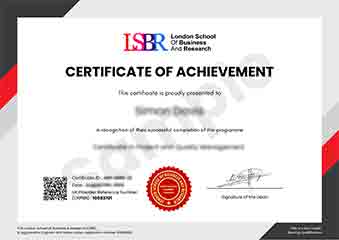
Sample Certificate
Preview the certificate you'll receive upon successful completion of this program.
Get Free Course Info
Enter your details and we'll send you a comprehensive course information pack straight to your inbox.
Employer Sponsored Training
Let your employer invest in your professional development. Request a corporate invoice and get your training funded.
Request Corporate InvoiceWhat People Say About Us
Hear from our students about their experience with the Executive Development Programme in RTOS Interoperability for High-Performance Computing Clusters at FlexiCourses.
Oliver Davies
United Kingdom"The course content was exceptionally detailed and well-structured, providing a deep understanding of RTOS interoperability for high-performance computing clusters. I gained significant practical skills that will undoubtedly enhance my ability to design and optimize complex computing systems for real-world applications."
Charlotte Williams
United Kingdom"This course has significantly enhanced my understanding of real-time operating system interoperability, making me more competitive in the high-performance computing industry. The practical applications I've learned have already led to new opportunities in my career, allowing me to tackle complex projects with confidence."
Wei Ming Tan
Singapore"The course structure was meticulously organized, providing a seamless progression from foundational concepts to advanced topics in RTOS interoperability, which greatly enhanced my understanding and practical skills in high-performance computing clusters. The comprehensive content and real-world applications have significantly contributed to my professional growth, equipping me with valuable insights and tools for tackling complex systems integration challenges."