

Executive Development Programme in Spatial Statistics for Data Science
This programme equips executives with advanced spatial statistics skills, enhancing data-driven decision-making and strategic insights.
Executive Development Programme in Spatial Statistics for Data Science
Programme Overview
This course is tailored for executives and data science professionals aiming to harness the power of spatial statistics for strategic business decisions. Participants will gain expertise in analyzing geospatial data to uncover patterns, predict outcomes, and optimize operations. The curriculum covers essential techniques for spatial data analysis, including spatial autocorrelation, spatial forecasting, and the application of Geographic Information Systems (GIS).
Attendees will learn to integrate spatial statistics into their existing data science workflows, enabling them to make data-driven decisions based on location-based insights. By the end of the program, participants will be equipped to lead projects that leverage spatial analytics to drive innovation and competitive advantage in their organizations.
What You'll Learn
Dive into the future of data science with our Executive Development Programme in Spatial Statistics. This immersive course equips you with the cutting-edge skills to analyze and interpret spatial data, transforming raw data into actionable insights. You'll master advanced statistical techniques, geospatial analytics, and predictive modeling, all under the guidance of industry experts. Perfect for professionals eager to enhance their data science capabilities, this program opens doors to roles in urban planning, environmental science, public health, and beyond. Engage with real-world case studies, learn from leading academics, and build a network of like-minded professionals. Join us and shape the future of data-driven decision-making.
Programme Highlights
Industry-Aligned Curriculum
Developed with industry leaders to ensure practical, job-ready skills valued by employers worldwide.
Globally Recognised Certificate
Recognised by employers across 180+ countries as a mark of professional excellence.
Flexible Online Learning
Study at your own pace with lifetime access to all course materials and updates.
Instant Access
Start learning immediately — no application process or waiting period required.
Constantly Updated Content
Stay ahead with the latest industry trends, best practices, and emerging insights.
Career Advancement
87% of graduates report measurable career progression within 6 months of completion.
Topics Covered
- 1. Introduction to Spatial Statistics: Learners will study the basics of spatial data and spatial statistics, including types of spatial data and fundamental concepts of spatial autocorrelation. They will gain skills in analyzing and visualizing basic spatial datasets.
- 2. Exploratory Spatial Data Analysis (ESDA): Learners will delve into techniques for exploring spatial patterns and relationships in data, such as Moran's I and Geary's C. They will develop skills in using ESDA tools to identify spatial trends and patterns.
- 3. Spatial Point Patterns: This module covers the analysis of spatial point patterns, including methods for describing and testing for spatial randomness. Learners will gain proficiency in using tools like the K-function and L-function to analyze point patterns.
- 4. Geostatistical Analysis: Learners will study geostatistical methods for spatial interpolation and prediction, including variogram models and kriging techniques. They will learn to apply these methods to create continuous surfaces from sampled data.
- 5. Spatial Regression Models: This module introduces spatial regression models, including spatial lag and spatial error models. Learners will understand how to incorporate spatial effects into regression analysis and interpret the results.
- 6. Advanced Geostatistical Techniques: Building on Module 4, learners will explore advanced geostatistical techniques such as co-kriging and multi-scale kriging. They will apply these techniques to complex datasets and learn how to optimize model parameters.
- 7. Spatial Econometrics: This module covers spatial econometric models, focusing on how spatial relationships affect economic outcomes. Learners will learn to model and interpret spatial dependencies in economic data.
- 8. Machine Learning for Spatial Data: Learners will study machine learning techniques specifically tailored for spatial data, including spatial clustering, spatial classification, and spatial regression trees. They will gain skills in applying machine learning models to spatial datasets.
- 9. Spatio-Temporal Analysis: This module introduces spatio-temporal data analysis, covering techniques for modeling and predicting spatial phenomena that change over time. Learners will learn to analyze spatio-temporal datasets and develop models to forecast changes.
- 10. Case Studies in Spatial Data Science: In this final module, learners will apply the skills and knowledge gained throughout the program to real-world case studies in various domains such as environmental science, urban planning, and public health. They will work on projects that require integrating spatial statistics with data science methodologies.
What You Get When You Enroll
Secure checkout • Instant access • Certificate included
Key Facts
Audience: Data scientists, statisticians
Prerequisites: Basic statistics knowledge
Outcomes: Advanced spatial statistics skills, improved data analysis
Ready to get started?
Join thousands of professionals who already took the next step. Enroll now and get instant access.
Enroll Now — $199Why This Course
Enhance Data Analysis Skills: Gain advanced skills in spatial statistics, enabling you to analyze and interpret geographically referenced data more effectively.
Career Advancement: Equip yourself with specialized knowledge that is in high demand across various industries, including environmental science, urban planning, and public health, opening up new career opportunities.
Practical Application: Learn through real-world case studies and projects, ensuring you can apply your skills to solve practical problems in your field.
Your Path to Certification
Trusted by Professionals Worldwide
Course Brochure
Download our comprehensive course brochure with all details
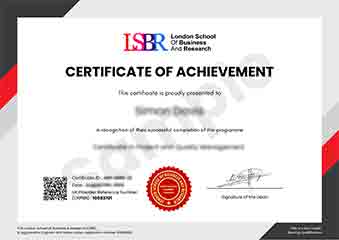
Sample Certificate
Preview the certificate you'll receive upon successful completion of this program.
Get Free Course Info
Enter your details and we'll send you a comprehensive course information pack straight to your inbox.
Employer Sponsored Training
Let your employer invest in your professional development. Request a corporate invoice and get your training funded.
Request Corporate InvoiceWhat People Say About Us
Hear from our students about their experience with the Executive Development Programme in Spatial Statistics for Data Science at FlexiCourses.
Oliver Davies
United Kingdom"The course content was exceptionally well-structured, providing a deep dive into spatial statistics that significantly enhanced my analytical skills. Gaining proficiency in applying these techniques to real-world data has opened up new opportunities in my career, making the investment in this program truly worthwhile."
Jack Thompson
Australia"The Executive Development Programme in Spatial Statistics for Data Science has significantly enhanced my ability to analyze spatial data, making my work in environmental consulting more precise and impactful. This course has not only deepened my technical skills but also opened up new career opportunities in specialized roles that require advanced spatial statistical analysis."
James Thompson
United Kingdom"The course structure was meticulously organized, providing a seamless progression from foundational concepts to advanced applications in spatial statistics, which significantly enhanced my understanding and practical skills in data science. The comprehensive content and real-world case studies were particularly beneficial, offering valuable insights into how spatial statistics can be applied in various professional settings."