

Executive Development Programme in Spatial Thinking in Design Innovation
Enhance spatial thinking and design innovation skills, fostering creative problem-solving and leadership in architectural and design fields.
Executive Development Programme in Spatial Thinking in Design Innovation
Programme Overview
This course is designed for senior executives and design leaders aiming to enhance their spatial thinking skills to drive innovation. Participants will gain a deep understanding of how spatial concepts can be leveraged to solve complex problems, fostering creativity and strategic thinking in their organizations.
By the end of the program, learners will possess the ability to apply spatial reasoning to design innovation, enabling them to make informed decisions that lead to competitive advantages. They will also develop a network of peers and experts in the field, enhancing their professional growth and innovation capabilities.
What You'll Learn
Transform your career with the Executive Development Programme in Spatial Thinking in Design Innovation. This groundbreaking program equips you with the skills to navigate complex spatial challenges, fostering creativity and innovation in design. By mastering advanced spatial thinking techniques, you'll enhance your problem-solving abilities and boost your leadership skills. Engage in hands-on workshops, collaborative projects, and expert-led seminars that challenge you to think beyond the conventional. This program is ideal for professionals aspiring to lead in design and innovation, offering a unique blend of theoretical knowledge and practical application. Join a network of like-minded professionals and gain the competitive edge needed to excel in today’s fast-paced, innovative industries.
Programme Highlights
Industry-Aligned Curriculum
Developed with industry leaders to ensure practical, job-ready skills valued by employers worldwide.
Globally Recognised Certificate
Recognised by employers across 180+ countries as a mark of professional excellence.
Flexible Online Learning
Study at your own pace with lifetime access to all course materials and updates.
Instant Access
Start learning immediately — no application process or waiting period required.
Constantly Updated Content
Stay ahead with the latest industry trends, best practices, and emerging insights.
Career Advancement
87% of graduates report measurable career progression within 6 months of completion.
Topics Covered
- 1. Introduction to Spatial Thinking: Learners will explore the foundational concepts of spatial thinking and its relevance to design innovation. They will gain skills in visualizing and manipulating three-dimensional objects and spaces.
- 2. Principles of Spatial Perception: Students will delve into the psychological and cognitive aspects of spatial perception, learning how to design environments that enhance user experience and satisfaction.
- 3. Spatial Analysis and Mapping Techniques: This module covers advanced spatial analysis techniques and the use of mapping tools to visualize and understand complex spatial data, aiming to help learners develop data-driven design strategies.
- 4. Spatial Synthesis and Design Thinking: Focusing on the synthesis of spatial elements, learners will employ design thinking to create innovative spatial solutions that meet user needs and improve functionality.
- 5. Advanced Spatial Modeling: Students will master the use of advanced spatial modeling software to create detailed and realistic spatial designs, enhancing their ability to translate conceptual ideas into tangible projects.
- 6. Spatial Sustainability and Environmental Considerations: This module examines the impact of spatial design on the environment and introduces strategies for creating sustainable and eco-friendly spaces.
- 7. User Experience and Human-Centered Design: Learners will study how to integrate user experience principles into spatial design, ensuring that designs are intuitive, accessible, and user-centered.
- 8. Spatial Innovation and Creativity: This module encourages learners to think outside the box and develop innovative spatial solutions that push the boundaries of traditional design thinking.
- 9. Spatial Communication and Visualization: Students will learn how to effectively communicate spatial concepts and designs through various visualization techniques, from sketching to 3D rendering.
- 10. Leadership in Spatial Design Innovation: This final module focuses on developing leadership skills in spatial design innovation, preparing learners to lead teams and drive innovation in the field.
What You Get When You Enroll
Secure checkout • Instant access • Certificate included
Key Facts
Audience: Designers, architects, innovation leaders
Prerequisites: Basic design skills, spatial awareness
Outcomes: Enhanced problem-solving, improved design innovation
Ready to get started?
Join thousands of professionals who already took the next step. Enroll now and get instant access.
Enroll Now — $199Why This Course
Enhance problem-solving skills by integrating spatial thinking with design innovation, leading to more effective and creative solutions.
Gain a competitive edge by developing a unique approach to design that can lead to novel product innovations and improved spatial solutions.
Network with industry professionals and peers, fostering collaborative opportunities and knowledge sharing in a dynamic field.
Your Path to Certification
Trusted by Professionals Worldwide
Course Brochure
Download our comprehensive course brochure with all details
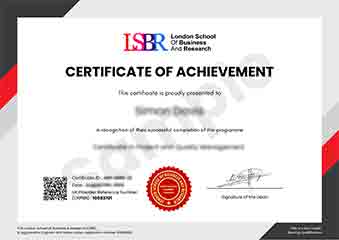
Sample Certificate
Preview the certificate you'll receive upon successful completion of this program.
Get Free Course Info
Enter your details and we'll send you a comprehensive course information pack straight to your inbox.
Employer Sponsored Training
Let your employer invest in your professional development. Request a corporate invoice and get your training funded.
Request Corporate InvoiceWhat People Say About Us
Hear from our students about their experience with the Executive Development Programme in Spatial Thinking in Design Innovation at FlexiCourses.
James Thompson
United Kingdom"The course content was incredibly rich and well-structured, providing a deep understanding of spatial thinking and its application in design innovation. I gained valuable practical skills that have already enhanced my ability to approach design problems from a new perspective, which I believe will be highly beneficial in my career."
Connor O'Brien
Canada"The Executive Development Programme in Spatial Thinking in Design Innovation has significantly enhanced my ability to visualize and solve complex spatial problems, making me more competitive in the design industry. This program has not only deepened my technical skills but also opened up new career opportunities by bridging the gap between theoretical knowledge and practical application."
Ruby McKenzie
Australia"The course structure was meticulously organized, providing a seamless progression from foundational concepts to advanced applications in spatial thinking, which greatly enhanced my understanding and practical skills in design innovation. The comprehensive content not only deepened my knowledge but also offered numerous real-world examples that significantly broadened my perspective on how to apply spatial thinking in various design contexts."