

Executive Development Programme in Visual Inspection Methods for Structural Damage
Enhance leadership skills and expertise in visual inspection methods to prevent structural damage, ensuring safety and efficiency in maintenance and engineering.
Executive Development Programme in Visual Inspection Methods for Structural Damage
Programme Overview
This Executive Development Programme in Visual Inspection Methods for Structural Damage is tailored for engineering managers, facility maintenance directors, and structural engineers. It equips participants with advanced visual inspection techniques to identify and assess structural damages promptly, ensuring safety and compliance with industry standards.
By the end of the course, participants will gain proficiency in using non-destructive testing methods, interpret inspection results accurately, and develop strategies to mitigate structural risks. Real-world case studies and hands-on workshops enhance practical application and problem-solving skills in managing structural integrity.
What You'll Learn
Dive into the cutting-edge world of structural integrity with our Executive Development Programme in Visual Inspection Methods for Structural Damage. This intensive program equips you with advanced techniques to identify and assess structural flaws, ensuring safety in everything from bridges to buildings. You’ll gain hands-on experience with state-of-the-art tools and materials, while deepening your understanding of industry standards and best practices. Ideal for professionals seeking to advance in structural engineering, this program offers a unique blend of theoretical knowledge and practical skills. Enhance your career prospects by becoming a trusted expert in visual inspection methods, driving innovation and safety in structural design and maintenance. Join us and transform your expertise into a powerful tool for safeguarding structures and saving lives.
Programme Highlights
Industry-Aligned Curriculum
Developed with industry leaders to ensure practical, job-ready skills valued by employers worldwide.
Globally Recognised Certificate
Recognised by employers across 180+ countries as a mark of professional excellence.
Flexible Online Learning
Study at your own pace with lifetime access to all course materials and updates.
Instant Access
Start learning immediately — no application process or waiting period required.
Constantly Updated Content
Stay ahead with the latest industry trends, best practices, and emerging insights.
Career Advancement
87% of graduates report measurable career progression within 6 months of completion.
Topics Covered
- 1. Introduction to Structural Inspection: Learners will study the importance of visual inspection in structural integrity and the basic principles of how to conduct visual inspections. They will gain skills in recognizing common structural defects and the initial use of visual aids like binoculars and cameras.
- 2. Fundamentals of Structural Materials: This module covers the properties of materials commonly used in construction, their degradation mechanisms, and how to identify signs of material failure through visual inspection. Learners will learn to differentiate between various materials and understand their vulnerabilities.
- 3. Visual Inspection Techniques and Tools: Learners will explore a range of inspection techniques and tools used in visual inspections, including the use of drones, thermal imaging, and other advanced visual aids. They will practice using these tools to conduct thorough inspections.
- 4. Identifying Common Structural Defects: This module focuses on recognizing and understanding common structural defects such as cracks, spalls, and corrosion. Learners will develop the ability to assess the severity of defects and their potential impact on structure integrity.
- 5. Advanced Inspection for Concrete Structures: Learners will delve into specific inspection methods for concrete structures, including the detection of reinforcement corrosion, cracking, and other durability issues. Practical exercises will enhance their ability to perform detailed inspections.
- 6. Inspection of Steel Structures: This module covers the unique challenges and inspection methods for steel structures, including the identification of weld defects, corrosion, and fatigue. Practical sessions will include hands-on exercises to identify and report defects.
- 7. Non-Destructive Testing Methods: Learners will study various non-destructive testing (NDT) methods, including ultrasonic testing, radiography, and magnetic particle inspection. They will practice using these methods to inspect structures without causing damage.
- 8. Advanced Visual Inspection for Composite Materials: This module focuses on inspecting composite materials used in modern structures, including signs of delamination, cracking, and moisture ingress. Practical exercises will help learners to identify and document defects in composite structures.
- 9. Structural Monitoring and Condition Assessment: Learners will learn how to monitor and assess the condition of structures over time using visual and other inspection methods. They will develop skills in planning and conducting long-term monitoring programs.
- 10. Reporting and Documentation: This module covers the best practices for documenting inspection findings and preparing comprehensive reports. Learners will learn to use software tools for data analysis and report generation, enhancing their ability to communicate technical information effectively.
What You Get When You Enroll
Secure checkout • Instant access • Certificate included
Key Facts
Audience: Engineering managers, quality assurance leads
Prerequisites: Basic understanding of structural materials
Outcomes: Enhanced inspection skills, damage identification accuracy, improved safety protocols
Ready to get started?
Join thousands of professionals who already took the next step. Enroll now and get instant access.
Enroll Now — $199Why This Course
Develop specialized skills in visual inspection techniques, crucial for identifying and assessing structural damage.
Enhance career prospects by gaining expertise in a high-demand field, applicable across various industries including construction, civil engineering, and aerospace.
Receive practical, hands-on training that equips learners with the knowledge to conduct thorough and accurate inspections, ensuring safety and compliance.
Your Path to Certification
Trusted by Professionals Worldwide
Course Brochure
Download our comprehensive course brochure with all details
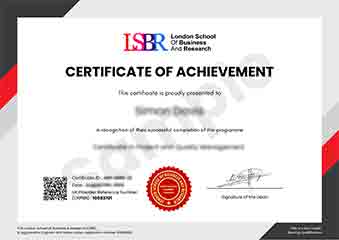
Sample Certificate
Preview the certificate you'll receive upon successful completion of this program.
Get Free Course Info
Enter your details and we'll send you a comprehensive course information pack straight to your inbox.
Employer Sponsored Training
Let your employer invest in your professional development. Request a corporate invoice and get your training funded.
Request Corporate InvoiceWhat People Say About Us
Hear from our students about their experience with the Executive Development Programme in Visual Inspection Methods for Structural Damage at FlexiCourses.
James Thompson
United Kingdom"The course content was incredibly detailed and well-structured, providing a solid foundation in visual inspection methods for structural damage. Gained practical skills that are directly applicable to my work, enhancing my ability to identify and assess structural issues effectively."
Tyler Johnson
United States"The Executive Development Programme in Visual Inspection Methods for Structural Damage has significantly enhanced my ability to identify and assess structural issues, making me more valuable in my role. This course has not only deepened my technical skills but also provided practical insights that are directly applicable in the field, opening up new opportunities for career advancement."
Mei Ling Wong
Singapore"The course structure was meticulously organized, providing a clear progression from fundamental concepts to advanced techniques in visual inspection, which greatly enhanced my understanding and practical application skills. The comprehensive content covered a wide range of real-world scenarios, significantly contributing to my professional growth in identifying and assessing structural damage."