

Global Certificate in Building Spatial Databases for Efficiency
Master the creation and management of spatial databases for enhanced efficiency and data-driven decision-making.
Global Certificate in Building Spatial Databases for Efficiency
Programme Overview
This course is designed for data professionals, GIS analysts, and urban planners aiming to enhance their skills in building and managing spatial databases. Participants will learn to integrate and analyze geospatial data effectively, leveraging advanced tools and techniques to improve operational efficiency.
By the end of the course, learners will be proficient in creating spatial databases, performing complex geospatial analysis, and implementing solutions that enhance decision-making processes in various sectors. Practical hands-on experience with industry-standard software and real-world case studies will equip learners with the knowledge to apply these skills in professional settings.
What You'll Learn
Explore the world of spatial data with our Global Certificate in Building Spatial Databases for Efficiency. This intensive course equips you with the skills to harness the power of geospatial technology for data management, analysis, and decision-making. Learn from industry experts who will guide you through the latest tools and techniques in GIS and database management. You'll gain hands-on experience in creating, managing, and analyzing spatial databases, preparing you for roles in urban planning, environmental management, logistics, and more. This certificate not only enhances your technical expertise but also opens doors to high-demand careers where spatial data plays a critical role. Join us and transform raw data into actionable insights that drive efficiency and innovation.
Programme Highlights
Industry-Aligned Curriculum
Developed with industry leaders to ensure practical, job-ready skills valued by employers worldwide.
Globally Recognised Certificate
Recognised by employers across 180+ countries as a mark of professional excellence.
Flexible Online Learning
Study at your own pace with lifetime access to all course materials and updates.
Instant Access
Start learning immediately — no application process or waiting period required.
Constantly Updated Content
Stay ahead with the latest industry trends, best practices, and emerging insights.
Career Advancement
87% of graduates report measurable career progression within 6 months of completion.
Topics Covered
- 1. Introduction to Spatial Databases: Learners will explore the basics of spatial data, including types of spatial data, spatial data models, and the importance of spatial databases in various industries. They will gain foundational skills in understanding and representing spatial information effectively.
- 2. Database Systems for Spatial Data: Learners will study different database systems used for spatial data, such as relational, object-oriented, and spatial-specific databases. They will learn how to choose the right database system for specific applications and gain hands-on experience in setting up spatial databases.
- 3. Spatial Data Modeling and Design: This module covers the principles of spatial data modeling and design, including entity-relationship modeling, topological relationships, and geospatial data normalization. Learners will develop skills in designing efficient and effective spatial data models.
- 4. Geospatial Data Collection and Integration: Learners will learn about various methods of geospatial data collection, including remote sensing, GPS, and field surveys. They will also explore techniques for integrating data from different sources and managing data quality issues.
- 5. Geospatial Analysis Techniques: This module focuses on advanced spatial analysis techniques, including spatial querying, spatial statistics, and network analysis. Learners will gain practical skills in performing complex spatial analyses and interpreting results.
- 6. Spatial Data Visualization: Learners will study various techniques for visualizing spatial data, including thematic mapping, 3D visualization, and dynamic mapping. They will develop skills in creating effective visual representations of spatial data for different audiences.
- 7. Geospatial Web Services: This module covers the development and use of geospatial web services, including web mapping APIs, web services for spatial data exchange, and cloud-based geospatial services. Learners will learn how to integrate geospatial services into web applications.
- 8. Big Spatial Data and Scalability: Learners will explore the challenges and solutions for managing big spatial data, including data storage, indexing, and querying. They will learn techniques for scaling spatial databases to handle large datasets efficiently.
- 9. Security and Privacy in Geospatial Databases: This module covers the principles of security and privacy in geospatial databases, including access control, data encryption, and compliance with legal and regulatory requirements. Learners will gain skills in ensuring the security and privacy of geospatial data.
- 10. Case Studies and Project Work: In this final module, learners will work on real-world case studies and projects that apply the concepts and skills learned throughout the programme. They will develop a comprehensive understanding of how to build and manage spatial databases for efficiency in practical settings.
What You Get When You Enroll
Secure checkout • Instant access • Certificate included
Key Facts
For GIS professionals, data analysts
No prior coding experience required
Master spatial data modeling and management
Develop skills in database design for GIS
Learn efficient data storage and retrieval techniques
Ready to get started?
Join thousands of professionals who already took the next step. Enroll now and get instant access.
Enroll Now — $99Why This Course
Acquire specialized skills in building and managing spatial databases, enhancing your career prospects in fields such as geographic information systems (GIS), urban planning, and environmental management.
Gain practical experience with cutting-edge tools and technologies used in spatial data management, providing a competitive edge in the job market.
Develop a deep understanding of spatial data analysis and its application in real-world scenarios, enabling you to contribute effectively to projects that require spatial data management and analysis.
Your Path to Certification
Trusted by Professionals Worldwide
Course Brochure
Download our comprehensive course brochure with all details
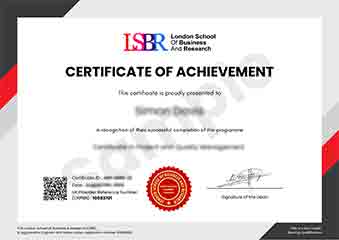
Sample Certificate
Preview the certificate you'll receive upon successful completion of this program.
Get Free Course Info
Enter your details and we'll send you a comprehensive course information pack straight to your inbox.
Employer Sponsored Training
Let your employer invest in your professional development. Request a corporate invoice and get your training funded.
Request Corporate InvoiceWhat People Say About Us
Hear from our students about their experience with the Global Certificate in Building Spatial Databases for Efficiency at FlexiCourses.
Oliver Davies
United Kingdom"The course content is incredibly thorough, covering all the essential aspects of building spatial databases, which has significantly enhanced my ability to manage and analyze geographical data efficiently. Gaining hands-on experience with real-world datasets has been invaluable, providing a strong foundation for applying these skills in my future career."
Ashley Rodriguez
United States"This course has been incredibly valuable, equipping me with the skills to design and implement efficient spatial databases that are directly applicable in the field of geographic information systems. It has opened up new opportunities for career advancement in environmental consulting, where spatial data analysis is crucial."
Connor O'Brien
Canada"The course structure is well-organized, providing a clear progression from basic concepts to advanced techniques in building spatial databases, which greatly enhances my understanding and practical skills in this field. The comprehensive content and real-world applications have significantly boosted my ability to apply these skills in professional settings."