

Global Certificate in Simulation Driven Structural Engineering
This global certificate equips engineers with advanced simulation techniques for structural analysis, enhancing design accuracy and efficiency worldwide.
Global Certificate in Simulation Driven Structural Engineering
Programme Overview
This course is designed for structural engineers, architects, and engineering students looking to enhance their skills in simulation-driven structural engineering. It focuses on using the latest software tools and techniques to model and analyze structural systems, ensuring safe and efficient designs.
Participants will gain proficiency in advanced simulation software, learn to predict structural behavior under various conditions, and develop strategies for optimizing structural designs. By the end, they will be able to apply simulation methods to real-world projects, improving project outcomes and reducing costs.
What You'll Learn
Embark on a transformative journey into the future of structural engineering with our Global Certificate in Simulation-Driven Structural Engineering. This cutting-edge program equips you with the latest tools and techniques to design and analyze complex structures, ensuring safety and sustainability. You'll master advanced software, including finite element analysis and machine learning, preparing you for high-demand roles in construction, architecture, and consulting. Engage in real-world projects that challenge your creativity and technical skills, and network with industry leaders. Graduates secure positions as structural engineers, project managers, or simulation specialists, with opportunities in both public and private sectors. Join us to shape a resilient and innovative built environment.
Programme Highlights
Industry-Aligned Curriculum
Developed with industry leaders to ensure practical, job-ready skills valued by employers worldwide.
Globally Recognised Certificate
Recognised by employers across 180+ countries as a mark of professional excellence.
Flexible Online Learning
Study at your own pace with lifetime access to all course materials and updates.
Instant Access
Start learning immediately — no application process or waiting period required.
Constantly Updated Content
Stay ahead with the latest industry trends, best practices, and emerging insights.
Career Advancement
87% of graduates report measurable career progression within 6 months of completion.
Topics Covered
- 1. Fundamentals of Structural Analysis: Learners will study basic principles of structural analysis, including statics, mechanics of materials, and the behavior of structures under various loading conditions. They will gain skills in applying these principles to design simple structures and understand the importance of material properties and geometry in structural performance.
- 2. Introduction to Computational Simulation: This module introduces learners to the basics of computational simulation, focusing on finite element analysis (FEA) and its application in structural engineering. Learners will learn how to set up and run basic FEA models and interpret simulation results, laying the groundwork for more advanced simulation techniques.
- 3. Advanced Structural Analysis Techniques: Building on the foundational concepts, learners will explore advanced structural analysis techniques such as nonlinear analysis, dynamic analysis, and stability analysis. They will gain practical skills in using these techniques to analyze complex structural systems and predict their behavior under realistic loading scenarios.
- 4. Material Modeling and Properties: This module delves into the behavior of materials under loading, focusing on the development and validation of material models. Learners will learn how to select appropriate material models for different structural components and how to incorporate these models into simulation tools to improve the accuracy of structural analyses.
- 5. Simulation of Composite Structures: Learners will study the unique challenges and opportunities associated with simulating composite structures. They will gain skills in modeling composite materials and structures, understanding the effects of anisotropy, and optimizing composite structures for specific performance criteria.
- 6. Structural Health Monitoring and Condition Assessment: This module covers the principles and techniques of structural health monitoring (SHM) and condition assessment. Learners will learn how to design monitoring systems, interpret SHM data, and assess the structural condition of existing structures to ensure their safety and longevity.
- 7. Simulation in Renewable Energy Structures: Focusing on the specific needs of renewable energy structures such as wind turbines, solar panels, and offshore structures, learners will study the unique challenges and simulation techniques required for these applications. They will gain skills in modeling and analyzing the structural behavior of these complex systems under various environmental conditions.
- 8. Parametric and Topology Optimization: This advanced module introduces learners to parametric and topology optimization techniques for structural design. Learners will learn how to use optimization algorithms to improve the performance of structures while minimizing material usage and cost, and they will apply these techniques to real-world design problems.
- 9. Integration of Simulation with Building Information Modeling (BIM): In this module, learners will explore the integration of structural simulation with BIM tools. They will learn how to create and manage digital models of buildings and structures, incorporate simulation results into these models, and use BIM for coordinated design and construction processes.
- 10. Case Studies and Project Work: The final module involves applying the knowledge and skills gained throughout the programme to real-world case studies and a project work. Learners will work on a comprehensive project that integrates various aspects of simulation-driven structural engineering, demonstrating their ability to solve complex structural engineering problems using advanced simulation techniques.
What You Get When You Enroll
Secure checkout • Instant access • Certificate included
Key Facts
Audience: Engineers, researchers, students
Prerequisites: Basic engineering knowledge
Outcomes: Proficient in simulation tools, enhanced problem-solving skills
Ready to get started?
Join thousands of professionals who already took the next step. Enroll now and get instant access.
Enroll Now — $99Why This Course
Enhances Practical Skills: The Global Certificate in Simulation Driven Structural Engineering focuses on hands-on learning, providing learners with the practical skills needed for real-world applications in structural engineering.
Industry-Relevant Knowledge: This program equips learners with the latest industry standards and tools, ensuring they are well-prepared to meet the demands of the structural engineering field.
Networking Opportunities: Participants gain access to a global network of professionals, facilitating collaborations and knowledge exchange, which can be invaluable for career advancement.
Your Path to Certification
Trusted by Professionals Worldwide
Course Brochure
Download our comprehensive course brochure with all details
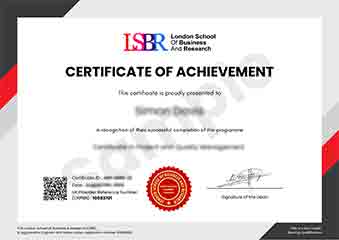
Sample Certificate
Preview the certificate you'll receive upon successful completion of this program.
Get Free Course Info
Enter your details and we'll send you a comprehensive course information pack straight to your inbox.
Employer Sponsored Training
Let your employer invest in your professional development. Request a corporate invoice and get your training funded.
Request Corporate InvoiceWhat People Say About Us
Hear from our students about their experience with the Global Certificate in Simulation Driven Structural Engineering at FlexiCourses.
James Thompson
United Kingdom"The course content is incredibly thorough and well-researched, providing a solid foundation in simulation-driven structural engineering that has significantly enhanced my problem-solving skills. I've gained practical knowledge that I can directly apply to real-world projects, making this course invaluable for my career in structural engineering."
Anna Schmidt
Germany"This course has been incredibly valuable, equipping me with advanced simulation techniques that are directly applicable in the industry. It has not only enhanced my problem-solving skills but also opened up new career opportunities in structural engineering."
Charlotte Williams
United Kingdom"The course structure is well-organized, providing a comprehensive understanding of simulation-driven structural engineering that directly translates into practical applications, significantly enhancing my professional growth."