

Postgraduate Certificate in Image Filtering with Python Libraries
Gain expertise in image filtering techniques using Python libraries, enhancing image processing skills for professional applications.
Postgraduate Certificate in Image Filtering with Python Libraries
Programme Overview
This course is designed for postgraduate students and professionals with a foundational knowledge of Python and image processing. It aims to equip learners with advanced skills in applying various image filtering techniques using Python libraries such as OpenCV and NumPy. Participants will gain practical experience in enhancing, restoring, and analyzing images through hands-on projects and assignments. The course covers essential topics like convolution, edge detection, and noise reduction, preparing students for careers in computer vision, data science, and related fields.
Upon completion, students will be able to implement complex image filtering algorithms, optimize image processing pipelines, and leverage Python libraries to solve real-world problems in image analysis. The curriculum is structured to bridge theoretical knowledge with practical application, ensuring that learners can immediately apply their skills in professional settings.
What You'll Learn
Dive into the captivating world of image filtering with our Postgraduate Certificate in Image Filtering with Python Libraries. This intensive, week program equips you with advanced skills in using Python to process and analyze images, enhancing your ability to tackle complex visual data. You'll master cutting-edge techniques, from basic filters to deep learning applications, using popular libraries like OpenCV and TensorFlow. Our hands-on approach ensures you gain practical experience, perfecting your coding skills and problem-solving abilities. This course not only prepares you for roles in data science, computer vision, and image processing but also opens doors to research and development positions. Join us and transform your understanding of image filtering, turning visual data into actionable insights.
Programme Highlights
Industry-Aligned Curriculum
Developed with industry leaders to ensure practical, job-ready skills valued by employers worldwide.
Globally Recognised Certificate
Recognised by employers across 180+ countries as a mark of professional excellence.
Flexible Online Learning
Study at your own pace with lifetime access to all course materials and updates.
Instant Access
Start learning immediately — no application process or waiting period required.
Constantly Updated Content
Stay ahead with the latest industry trends, best practices, and emerging insights.
Career Advancement
87% of graduates report measurable career progression within 6 months of completion.
Topics Covered
- 1. Introduction to Image Filtering: Learners will study the basics of image filtering, including types of images and filters. They will gain foundational skills in understanding the importance of filtering in image processing and how to apply basic filters using Python libraries.
- 2. Mathematical Foundations of Image Filtering: This module covers the mathematical concepts underlying image filtering, such as convolution and Fourier transforms. Learners will understand the theoretical aspects and apply them practically to enhance their image processing skills.
- 3. Implementing Simple Filters in Python: Learners will implement simple image filters using Python libraries like OpenCV and NumPy. They will practice writing code to apply these filters and gain hands-on experience with basic image manipulation techniques.
- 4. Advanced Filtering Techniques: This module explores more advanced filtering techniques, including non-linear filters and adaptive filters. Learners will study these methods and apply them to solve complex image processing problems.
- 5. Frequency Domain Filtering: Learners will delve into frequency domain filtering techniques, including Fourier and Wavelet transforms. They will learn how to apply these filters to images and analyze their effects on the image.
- 6. Image Enhancement and Restoration: This module focuses on enhancing and restoring images, covering techniques such as noise reduction and image sharpness improvement. Learners will apply various filters to achieve these goals and understand their impact on image quality.
- 7. Python Libraries for Image Filtering: In this module, learners will become proficient in using popular Python libraries for image filtering, including OpenCV, Pillow, and SciPy. They will explore the features and capabilities of these libraries and apply them to real-world image processing tasks.
- 8. Project Development: Learners will work on a comprehensive project that applies the knowledge and skills gained throughout the course to a real-world image filtering problem. They will design, implement, and present their solution, demonstrating their ability to apply advanced filtering techniques.
- 9. Machine Learning in Image Filtering: This module introduces machine learning approaches to image filtering, including supervised and unsupervised learning techniques. Learners will apply machine learning algorithms to filter images and understand how these methods can enhance image processing capabilities.
- 10. Practical Applications of Image Filtering: In the final module, learners will explore the practical applications of image filtering in various fields, such as medical imaging, surveillance, and computer vision. They will gain insights into how image filtering techniques are used in real-world scenarios and discuss future trends in the field.
What You Get When You Enroll
Secure checkout • Instant access • Certificate included
Key Facts
Ideal for data science professionals
Prerequisite: Basic Python knowledge
Prerequisite: Basic image processing concepts
Understand advanced image filtering techniques
Implement filters using Python libraries
Enhance image quality in practical projects
Ready to get started?
Join thousands of professionals who already took the next step. Enroll now and get instant access.
Enroll Now — $149Why This Course
Gain specialized skills in image processing using Python libraries, enhancing employability in tech and engineering fields.
Access real-world applications of image filtering techniques, bridging theoretical knowledge with practical experience.
Develop a competitive edge by acquiring in-demand skills that are crucial for roles in data science, computer vision, and artificial intelligence.
Your Path to Certification
Trusted by Professionals Worldwide
Course Brochure
Download our comprehensive course brochure with all details
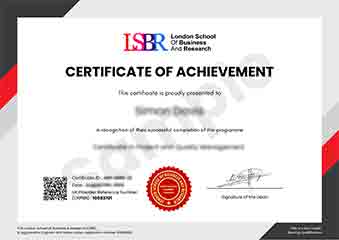
Sample Certificate
Preview the certificate you'll receive upon successful completion of this program.
Get Free Course Info
Enter your details and we'll send you a comprehensive course information pack straight to your inbox.
Employer Sponsored Training
Let your employer invest in your professional development. Request a corporate invoice and get your training funded.
Request Corporate InvoiceWhat People Say About Us
Hear from our students about their experience with the Postgraduate Certificate in Image Filtering with Python Libraries at FlexiCourses.
Charlotte Williams
United Kingdom"The course content is exceptionally well-structured, providing a deep dive into various image filtering techniques with practical Python implementations. Gaining hands-on experience with popular libraries has significantly enhanced my ability to process and analyze images, which is incredibly beneficial for my career in data science."
Emma Tremblay
Canada"This postgraduate certificate has significantly enhanced my ability to apply advanced image filtering techniques in real-world scenarios, making my skills highly sought after in the tech industry. It has opened up new career opportunities and allowed me to take on more complex projects at work."
Liam O'Connor
Australia"The course structure is well-organized, providing a clear progression from basic concepts to advanced techniques in image filtering, which significantly enhances my understanding and practical skills in using Python libraries for image processing. The comprehensive content and real-world applications have been invaluable for my professional growth in this field."