

Postgraduate Certificate in Python for Microcontroller Development: Real-World Applications
Earn a Postgraduate Certificate in Python for Microcontroller Development to gain expertise in real-world applications, enhancing project management and technical skills for IoT and embedded systems.
Postgraduate Certificate in Python for Microcontroller Development: Real-World Applications
Programme Overview
This course is designed for professionals and students with a foundational knowledge of Python and an interest in microcontroller development. It equips participants with the skills to develop embedded systems using Python, focusing on real-world applications like IoT devices, home automation, and wearable tech. By the end, learners will have built projects that integrate Python with microcontrollers, enhancing their ability to innovate in tech-driven industries.
Participants will gain practical experience in writing efficient Python code for microcontrollers, understanding hardware-software interfacing, and deploying Python in constrained environments. The curriculum includes hands-on labs and real-world case studies to bridge the gap between theory and application, making participants ready to tackle challenges in the field of embedded systems.
What You'll Learn
Dive into the cutting-edge world of microcontroller development with our Postgraduate Certificate in Python for Microcontroller Development: Real-World Applications. This intensive program equips you with the skills to design and develop embedded systems using Python, a language known for its simplicity and power. You'll explore real-world applications, from IoT devices to smart home systems, and gain hands-on experience with popular microcontrollers. This course not only enhances your technical skills but also opens doors to lucrative career opportunities in tech, electronics, and IoT industries. Stand out in the job market as a developer capable of creating innovative, Python-driven microcontroller solutions. Enroll now and make your mark in the exciting field of embedded systems.
Programme Highlights
Industry-Aligned Curriculum
Developed with industry leaders to ensure practical, job-ready skills valued by employers worldwide.
Globally Recognised Certificate
Recognised by employers across 180+ countries as a mark of professional excellence.
Flexible Online Learning
Study at your own pace with lifetime access to all course materials and updates.
Instant Access
Start learning immediately — no application process or waiting period required.
Constantly Updated Content
Stay ahead with the latest industry trends, best practices, and emerging insights.
Career Advancement
87% of graduates report measurable career progression within 6 months of completion.
Topics Covered
- 1. Introduction to Python for Microcontroller Development: Learners will be introduced to the basics of Python programming and its application in microcontroller development. They will gain foundational knowledge of Python syntax, data types, and basic programming constructs necessary for developing microcontroller applications.
- 2. Microcontroller Fundamentals: Learners will study the basics of microcontrollers, including architecture, programming models, and interfacing with external devices. Practical skills include setting up development environments and basic microcontroller programming techniques.
- 3. I/O Operations and Pin Control: Learners will delve into input/output operations, learning how to control GPIO pins and interface with LEDs, buttons, and other common peripheral devices. They will gain hands-on experience in writing code to handle I/O operations.
- 4. Sensor Interfacing: This module covers interfacing with various sensors such as temperature, humidity, and motion detectors. Learners will learn how to read sensor data and process it using Python, enhancing their ability to develop data-driven microcontroller applications.
- 5. Communication Protocols: Learners will explore communication protocols like UART, I2C, and SPI, essential for connecting microcontrollers with other devices. They will write code to implement these protocols, enabling data exchange between microcontrollers and other hardware components.
- 6. Real-Time Data Processing: This module focuses on techniques for real-time data processing in microcontroller applications. Learners will learn to handle time-critical tasks, implement event-driven programming, and optimize code performance for resource-constrained environments.
- 7. Advanced Python for Microcontrollers: Learners will study advanced Python features such as classes, modules, and packages, and see how they can be applied to microcontroller development. They will also explore concurrency and threading in Python for better performance and responsiveness.
- 8. Embedded Systems Design: This module provides an overview of embedded system design principles and practices. Learners will learn to design, implement, and test complex microcontroller-based systems, covering topics like power management, memory optimization, and system reliability.
- 9. Case Studies and Projects: Through case studies and practical projects, learners will apply their knowledge to real-world scenarios. They will work on designing and implementing microcontroller-based projects, from start to finish, including planning, coding, and testing.
- 10. Final Project and Presentation: In this final module, learners will undertake an independent project, applying all the skills and knowledge acquired throughout the programme. They will present their project to peers and instructors, demonstrating their ability to solve complex problems using Python for microcontroller development.
What You Get When You Enroll
Secure checkout • Instant access • Certificate included
Key Facts
Target professionals in IoT, embedded systems
No prior Python or microcontroller experience needed
Understand microcontroller architectures
Develop firmware for Arduino, Raspberry Pi
Implement real-time data processing
Gain hands-on with sensor integration
Prepare for advanced microcontroller projects
Ready to get started?
Join thousands of professionals who already took the next step. Enroll now and get instant access.
Enroll Now — $149Why This Course
Gain specialized skills in Python for microcontroller development, enhancing career prospects in IoT and embedded systems.
Access real-world application projects that bridge theoretical knowledge with practical implementation, preparing learners for industry demands.
Benefit from expert instruction in a cutting-edge field, equipping you with the latest tools and techniques for microcontroller programming.
Your Path to Certification
Trusted by Professionals Worldwide
Course Brochure
Download our comprehensive course brochure with all details
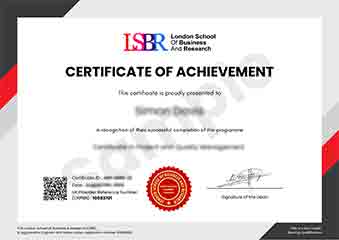
Sample Certificate
Preview the certificate you'll receive upon successful completion of this program.
Get Free Course Info
Enter your details and we'll send you a comprehensive course information pack straight to your inbox.
Employer Sponsored Training
Let your employer invest in your professional development. Request a corporate invoice and get your training funded.
Request Corporate InvoiceWhat People Say About Us
Hear from our students about their experience with the Postgraduate Certificate in Python for Microcontroller Development: Real-World Applications at FlexiCourses.
Oliver Davies
United Kingdom"The course content is incredibly thorough and well-structured, providing a solid foundation in Python for microcontroller development that directly translates into practical skills for real-world applications. Gaining this knowledge has significantly enhanced my ability to tackle complex projects and has opened up new career opportunities in embedded systems development."
Rahul Singh
India"This course has been instrumental in bridging the gap between theoretical knowledge and practical application of Python in microcontroller development. It has significantly enhanced my resume, making me a more attractive candidate for roles that require expertise in IoT and embedded systems."
Rahul Singh
India"The course structure is well-organized, seamlessly blending theoretical concepts with practical real-world applications, which has significantly enhanced my understanding and knowledge in Python for microcontroller development. It has provided a solid foundation for applying these skills in professional settings."