

Professional Certificate in Implementing Bayesian Models for Data Estimation
Elevate data estimation skills with this certificate, mastering Bayesian models for precise and predictive analytics outcomes.
Professional Certificate in Implementing Bayesian Models for Data Estimation
Programme Overview
This course is designed for data scientists, statisticians, and researchers who need to apply Bayesian models to real-world data estimation problems. It covers the fundamentals of Bayesian statistics, including prior and posterior distributions, Markov Chain Monte Carlo methods, and model selection techniques. Participants will gain hands-on experience using Python and popular libraries like PyMC3 or Stan to implement Bayesian models and interpret their results.
By the end of the course, learners will be able to select appropriate Bayesian models for their data, estimate parameters using Markov Chain Monte Carlo simulations, and evaluate model fit and predictive accuracy. They will also understand the advantages and limitations of Bayesian approaches compared to frequentist methods, enabling them to make informed decisions when solving complex data estimation challenges.
What You'll Learn
Dive into the future of data analysis with our Professional Certificate in Implementing Bayesian Models for Data Estimation. This intensive course equips you with advanced skills in Bayesian statistics, empowering you to make more accurate predictions and informed decisions. You'll master the use of Bayesian models to estimate complex data scenarios, from predictive analytics to machine learning. Our unique hands-on approach includes real-world case studies and practical projects, ensuring you can apply your knowledge immediately. Enroll and transform your career in data science, data analytics, machine learning, or any field requiring sophisticated statistical modeling. Join the ranks of data experts who leverage Bayesian approaches to gain a competitive edge in today's data-driven world.
Programme Highlights
Industry-Aligned Curriculum
Developed with industry leaders to ensure practical, job-ready skills valued by employers worldwide.
Globally Recognised Certificate
Recognised by employers across 180+ countries as a mark of professional excellence.
Flexible Online Learning
Study at your own pace with lifetime access to all course materials and updates.
Instant Access
Start learning immediately — no application process or waiting period required.
Constantly Updated Content
Stay ahead with the latest industry trends, best practices, and emerging insights.
Career Advancement
87% of graduates report measurable career progression within 6 months of completion.
Topics Covered
- 1. Introduction to Bayesian Statistics: Learners will study the fundamental principles of Bayesian statistics, including prior and posterior distributions, and gain an understanding of how to interpret Bayesian results. Practical skills include using software tools to set up and run basic Bayesian models.
- 2. Prior Distributions and Model Specification: This module covers the selection and specification of prior distributions, essential for Bayesian model building. Learners will learn to choose appropriate priors and understand their impact on model outcomes. Practical skills involve specifying and comparing different prior distributions in modeling scenarios.
- 3. Bayesian Inference and Estimation Techniques: Learners will explore various Bayesian inference methods and estimation techniques, such as Markov Chain Monte Carlo (MCMC) and Hamiltonian Monte Carlo. They will gain hands-on experience in applying these techniques using programming tools.
- 4. Model Checking and Validation: This module focuses on assessing the adequacy of Bayesian models and validating their performance. Learners will study diagnostic tools and methods for checking model assumptions and fit. Practical skills include conducting model validation using posterior predictive checks and other diagnostics.
- 5. Advanced Bayesian Techniques: Learners will delve into advanced Bayesian modeling techniques, including hierarchical models and mixture models, and learn how to apply these to complex data structures. Practical skills encompass building and interpreting hierarchical and mixture models.
- 6. Bayesian Model Comparison: This module covers various methods for comparing different Bayesian models, including information criteria and cross-validation techniques. Learners will learn to evaluate model fit and predictive accuracy. Practical skills include using software to compare and select models based on criteria such as WAIC and LOO.
- 7. Bayesian Regression Models: Learners will study Bayesian regression techniques, including linear and generalized linear models. They will learn how to apply these models to real-world data and interpret the results. Practical skills involve fitting and interpreting Bayesian regression models.
- 8. Bayesian Time Series Analysis: This module introduces Bayesian methods for analyzing time series data, including autoregressive models and state-space models. Learners will learn to model temporal dependencies and forecast future values. Practical skills include building and forecasting with Bayesian time series models.
- 9. Bayesian Machine Learning: Learners will explore the intersection of Bayesian methods and machine learning, covering topics such as Bayesian neural networks and Bayesian optimization. Practical skills include implementing Bayesian methods in machine learning pipelines.
- 10. Applied Bayesian Data Estimation: In this final module, learners will apply all the knowledge gained throughout the course to estimate parameters and make predictions using Bayesian models in real-world scenarios. Practical skills include designing, implementing, and presenting a comprehensive Bayesian data estimation project.
What You Get When You Enroll
Secure checkout • Instant access • Certificate included
Key Facts
Audience: Data scientists, analysts
Prerequisites: Basic statistics, programming
Outcomes: Master Bayesian models, build estimations
Ready to get started?
Join thousands of professionals who already took the next step. Enroll now and get instant access.
Enroll Now — $149Why This Course
Enhance predictive capabilities with Bayesian methods, providing a robust framework for data analysis and estimation.
Gain practical skills in implementing Bayesian models, which are essential for making informed decisions based on data.
Access exclusive resources and support from industry experts, accelerating your learning and application of Bayesian techniques.
Your Path to Certification
Trusted by Professionals Worldwide
Course Brochure
Download our comprehensive course brochure with all details
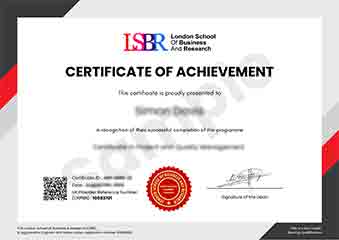
Sample Certificate
Preview the certificate you'll receive upon successful completion of this program.
Get Free Course Info
Enter your details and we'll send you a comprehensive course information pack straight to your inbox.
Employer Sponsored Training
Let your employer invest in your professional development. Request a corporate invoice and get your training funded.
Request Corporate InvoiceWhat People Say About Us
Hear from our students about their experience with the Professional Certificate in Implementing Bayesian Models for Data Estimation at FlexiCourses.
Oliver Davies
United Kingdom"The course content is incredibly thorough and well-structured, providing a solid foundation in Bayesian models that has significantly enhanced my analytical skills. I've gained practical knowledge that I can directly apply to real-world data estimation problems, which is incredibly beneficial for my career in data science."
Ruby McKenzie
Australia"This course has been instrumental in enhancing my ability to apply Bayesian models to real-world data estimation problems, making my skills highly relevant in the job market. It has opened up new career opportunities in data analysis and statistical modeling."
Klaus Mueller
Germany"The course structure is well-organized, providing a seamless transition from theoretical concepts to practical applications, which significantly enhances my understanding and confidence in implementing Bayesian models. The comprehensive content, coupled with real-world examples, has been instrumental in my professional growth, equipping me with the skills needed to estimate data effectively in various industries."