

Professional Certificate in Implementing Clustering Algorithms in Python
Earn a professional certificate in using Python to implement and optimize clustering algorithms, enhancing data analysis and machine learning skills.
Professional Certificate in Implementing Clustering Algorithms in Python
Programme Overview
This course is designed for data scientists, machine learning engineers, and IT professionals looking to enhance their skills in clustering algorithms specifically using Python. Participants will gain hands-on experience with popular clustering techniques like K-means, hierarchical clustering, and DBSCAN, and learn to implement these algorithms effectively using libraries such as scikit-learn and pandas.
By the end of the course, learners will be able to preprocess data, choose suitable clustering algorithms based on data characteristics, and evaluate the effectiveness of their clustering solutions. Practical projects will help solidify understanding and prepare learners for real-world applications.
What You'll Learn
Dive into the world of unsupervised learning with our Professional Certificate in Implementing Clustering Algorithms in Python. This hands-on course equips you with the skills to master K-Means, Hierarchical, and DBSCAN clustering methods, ensuring you can analyze complex data sets and uncover hidden patterns. Ideal for data scientists, analysts, and AI enthusiasts, this program offers real-world projects and a capstone project that prepares you for advanced roles. Join us to transform raw data into actionable insights, enhancing your career in tech, finance, healthcare, and more. By the end, you'll have a portfolio of projects and a certificate that opens doors to specialized roles in data science and machine learning.
Programme Highlights
Industry-Aligned Curriculum
Developed with industry leaders to ensure practical, job-ready skills valued by employers worldwide.
Globally Recognised Certificate
Recognised by employers across 180+ countries as a mark of professional excellence.
Flexible Online Learning
Study at your own pace with lifetime access to all course materials and updates.
Instant Access
Start learning immediately — no application process or waiting period required.
Constantly Updated Content
Stay ahead with the latest industry trends, best practices, and emerging insights.
Career Advancement
87% of graduates report measurable career progression within 6 months of completion.
Topics Covered
- 1. Introduction to Clustering Algorithms: Learners will study the basic concepts of clustering, including types of clustering, and gain an understanding of how clustering algorithms work. They will learn to implement simple clustering algorithms and interpret results.
- 2. Hierarchical Clustering: This module covers hierarchical clustering techniques, including agglomerative and divisive clustering. Learners will learn to implement these methods using Python and visualize the resulting clusters.
- 3. K-Means Clustering: Learners will delve into K-Means clustering, understanding its mechanics and limitations. They will implement K-Means from scratch and use libraries like scikit-learn, enhancing their ability to handle real-world data.
- 4. DBSCAN Clustering: This module introduces DBSCAN, focusing on its ability to discover clusters of arbitrary shape. Learners will learn how to apply DBSCAN and understand its parameters, including e and MinPts, through practical exercises.
- 5. Evaluation Metrics for Clustering: Learners will study various metrics to evaluate the quality of clustering, such as silhouette score and Davies-Bouldin index. They will practice using these metrics to compare and optimize clustering results.
- 6. Advanced K-Means Clustering Techniques: This module explores advanced techniques for K-Means, including initialization methods (e.g., K-Means++) and handling large datasets using mini-batch K-Means.
- 7. Clustering with Non-Euclidean Distance Metrics: Learners will learn to apply clustering algorithms using non-Euclidean distance metrics, such as cosine similarity and Jaccard distance, and understand when and why to use these metrics.
- 8. Clustering Text Data: This module focuses on clustering text data, including topic modeling techniques like Latent Dirichlet Allocation (LDA). Learners will practice preprocessing text data and applying clustering algorithms to discover hidden themes.
- 9. Clustering with High-Dimensional Data: Learners will tackle challenges in clustering high-dimensional data, such as the curse of dimensionality, and learn dimensionality reduction techniques like PCA to preprocess data before clustering.
- 10. Real-World Applications of Clustering: In this final module, learners will apply clustering techniques to real-world datasets from various domains, such as customer segmentation, image analysis, and biological data. They will work on end-to-end projects, from data preparation to model evaluation.
What You Get When You Enroll
Secure checkout • Instant access • Certificate included
Key Facts
Audience: Data scientists, analysts
Prerequisites: Basic Python, statistics knowledge
Outcomes: Master clustering techniques, apply algorithms, evaluate models
Ready to get started?
Join thousands of professionals who already took the next step. Enroll now and get instant access.
Enroll Now — $149Why This Course
Gain practical skills in applying clustering algorithms using Python, enhancing your ability to analyze and interpret complex datasets.
Access to industry-standard tools and techniques, which are essential for careers in data science, machine learning, and analytics.
Develop a portfolio project that showcases your proficiency in clustering, making you a more competitive candidate for data-related positions.
Your Path to Certification
Trusted by Professionals Worldwide
Course Brochure
Download our comprehensive course brochure with all details
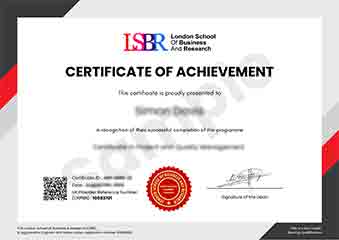
Sample Certificate
Preview the certificate you'll receive upon successful completion of this program.
Get Free Course Info
Enter your details and we'll send you a comprehensive course information pack straight to your inbox.
Employer Sponsored Training
Let your employer invest in your professional development. Request a corporate invoice and get your training funded.
Request Corporate InvoiceWhat People Say About Us
Hear from our students about their experience with the Professional Certificate in Implementing Clustering Algorithms in Python at FlexiCourses.
Charlotte Williams
United Kingdom"The course content is comprehensive and well-structured, providing a solid foundation in clustering algorithms and their implementation in Python. I've gained valuable practical skills that have directly enhanced my ability to analyze and segment data effectively, which is incredibly beneficial for my career in data science."
Jia Li Lim
Singapore"This course has been incredibly valuable in enhancing my ability to apply clustering algorithms in real-world scenarios, directly improving my analytical skills and making me more competitive in the job market. Since completing the course, I've been able to take on more complex projects at work, leading to a significant boost in my career."
Madison Davis
United States"The course is well-organized, providing a clear path from basic concepts to advanced clustering techniques, which greatly enhances my understanding and practical skills in implementing these algorithms in Python. It offers a wealth of real-world applications that have significantly broadened my perspective on how clustering can be applied in various industries."