

Professional Certificate in Model Uncertainty Quantification Methods
Elevate skills in quantifying model uncertainty with a professional certificate, enhancing decision-making through robust risk assessment and analysis.
Professional Certificate in Model Uncertainty Quantification Methods
Programme Overview
This course is designed for data scientists, statisticians, and engineers seeking to enhance their skills in quantifying uncertainties in predictive models. Participants will gain proficiency in using advanced statistical methods and machine learning techniques to assess and manage prediction errors and model uncertainties effectively.
Students will learn to apply state-of-the-art uncertainty quantification techniques, including Bayesian methods, Monte Carlo simulations, and ensemble modeling. They will also develop skills in using software tools and programming languages such as Python and R for implementing these methods in real-world applications.
What You'll Learn
Dive into the heart of modern data science with our Professional Certificate in Model Uncertainty Quantification Methods. This intensive program equips you with the latest tools and techniques to navigate the complexities of model uncertainty in real-world applications. You'll master Bayesian methods, Monte Carlo simulations, and advanced statistical modeling to make informed decisions in fields like finance, healthcare, and climate science. Our curriculum is designed to not only enhance your analytical skills but also to provide hands-on experience through project-based learning. By the end of the course, you'll be well-prepared to tackle complex models with confidence, opening doors to lucrative careers in data analysis, risk management, and research. Join us and transform your approach to uncertainty in modeling!
Programme Highlights
Industry-Aligned Curriculum
Developed with industry leaders to ensure practical, job-ready skills valued by employers worldwide.
Globally Recognised Certificate
Recognised by employers across 180+ countries as a mark of professional excellence.
Flexible Online Learning
Study at your own pace with lifetime access to all course materials and updates.
Instant Access
Start learning immediately — no application process or waiting period required.
Constantly Updated Content
Stay ahead with the latest industry trends, best practices, and emerging insights.
Career Advancement
87% of graduates report measurable career progression within 6 months of completion.
Topics Covered
- 1. Introduction to Uncertainty Quantification: Learners will study the basic principles and importance of uncertainty quantification in modeling, understanding how uncertainties arise and their impact on model predictions. They will gain foundational skills in identifying, characterizing, and representing uncertainties in models.
- 2. Probability Theory and Statistical Inference: This module covers essential probability theory and statistical inference techniques necessary for quantifying uncertainties. Learners will learn to apply probability distributions, perform hypothesis testing, and use statistical methods to estimate uncertainties in model parameters.
- 3. Sensitivity Analysis Techniques: Learners will explore various sensitivity analysis methods to identify which input variables significantly influence model outputs. Skills in conducting local and global sensitivity analyses, and interpreting the results for model improvement will be developed.
- 4. Monte Carlo Methods: This module focuses on Monte Carlo simulation techniques for uncertainty quantification. Learners will gain expertise in generating random samples, simulating model behavior under uncertainty, and using Monte Carlo methods to compute statistics and propagate uncertainties.
- 5. Bayesian Methods for Uncertainty Quantification: Here, learners will study Bayesian inference and its application in uncertainty quantification. They will learn to update prior knowledge with new data, perform Bayesian model calibration, and use Markov Chain Monte Carlo (MCMC) methods for parameter estimation.
- 6. Uncertainty Propagation Techniques: This module covers methods for propagating uncertainties through models, including analytical and numerical techniques. Learners will understand and apply techniques such as polynomial chaos expansions and stochastic collocation methods.
- 7. Model Calibration and Validation: Learners will learn advanced techniques for calibrating and validating models under uncertainty. This includes understanding the principles of model validation, developing strategies for model selection, and assessing model reliability and accuracy.
- 8. Uncertainty Treatment in Decision Making: This module focuses on the application of uncertainty quantification in decision-making processes. Learners will learn to incorporate uncertainty into decision metrics, evaluate risk and uncertainty in decision-making, and use uncertainty quantification to inform decision strategies.
- 9. Uncertainty Quantification in Complex Systems: Here, learners will explore the challenges and methods for uncertainty quantification in complex, multi-scale, and multi-physics systems. They will gain skills in handling high-dimensional problems, managing large datasets, and using advanced computational tools.
- 10. Case Studies and Applications: This final module provides real-world applications of uncertainty quantification methods. Learners will analyze case studies from various fields such as engineering, environmental science, and finance, applying the skills and knowledge gained throughout the programme to solve practical problems.
What You Get When You Enroll
Secure checkout • Instant access • Certificate included
Key Facts
For professionals in data science, finance, and engineering
No prior knowledge of uncertainty quantification required
Understands methods for quantifying model uncertainty
Applies techniques to real-world problems
Develops skills in risk assessment and management
Ready to get started?
Join thousands of professionals who already took the next step. Enroll now and get instant access.
Enroll Now — $149Why This Course
Gain specialized skills in quantifying uncertainty, a critical aspect in data-driven decision-making across industries.
Enhance employability by acquiring a recognized professional certification that aligns with the growing demand for experts in model uncertainty.
Develop a deeper understanding of statistical methods and their applications, improving the accuracy and reliability of predictive models.
Your Path to Certification
Trusted by Professionals Worldwide
Course Brochure
Download our comprehensive course brochure with all details
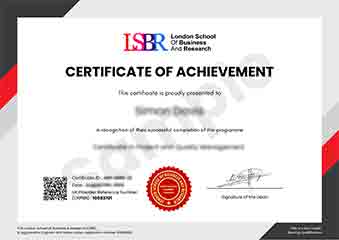
Sample Certificate
Preview the certificate you'll receive upon successful completion of this program.
Get Free Course Info
Enter your details and we'll send you a comprehensive course information pack straight to your inbox.
Employer Sponsored Training
Let your employer invest in your professional development. Request a corporate invoice and get your training funded.
Request Corporate InvoiceWhat People Say About Us
Hear from our students about their experience with the Professional Certificate in Model Uncertainty Quantification Methods at FlexiCourses.
Charlotte Williams
United Kingdom"The course content is incredibly thorough and well-structured, providing a solid foundation in model uncertainty quantification methods that have direct applicability in real-world scenarios. Gaining proficiency in these techniques has significantly enhanced my analytical skills and opened up new career opportunities in risk assessment and data analysis."
Oliver Davies
United Kingdom"This course has been incredibly valuable, equipping me with advanced techniques to handle uncertainty in models, which is crucial in my field of data analysis. It has not only deepened my technical skills but also opened up new opportunities in risk assessment and predictive modeling roles."
Ruby McKenzie
Australia"The course structure is well-organized, providing a clear path from foundational concepts to advanced topics in model uncertainty quantification, which has significantly enhanced my understanding and practical skills in this field. The comprehensive content and real-world applications have been invaluable for my professional growth, offering insights that are directly applicable to my work."