

Professional Certificate in Python Code Reliability through Continuous Integration
Elevate Python coding reliability with this certificate, mastering continuous integration for robust, error-free software.
Professional Certificate in Python Code Reliability through Continuous Integration
Programme Overview
This course is designed for software developers and engineers aiming to enhance their Python coding practices through continuous integration (CI). It equips participants with essential skills to build reliable, maintainable, and scalable applications by integrating CI tools and methodologies effectively.
Participants will gain proficiency in setting up CI pipelines, automating testing processes, and identifying and fixing integration issues promptly. The course also covers best practices for version control, code reviews, and deploying code using CI, ensuring a robust development workflow.
What You'll Learn
Dive into the future of software development with our Professional Certificate in Python Code Reliability through Continuous Integration. This intensive, hands-on course equips you with the skills to build robust, reliable Python applications using cutting-edge CI/CD practices. You'll learn to automate testing, manage version control effectively, and streamline your development process, ensuring your code is not just written, but also continuously improved and integrated seamlessly. Gain a competitive edge in the job market by mastering the tools and techniques that industry leaders use. Perfect for professionals aiming to advance their careers or those new to Python who want to join the tech revolution. Join this journey and transform your code into a reliable, high-performing product.
Programme Highlights
Industry-Aligned Curriculum
Developed with industry leaders to ensure practical, job-ready skills valued by employers worldwide.
Globally Recognised Certificate
Recognised by employers across 180+ countries as a mark of professional excellence.
Flexible Online Learning
Study at your own pace with lifetime access to all course materials and updates.
Instant Access
Start learning immediately — no application process or waiting period required.
Constantly Updated Content
Stay ahead with the latest industry trends, best practices, and emerging insights.
Career Advancement
87% of graduates report measurable career progression within 6 months of completion.
Topics Covered
- 1. Introduction to Continuous Integration (CI): Learners will understand the principles of CI and its importance in software development. They will gain skills in setting up a basic CI pipeline using popular tools.
- 2. Version Control Systems: This module covers the use of Git for version control, including branching, merging, and collaboration. Learners will be able to manage code repositories effectively.
- 3. Python Testing Fundamentals: Learners will learn about unit testing, integration testing, and test-driven development (TDD) in Python. They will gain practical experience writing and executing tests.
- 4. Static Code Analysis: This module introduces learners to static code analysis tools and techniques. By the end, they will be able to use tools like PyLint and Flake8 to improve code quality.
- 5. Dynamic Testing and Debugging: Here, learners will explore dynamic testing and debugging in Python. They will learn to use tools like pytest and pdb for testing and debugging code.
- 6. CI Tools and Environments: This module focuses on setting up and using CI tools such as Jenkins, Travis CI, and GitHub Actions. Learners will learn how to configure these tools to automate their CI processes.
- 7. Automated Deployment Strategies: Learners will study various automated deployment strategies, including containerization with Docker and orchestration with Kubernetes. They will gain hands-on experience deploying applications.
- 8. Performance and Scalability Testing: This module covers performance and scalability testing techniques for Python applications. Learners will learn to use tools like Locust and Apache Bench to test and optimize application performance.
- 9. Security in CI/CD Pipelines: This module discusses security best practices in CI/CD pipelines. Learners will learn how to secure their code and infrastructure, including topics like continuous security monitoring and vulnerability management.
- 10. Best Practices and Case Studies: In this final module, learners will apply best practices learned throughout the course to real-world scenarios. They will analyze case studies and develop their own CI/CD strategies for Python projects.
What You Get When You Enroll
Secure checkout • Instant access • Certificate included
Key Facts
For professionals, managers, and developers
No prior coding experience required
Understand CI/CD pipelines
Implement Python tests effectively
Enhance code reliability and maintainability
Ready to get started?
Join thousands of professionals who already took the next step. Enroll now and get instant access.
Enroll Now — $149Why This Course
Gain practical skills in integrating Python code reliably using continuous integration tools, enhancing project quality and developer efficiency.
Access comprehensive resources and support, including real-world case studies and expert mentorship, to deepen understanding and application.
Develop a competitive edge by earning a recognized credential that validates your ability to maintain high standards of code reliability in Python projects.
Your Path to Certification
Trusted by Professionals Worldwide
Course Brochure
Download our comprehensive course brochure with all details
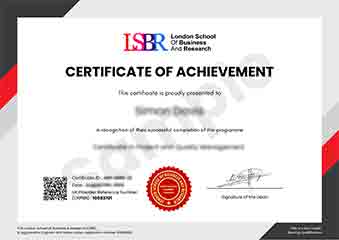
Sample Certificate
Preview the certificate you'll receive upon successful completion of this program.
Get Free Course Info
Enter your details and we'll send you a comprehensive course information pack straight to your inbox.
Employer Sponsored Training
Let your employer invest in your professional development. Request a corporate invoice and get your training funded.
Request Corporate InvoiceWhat People Say About Us
Hear from our students about their experience with the Professional Certificate in Python Code Reliability through Continuous Integration at FlexiCourses.
James Thompson
United Kingdom"The course content is comprehensive and well-structured, providing a solid foundation in Python code reliability through continuous integration. I gained valuable practical skills that have already enhanced my ability to develop more robust and reliable software solutions."
Sophie Brown
United Kingdom"This course has been instrumental in enhancing my ability to write reliable Python code through the implementation of continuous integration practices. It has not only deepened my technical skills but also made me more competitive in the job market, opening up new opportunities in software development roles that prioritize code quality and automation."
Ashley Rodriguez
United States"The course structure is well-organized, providing a clear path from basic concepts to advanced topics in continuous integration, which has significantly enhanced my understanding and practical skills in ensuring Python code reliability. The comprehensive content and real-world applications have been invaluable for my professional growth."