

Professional Certificate in Python for Data Science: Scientific Computing Projects
Earn a professional certificate in Python for data science, focusing on scientific computing projects to enhance analytical and programming skills.
Professional Certificate in Python for Data Science: Scientific Computing Projects
Programme Overview
This course is designed for professionals and students interested in applying Python for data science tasks, particularly in scientific computing. It equips learners with the skills to develop and implement Python-based solutions for complex data analysis problems, using libraries such as NumPy, SciPy, and Pandas.
Participants will gain hands-on experience in writing efficient code for data manipulation, statistical analysis, and visualization. By the end of the course, they will be able to create comprehensive scientific computing projects that address real-world challenges in fields like finance, healthcare, and environmental science.
What You'll Learn
Embark on an exhilarating journey into the heart of data science with our Professional Certificate in Python for Data Science: Scientific Computing Projects. This comprehensive program equips you with the skills to harness Python's power for complex data analysis and scientific computing. Dive into real-world projects that span data manipulation, statistical modeling, and machine learning, all while learning from industry experts. You'll not only master Python but also gain an edge in the job market with certifications that are in high demand across tech, finance, and research sectors. Join us to turn data into decisions and solutions that drive innovation and success.
Programme Highlights
Industry-Aligned Curriculum
Developed with industry leaders to ensure practical, job-ready skills valued by employers worldwide.
Globally Recognised Certificate
Recognised by employers across 180+ countries as a mark of professional excellence.
Flexible Online Learning
Study at your own pace with lifetime access to all course materials and updates.
Instant Access
Start learning immediately — no application process or waiting period required.
Constantly Updated Content
Stay ahead with the latest industry trends, best practices, and emerging insights.
Career Advancement
87% of graduates report measurable career progression within 6 months of completion.
Topics Covered
- 1. Introduction to Python for Data Science: Learners will be introduced to Python programming basics and essential libraries for data science, gaining foundational skills necessary for data manipulation and analysis.
- 2. Data Manipulation with Pandas: This module teaches learners how to use the Pandas library for data manipulation, including data cleaning, transformation, and preparation for analysis.
- 3. Data Visualization with Matplotlib and Seaborn: Learners will learn to create various types of plots and visualizations using Matplotlib and Seaborn, enhancing their ability to communicate data insights effectively.
- 4. Statistical Analysis Fundamentals: This module covers basic statistical concepts and their implementation in Python, enabling learners to perform descriptive and inferential statistical analyses on datasets.
- 5. Numerical Computing with NumPy: Learners will master the NumPy library for numerical operations and array manipulation, which is crucial for scientific computing and data analysis.
- 6. Machine Learning Fundamentals: This module introduces learners to core machine learning concepts and algorithms, focusing on supervised and unsupervised learning techniques using scikit-learn.
- 7. Advanced Data Manipulation Techniques: Building on foundational skills, learners will explore advanced data manipulation techniques, including merging, reshaping, and handling missing data.
- 8. Time Series Analysis: This module teaches learners how to analyze time series data using Python, covering concepts such as trend analysis, seasonal decomposition, and forecasting.
- 9. Text Data Processing with NLTK: Learners will learn to process and analyze text data using the Natural Language Toolkit (NLTK), gaining skills in text cleaning, tokenization, and sentiment analysis.
- 10. Scientific Computing Projects: In this capstone module, learners will apply their knowledge to real-world scientific computing projects, working on comprehensive data science tasks from data collection to model deployment.
What You Get When You Enroll
Secure checkout • Instant access • Certificate included
Key Facts
Audience: Data science professionals, Python enthusiasts
Prerequisites: Basic Python knowledge, statistics fundamentals
Outcomes: Master scientific computing, apply Python in data science
Ready to get started?
Join thousands of professionals who already took the next step. Enroll now and get instant access.
Enroll Now — $149Why This Course
Gain hands-on experience with real-world scientific computing projects, enhancing your practical skills.
Acquire in-depth knowledge of Python libraries essential for data science, such as NumPy, Pandas, and SciPy.
Develop a portfolio of projects that demonstrate your proficiency in Python for data analysis and scientific computing.
Your Path to Certification
Trusted by Professionals Worldwide
Course Brochure
Download our comprehensive course brochure with all details
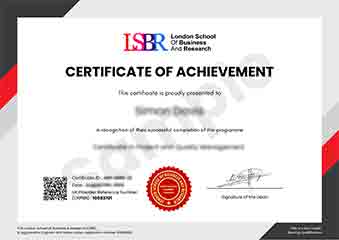
Sample Certificate
Preview the certificate you'll receive upon successful completion of this program.
Get Free Course Info
Enter your details and we'll send you a comprehensive course information pack straight to your inbox.
Employer Sponsored Training
Let your employer invest in your professional development. Request a corporate invoice and get your training funded.
Request Corporate InvoiceWhat People Say About Us
Hear from our students about their experience with the Professional Certificate in Python for Data Science: Scientific Computing Projects at FlexiCourses.
Sophie Brown
United Kingdom"The course content is comprehensive and well-structured, providing a solid foundation in Python for scientific computing that has significantly enhanced my ability to handle real-world data science projects. I've gained practical skills in data manipulation, analysis, and visualization, which are directly applicable and have already opened up new career opportunities."
Emma Tremblay
Canada"This Python for Data Science course has been incredibly valuable, equipping me with the skills to handle real-world scientific computing projects and making my resume stand out to potential employers in the tech industry. Since completing the course, I've been able to secure a position as a data analyst where I can apply these skills directly to solve complex problems."
Siti Abdullah
Malaysia"The course is meticulously organized, offering a seamless progression from foundational concepts to advanced topics, which greatly enhances my understanding and application of Python in scientific computing. It provides a wealth of knowledge that is both comprehensive and practical, equipping me with skills that are directly applicable to real-world data science projects."