

Undergraduate Certificate in Biomedical Image Processing with Python
Earn an Undergraduate Certificate in Biomedical Image Processing with Python, gaining expertise in image analysis techniques and practical Python programming skills.
Undergraduate Certificate in Biomedical Image Processing with Python
Programme Overview
This course is designed for undergraduate students and professionals in biology, computer science, and related fields interested in biomedical image processing. It aims to equip learners with practical skills in using Python for image analysis, including image acquisition, preprocessing, segmentation, and feature extraction techniques. Participants will gain proficiency in applying these techniques to biomedical imaging data to enhance their research and application capabilities.
Upon completion, students will be able to develop and implement custom image processing algorithms using Python, analyze complex biomedical images, and interpret results for informed decision-making in research and clinical settings.
What You'll Learn
Dive into the cutting-edge world of biomedical image processing with our Undergraduate Certificate in Biomedical Image Processing with Python. This intensive course equips you with the skills to analyze and interpret medical images using Python, a powerful tool in healthcare technology. You'll explore advanced techniques in image segmentation, registration, and analysis, all while gaining hands-on experience with real-world biomedical datasets. Ideal for students aiming to bridge the gap between computer science and medicine, this program opens doors to careers in medical imaging, healthcare IT, and biomedical research. Join us to transform data into diagnostic tools and contribute to the next generation of healthcare solutions.
Programme Highlights
Industry-Aligned Curriculum
Developed with industry leaders to ensure practical, job-ready skills valued by employers worldwide.
Globally Recognised Certificate
Recognised by employers across 180+ countries as a mark of professional excellence.
Flexible Online Learning
Study at your own pace with lifetime access to all course materials and updates.
Instant Access
Start learning immediately — no application process or waiting period required.
Constantly Updated Content
Stay ahead with the latest industry trends, best practices, and emerging insights.
Career Advancement
87% of graduates report measurable career progression within 6 months of completion.
Topics Covered
- 1. Introduction to Biomedical Imaging: Learners will study the basics of biomedical imaging techniques and their applications. They will gain an understanding of common imaging modalities such as MRI, CT, and ultrasound, and learn how to use Python for basic image manipulation.
- 2. Image Preprocessing: This module covers essential preprocessing steps for biomedical images, including noise reduction, contrast enhancement, and image registration. Learners will practice these techniques using Python to prepare images for further analysis.
- 3. Image Segmentation Techniques: Learners will study various image segmentation methods, including thresholding, region growing, and active contour models. They will implement these techniques in Python to segment different types of biomedical images.
- 4. Feature Extraction and Descriptors: This module focuses on extracting meaningful features from biomedical images. Learners will learn about different feature extraction techniques and descriptors, and apply them in Python to analyze and compare images.
- 5. Machine Learning in Biomedical Image Processing: Learners will explore the application of machine learning algorithms for image classification, segmentation, and object recognition. They will use Python libraries such as scikit-learn and TensorFlow to implement these techniques.
- 6. Deep Learning for Medical Images: This advanced module introduces deep learning techniques for biomedical image processing. Learners will study convolutional neural networks (CNNs) and implement them in Python to perform tasks such as image classification and segmentation.
- 7. Image Registration and Fusion: Learners will study advanced image registration techniques and image fusion methods. They will use Python to align and combine multiple images from different modalities or taken at different times.
- 8. Biomedical Image Analysis: This module covers advanced image analysis techniques, including image filtering, morphological operations, and texture analysis. Learners will apply these techniques in Python to analyze complex biomedical images.
- 9. Clinical Applications of Biomedical Image Processing: Learners will explore the practical applications of biomedical image processing in clinical settings. They will study case studies and implement solutions using Python to address real-world medical imaging challenges.
- 10. Capstone Project: In this final module, learners will work on a comprehensive project that integrates their knowledge and skills in biomedical image processing. They will design, implement, and evaluate their project using Python, showcasing their ability to solve real-world problems in the field.
What You Get When You Enroll
Secure checkout • Instant access • Certificate included
Key Facts
Audience: Students, professionals in biomedical fields
Prerequisites: Basic computer skills, Python knowledge
Outcomes: Master image processing techniques, apply Python in biomedical imaging
Ready to get started?
Join thousands of professionals who already took the next step. Enroll now and get instant access.
Enroll Now — $99Why This Course
Gain specialized skills in biomedical image processing, a critical area in medical research and diagnostics.
Learn to apply Python, a versatile and in-demand programming language, directly enhancing employment prospects in healthcare and technology sectors.
Develop a deeper understanding of image processing techniques, which are essential for analyzing and interpreting medical images, contributing to advancements in healthcare technologies.
Your Path to Certification
Trusted by Professionals Worldwide
Course Brochure
Download our comprehensive course brochure with all details
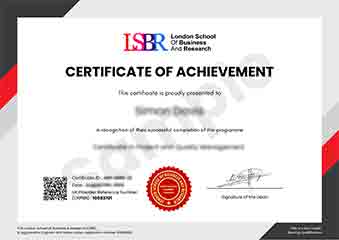
Sample Certificate
Preview the certificate you'll receive upon successful completion of this program.
Get Free Course Info
Enter your details and we'll send you a comprehensive course information pack straight to your inbox.
Employer Sponsored Training
Let your employer invest in your professional development. Request a corporate invoice and get your training funded.
Request Corporate InvoiceWhat People Say About Us
Hear from our students about their experience with the Undergraduate Certificate in Biomedical Image Processing with Python at FlexiCourses.
Sophie Brown
United Kingdom"The course content is thorough and well-structured, providing a solid foundation in biomedical image processing techniques using Python. I gained valuable practical skills that have already enhanced my ability to analyze and process medical images, which is incredibly beneficial for my career in medical imaging."
Oliver Davies
United Kingdom"This course has been instrumental in bridging the gap between theoretical knowledge and practical applications in biomedical imaging. It has equipped me with essential skills that are highly sought after in the industry, significantly enhancing my career prospects in medical imaging analysis."
Arjun Patel
India"The course structure is well-organized, providing a clear path from basic concepts to advanced techniques in biomedical image processing, which has significantly enhanced my understanding and practical skills in the field. The comprehensive content and real-world applications have been particularly beneficial for my professional growth, making me more confident in applying Python for image processing tasks."